Exploded view / storyboard: Clearly show structure and story with Nano Banana

An exploded view storyboard prompt should name the product, list only the components that matter, lock their physical order around a clear assembly axis, and specify how the finished object and assembly sequence must appear on the same board. The 15 copy-ready examples below use original, unbranded product forms and pair one central exploded diagram with a small assembled inset and three unnumbered sequence frames. They are explanatory concept visuals, not engineering drawings or manufacturing instructions. Use them to explore communication layouts, then verify dimensions, connections, safety clearances, materials, and part order with qualified product documentation before any real build.

Copy one complete prompt, replace the original generic subject with your own rights-cleared product concept, and keep the bounded part list, assembly axis, consistency rules, and output clause until the first result passes review.

15 original prompts · 15 reviewed GPT Image 2 results · Updated 2026-07-17

Exploded diagram or product storyboard?

Use an exploded diagram for structure

Choose a bounded set of major modules and place them once along a clear assembly axis. This is useful for concept reviews, manual drafts, classroom explanation, and stakeholder alignment. It is not a substitute for verified engineering documentation.

Use a product storyboard for sequence

Keep the same original product geometry while showing a short progression such as base, modules aligned, and product closed. For cinematic shot planning or narrative contact sheets, use the dedicated cinematic storyboard prompts instead.

Four steps for a clearer exploded view storyboard

  1. Define the communication goalDecide whether the board is for a concept review, manual draft, pitch, classroom explanation, or motion-planning reference. That context controls how much detail belongs in the image.
  2. List a bounded part setName six to ten major components in their approximate outer-to-inner or left-to-right order. Do not ask the model to invent exact engineering internals.
  3. Lock the assembly axisChoose one clear axis and require even spacing, non-overlapping parts, a complete assembled inset, and a short sequence strip that keeps product identity consistent.
  4. Inspect and correctCheck component count, order, floating relationships, repeated pieces, silhouette continuity, readable spacing, stray text, logos, and impossible intersections before using the visual.

Exploded view prompt parameter guide

GoalPart scopeLayoutRendering styleAvoid
Manual concept6–8 major partsSingle straight assembly axisClean technical 3D illustrationTiny hardware and invented dimensions
Design reviewOuter shell plus functional modulesIsometric fan-out with assembled insetMaterial-aware product visualizationBrand-specific silhouettes
Assembly storyboardOnly parts visible in the sequenceExploded hero plus three unnumbered framesConsistent camera and lightingChanged proportions between frames
Educational explainerSimplified conceptual layersGenerous spacing and clear hierarchyFriendly infographic renderClaims of engineering accuracy

Common failure fixes before you rerun

Parts appear twice or go missing

Why it happens: The component list is open-ended or the same module is named in overlapping ways.

Prompt correction: State an exact count, use one name per part, and add ‘show each listed component exactly once in the main exploded view.’

The exploded order is impossible to follow

Why it happens: Multiple axes and decorative floating parts compete for attention.

Prompt correction: Choose one left-to-right, vertical, or radial assembly axis and require even gaps with no overlaps or crossed relationships.

The sequence frames redesign the product

Why it happens: The prompt does not freeze silhouette, materials, camera family, and component count across the storyboard.

Prompt correction: Require the exact same original product geometry and palette in the assembled inset, exploded hero, and all sequence frames.

Labels are garbled or repeated

Why it happens: Dense generated text is being used as the primary explanation layer.

Prompt correction: Generate a label-free visual first, reserve clean whitespace, and add verified labels later in a design tool or document editor.

The image looks like a real branded product

Why it happens: Familiar colors, button layouts, or signature proportions were copied too closely.

Prompt correction: Restate ‘original generic industrial design’ and change silhouette, controls, materials, palette, and proportions; remove all logos and trademark-like marks.

The board implies engineering authority

Why it happens: Blueprint styling, dimensions, tolerances, or safety claims make a concept render look production-ready.

Prompt correction: Remove measurements and specifications, label the result as explanatory, and verify real construction details against qualified engineering sources.

Jump to an exploded view storyboard prompt

15 copy-ready exploded view storyboard prompts

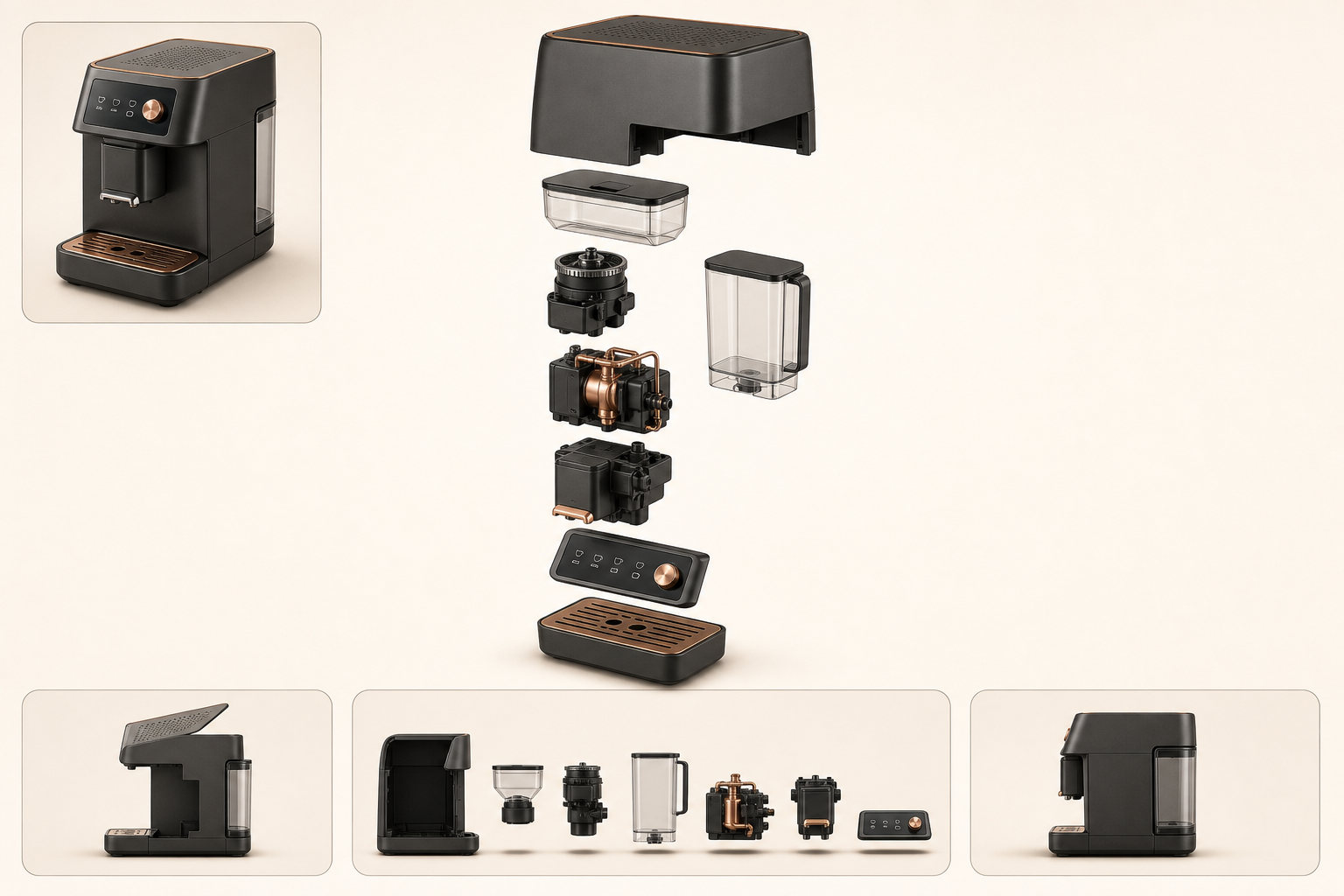
Exploded view storyboard · GPT Image 2 · Prompt 01

Automatic Coffee Machine Exploded Storyboard

Concept-review board for a compact countertop coffee machine.

Exploded view storyboard prompt result for an original automatic coffee machine
Automatic Coffee Machine Exploded Storyboard · Reviewed focus: Eight unique modules, vertical order, clear water and coffee paths, no duplicated hopper or tray. · Explanatory concept visual, not an engineering drawing.
Copy-ready tested prompt
Task: Create an explanatory exploded view storyboard for an original compact automatic coffee machine.
Subject: Show exactly eight major modules once each: outer shell, bean hopper, grinder, removable water reservoir, pump-and-heater block, brew group, control panel, and drip tray.
Context: A product-concept review board for designers and technical writers, not a manufacturing drawing.
Style: Polished 3D technical infographic with matte graphite, cream, and muted copper materials on a warm off-white background.
Composition: Center a vertical exploded assembly with even gaps and no overlaps; add one small fully assembled three-quarter inset at upper left and three unnumbered silhouette frames along the bottom showing shell open, modules aligned, and product closed.
Lighting: Soft high-key studio light from upper right with consistent contact shadows and restrained reflections.
Constraints: Original generic form; each listed module exactly once; plausible explanatory order only; no measurements, labels, text, beans spilling, logos, trademarks, watermark, crossed parts, or engineering-accuracy claims.
Output: One clean 1536×1024 landscape PNG with the complete board visible and generous safe margins.
Review focus
Eight unique modules, vertical order, clear water and coffee paths, no duplicated hopper or tray.
Tested model
GPT Image 2 built-in generation
Rights boundary
Original generic product form; no real logo, protected character, celebrity, or third-party input image.
Accuracy boundary
Use as an explanatory concept. Verify real components, dimensions, connections, clearances, materials, and safety requirements separately.
Exploded view storyboard · GPT Image 2 · Prompt 02

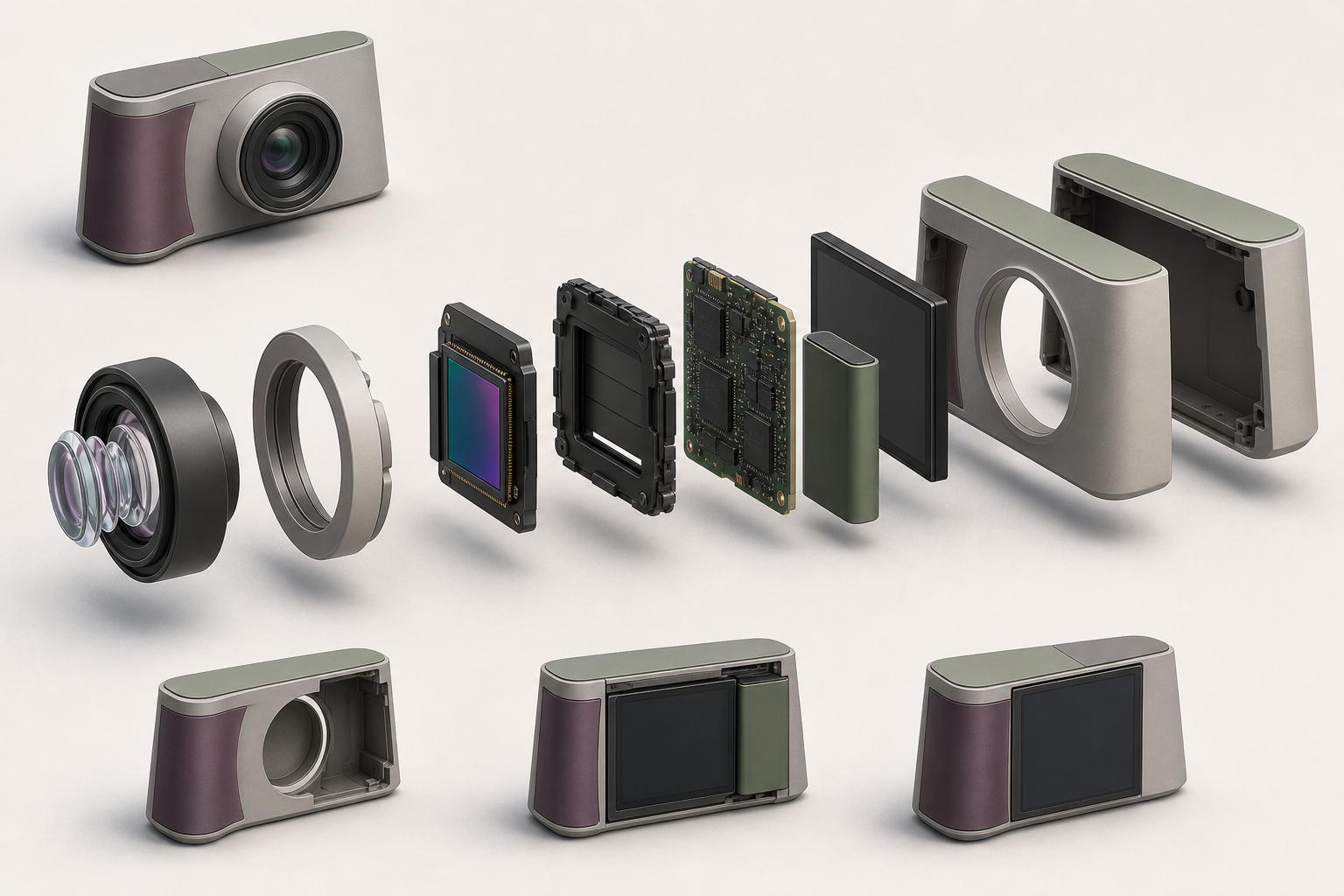
Mirrorless Camera Exploded Storyboard

Educational board explaining the major layers of an original compact camera.

Exploded view storyboard prompt result for an original mirrorless camera
Mirrorless Camera Exploded Storyboard · Reviewed focus: Eight unique parts, straight optical axis, no recognizable brand body or lens mount. · Explanatory concept visual, not an engineering drawing.
Copy-ready tested prompt
Task: Create an explanatory exploded view storyboard for an original compact mirrorless camera.
Subject: Show exactly eight major components once each: front lens group, generic lens mount ring, image-sensor module, shutter housing, main circuit board, battery, rear display, and two-piece outer body shell.
Context: An educational product-design board that communicates layer order without claiming repair or engineering accuracy.
Style: Crisp isometric 3D cutaway infographic using matte warm gray, muted plum, soft sage, and small acid-lime accents on a pale stone background; avoid a metallic retro top plate.
Composition: Align the lens and internal layers left-to-right on one straight optical axis; use a low asymmetric trapezoidal body with a crescent side grip, flush top touch pad, no viewfinder, and no top dials; place a small assembled three-quarter camera inset above left and three unnumbered assembly-state frames below, all with the same original silhouette.
Lighting: Broad cool studio lighting from upper left with subtle rim light and soft shadows beneath floating parts.
Constraints: Invent a non-retro body, grip, top surface, controls, and lens-interface silhouette; use smooth unmarked optical cartridges instead of a commercial ribbed lens barrel; each listed component exactly once; no viewfinder window, top dials, silver top plate, installation dot, real camera trade dress, logos, text, pseudo-text, numbers, tick marks, labels, watermark, dimensions, impossible intersections, or engineering claims.
Output: One sharp 1536×1024 landscape PNG with all components fully inside the frame.
Review focus
Eight unique parts, straight optical axis, no recognizable brand body or lens mount.
Tested model
GPT Image 2 built-in generation
Rights boundary
Original generic product form; no real logo, protected character, celebrity, or third-party input image.
Accuracy boundary
Use as an explanatory concept. Verify real components, dimensions, connections, clearances, materials, and safety requirements separately.
Exploded view storyboard · GPT Image 2 · Prompt 03

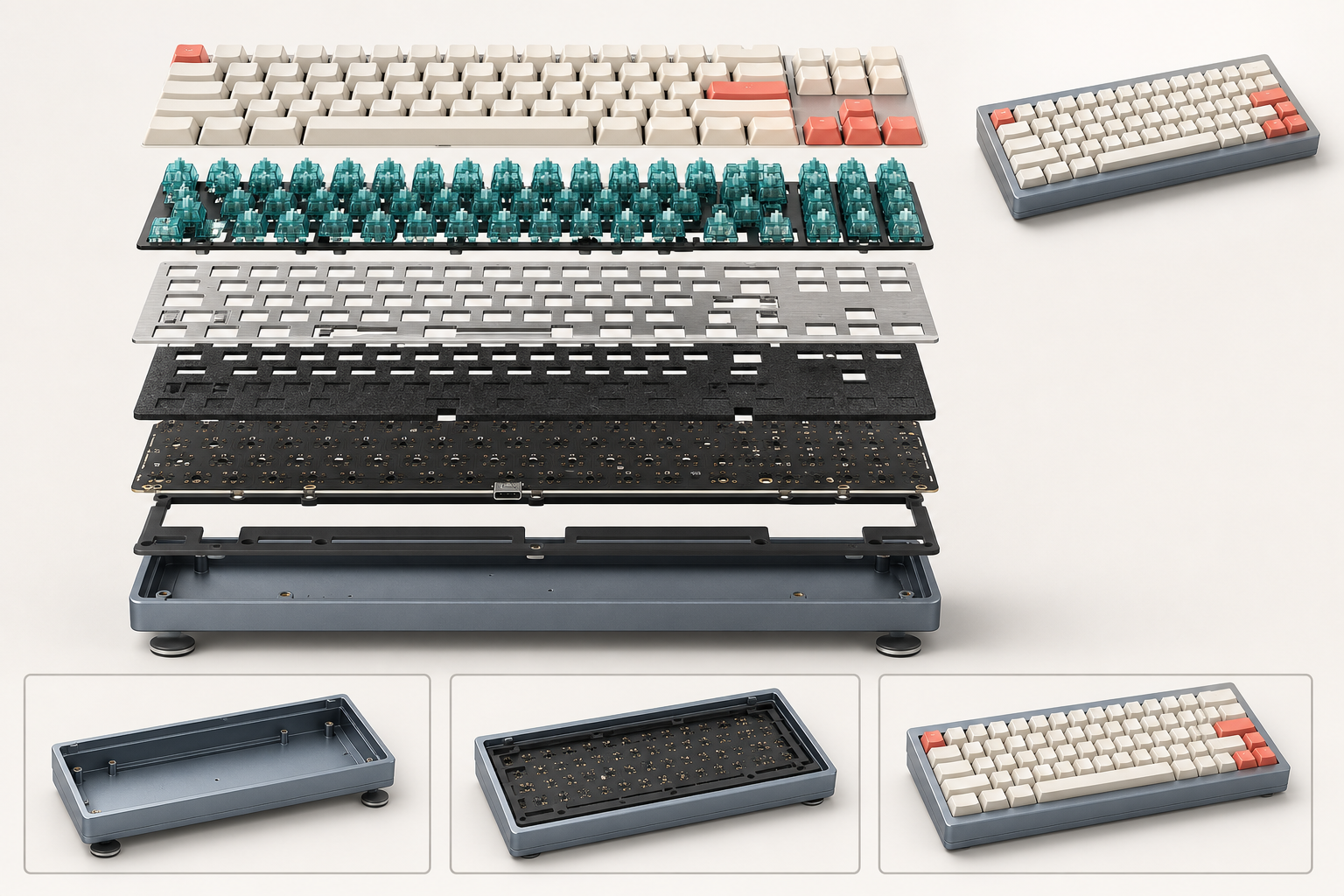
Mechanical Keyboard Layer Storyboard

Layer-by-layer explainer for a custom keyboard concept.

Exploded view storyboard prompt result for an original mechanical keyboard
Mechanical Keyboard Layer Storyboard · Reviewed focus: Seven distinct layers plus assembled inset, consistent key grid, no duplicated plate or foam. · Explanatory concept visual, not an engineering drawing.
Copy-ready tested prompt
Task: Create an explanatory exploded view storyboard for an original compact mechanical keyboard.
Subject: Show exactly seven layers once each: keycap set, switch grid, top plate, acoustic foam, circuit board, gasket layer, and two-piece case with feet grouped as one base assembly.
Context: A custom-hardware concept review that explains stack order for a non-branded 75-percent layout.
Style: Clean axonometric product infographic with ivory keycaps, coral accent keys, translucent teal switches, brushed aluminum, and dark slate electronics on a light neutral background.
Composition: Float the layers vertically in a perfectly aligned rectangular stack; add a small assembled keyboard inset at upper right and three unnumbered bottom frames showing base, internal stack, and completed board from the same camera family.
Lighting: Large softbox illumination from upper left with crisp edges, mild ambient occlusion, and no dramatic glare.
Constraints: Preserve one consistent key grid; each layer exactly once; original generic design; no brand legends, readable key text, logos, labels, measurements, cables, watermark, extra layers, or engineering claims.
Output: One 1536×1024 landscape PNG with generous spacing between every layer.
Review focus
Seven distinct layers plus assembled inset, consistent key grid, no duplicated plate or foam.
Tested model
GPT Image 2 built-in generation
Rights boundary
Original generic product form; no real logo, protected character, celebrity, or third-party input image.
Accuracy boundary
Use as an explanatory concept. Verify real components, dimensions, connections, clearances, materials, and safety requirements separately.
Exploded view storyboard · GPT Image 2 · Prompt 04

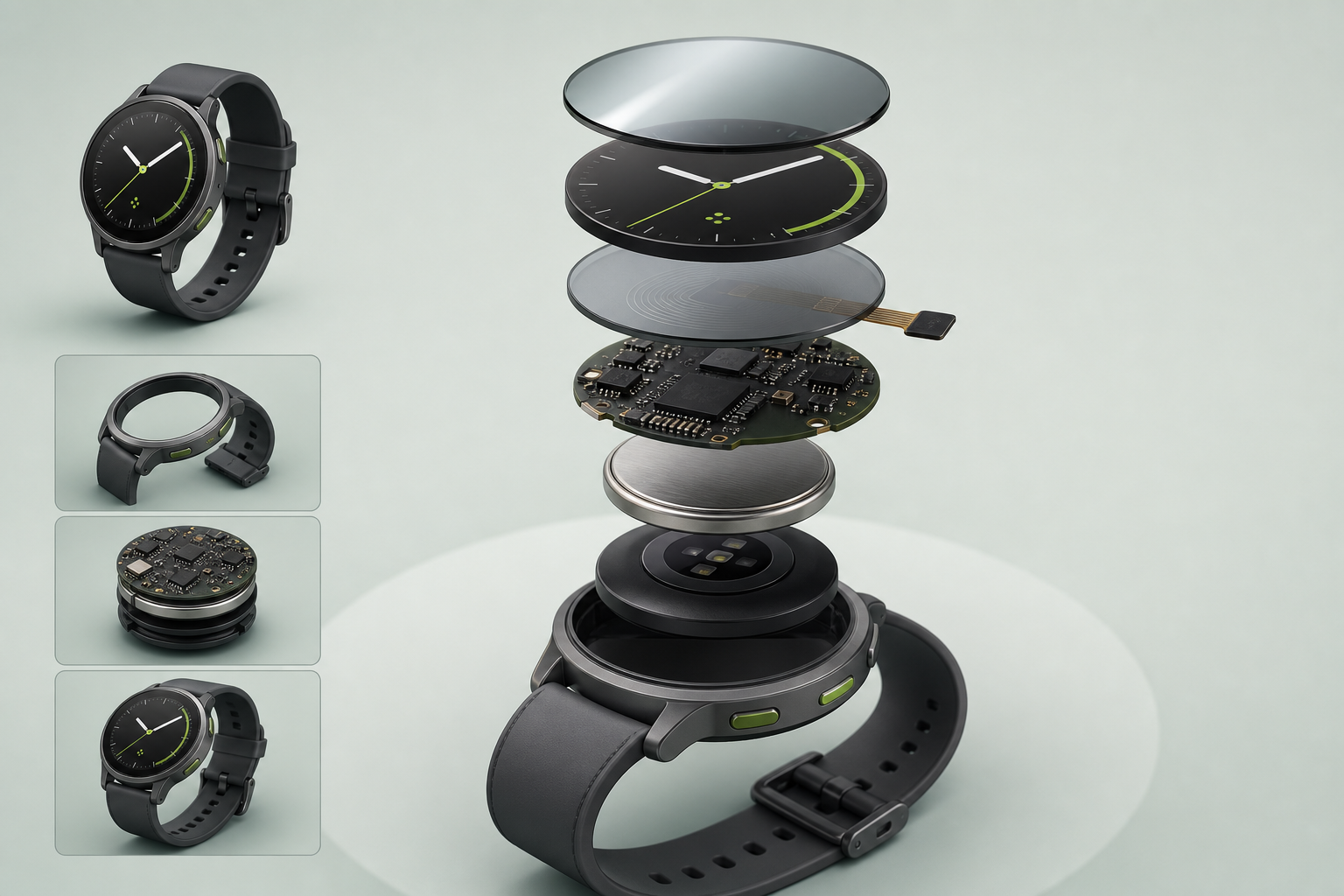
Smartwatch Radial Exploded Storyboard

Consumer-electronics concept board for a generic round smartwatch.

Exploded view storyboard prompt result for an original smartwatch
Smartwatch Radial Exploded Storyboard · Reviewed focus: Seven unique circular layers, centered radial order, no branded crown or watch face. · Explanatory concept visual, not an engineering drawing.
Copy-ready tested prompt
Task: Create an explanatory exploded view storyboard for an original round smartwatch.
Subject: Show exactly seven major components once each: cover glass, round display, touch layer, main board, coin-shaped battery, sensor back, and generic strap-and-case assembly.
Context: A consumer-electronics concept board for explaining product layers, not repair guidance or a production blueprint.
Style: Refined 3D infographic with charcoal ceramic, smoked glass, brushed titanium-gray, and restrained lime accents on a soft mint-gray background.
Composition: Use a centered radial exploded stack tilted slightly toward the viewer; place a small fully assembled watch inset at upper left and three unnumbered sequence frames below showing case, internal stack, and closed watch with identical proportions.
Lighting: Soft circular studio light with a controlled highlight on glass and coherent shadows below each layer.
Constraints: Original generic watch geometry; each listed component exactly once; no real brand controls, interface text, numerals, labels, logos, trademarks, watermark, measurements, floating fragments, or engineering claims.
Output: One polished 1536×1024 landscape PNG with clean margins and no cropped strap.
Review focus
Seven unique circular layers, centered radial order, no branded crown or watch face.
Tested model
GPT Image 2 built-in generation
Rights boundary
Original generic product form; no real logo, protected character, celebrity, or third-party input image.
Accuracy boundary
Use as an explanatory concept. Verify real components, dimensions, connections, clearances, materials, and safety requirements separately.
Exploded view storyboard · GPT Image 2 · Prompt 05

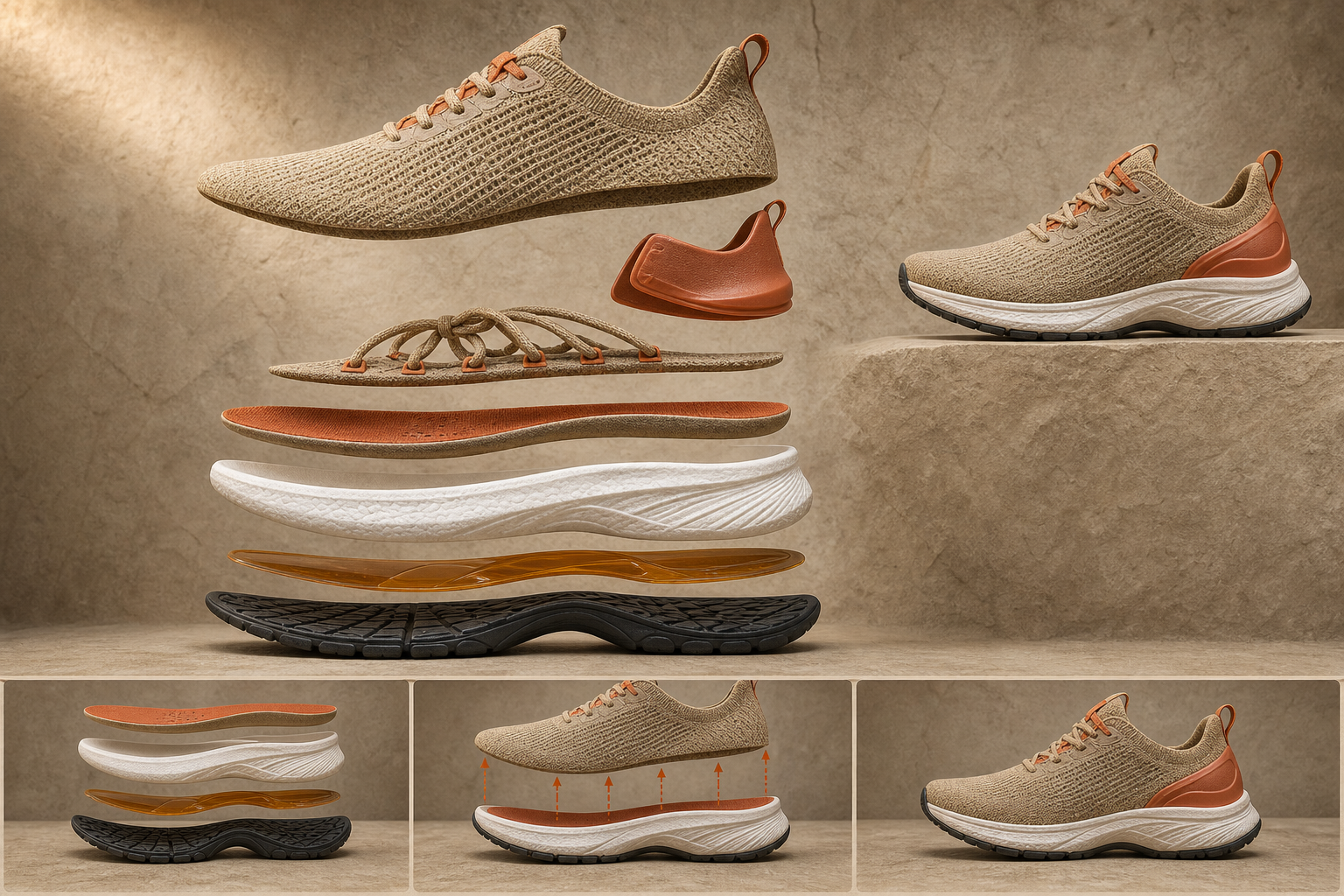
Running Sneaker Layer Storyboard

Footwear concept board explaining material layers and assembly order.

Exploded view storyboard prompt result for an original running sneaker
Running Sneaker Layer Storyboard · Reviewed focus: Seven unique layers, side-profile alignment, original silhouette, no duplicated sole layer. · Explanatory concept visual, not an engineering drawing.
Copy-ready tested prompt
Task: Create an explanatory exploded view storyboard for an original unbranded running sneaker.
Subject: Show exactly seven components once each: knit upper, heel counter, lace-and-eyelet assembly, removable insole, cushioned midsole, flexible support plate, and rubber outsole.
Context: A footwear material and construction concept review for designers, not a performance or manufacturing specification.
Style: Tactile 3D product illustration with sand-colored knit, burnt-orange accents, translucent amber support plate, white foam, and dark rubber on a warm stone background.
Composition: Keep every layer in matching left-facing side profile and separate them vertically along one clean axis; add a small assembled shoe inset above right and three unnumbered lower frames showing sole stack, upper attachment, and finished shoe.
Lighting: Warm diffused studio light from upper left that reveals knit, foam, and rubber texture without harsh contrast.
Constraints: Original silhouette and tread; each listed component exactly once; no real brand shapes, swooshes, logos, text, labels, foot, watermark, measurements, impossible seams, or performance claims.
Output: One detailed 1536×1024 landscape PNG with the entire shoe and all layers visible.
Review focus
Seven unique layers, side-profile alignment, original silhouette, no duplicated sole layer.
Tested model
GPT Image 2 built-in generation
Rights boundary
Original generic product form; no real logo, protected character, celebrity, or third-party input image.
Accuracy boundary
Use as an explanatory concept. Verify real components, dimensions, connections, clearances, materials, and safety requirements separately.
Exploded view storyboard · GPT Image 2 · Prompt 06

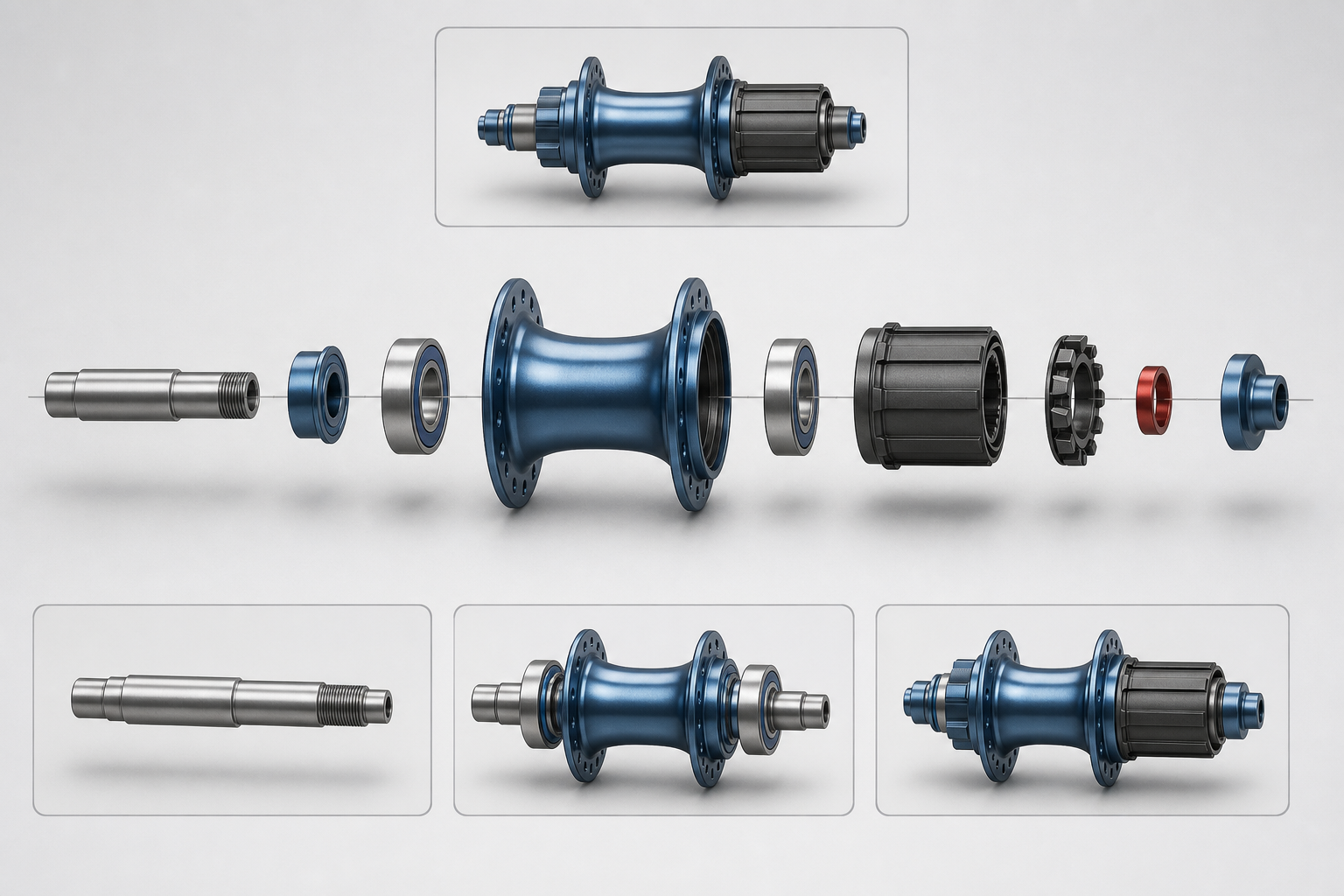
Bicycle Hub Axial Exploded Storyboard

Mechanical concept explainer for a generic bicycle hub assembly.

Exploded view storyboard prompt result for an original bicycle hub
Bicycle Hub Axial Exploded Storyboard · Reviewed focus: Nine unique part groups, one straight axle, symmetric shell order, no extra bearings. · Explanatory concept visual, not an engineering drawing.
Copy-ready tested prompt
Task: Create an explanatory exploded view storyboard for an original bicycle wheel hub.
Subject: Show exactly nine part groups once each: axle, left end cap, left bearing, central hub shell, right bearing, freehub body, pawl ring, spacer, and right end cap.
Context: A mechanical-design explainer for concept discussion, not a repair manual or tolerance drawing.
Style: Precise 3D technical illustration with brushed steel, anodized steel-blue, dark graphite, and a small red spacer accent on a cool light-gray background.
Composition: Arrange every cylindrical part left-to-right on one uninterrupted horizontal axle with equal gaps; add a small assembled hub inset above and three unnumbered bottom frames showing axle, bearing-and-shell stack, and closed hub.
Lighting: Neutral softbox lighting from upper right with clean metallic highlights and consistent soft shadows.
Constraints: Generic original geometry; each listed group exactly once; keep all bores concentric; no spokes, wheel, brand marks, text, labels, measurements, watermark, crossed parts, duplicated bearings, or engineering claims.
Output: One crisp 1536×1024 landscape PNG with the full axial sequence inside safe margins.
Review focus
Nine unique part groups, one straight axle, symmetric shell order, no extra bearings.
Tested model
GPT Image 2 built-in generation
Rights boundary
Original generic product form; no real logo, protected character, celebrity, or third-party input image.
Accuracy boundary
Use as an explanatory concept. Verify real components, dimensions, connections, clearances, materials, and safety requirements separately.
Exploded view storyboard · GPT Image 2 · Prompt 07

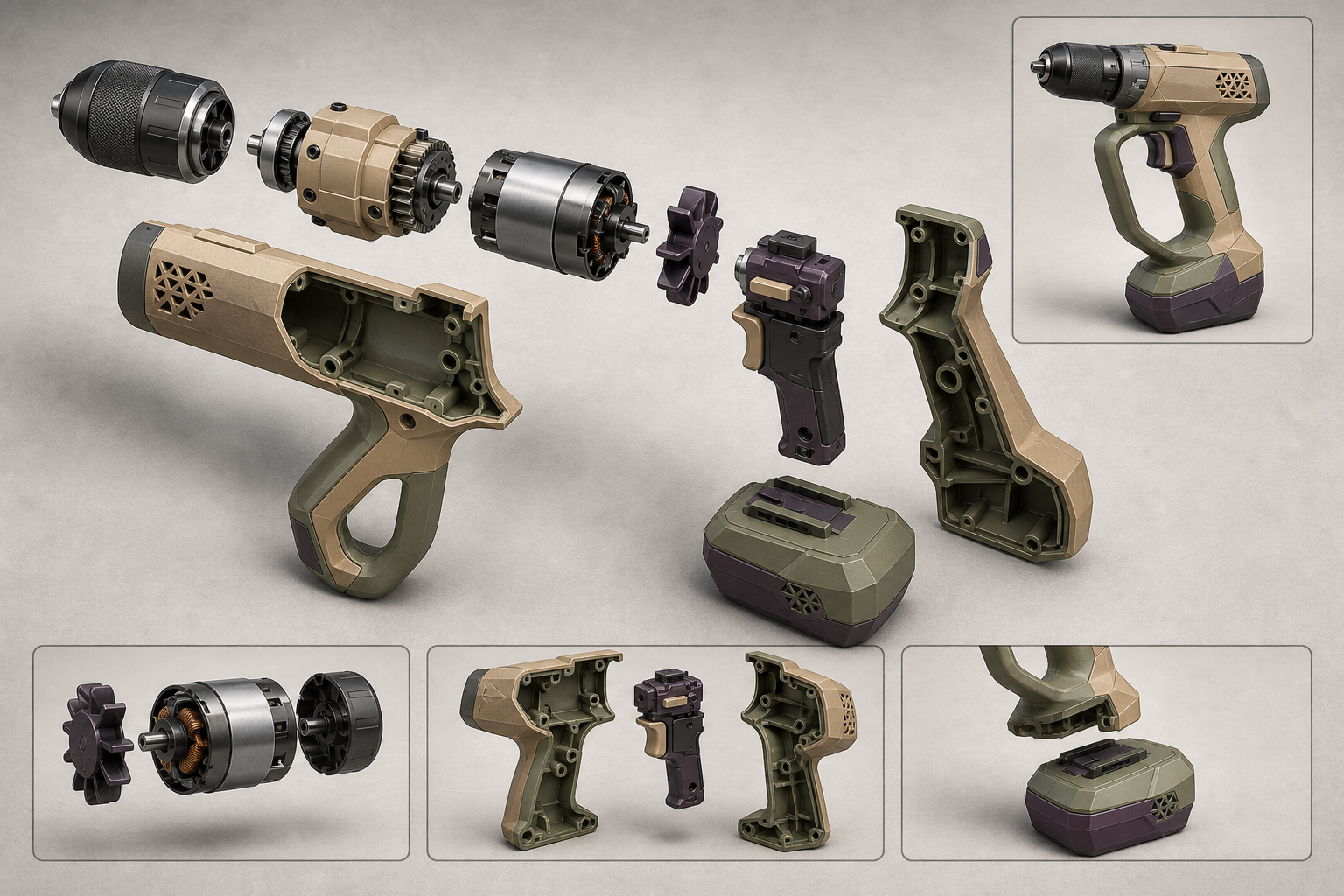
Cordless Drill Exploded Storyboard

Tool-design concept board showing major internal modules.

Exploded view storyboard prompt result for an original cordless drill
Cordless Drill Exploded Storyboard · Reviewed focus: Eight unique modules, diagonal powertrain alignment, original body design, trigger appears once. · Explanatory concept visual, not an engineering drawing.
Copy-ready tested prompt
Task: Create an explanatory exploded view storyboard for an original cordless drill concept.
Subject: Show exactly eight major modules once each: chuck, gearbox, motor, cooling fan, trigger-and-control module, left housing half, right housing half, and removable battery pack.
Context: A tool-design review board that communicates module relationships without serving as repair or safety instructions.
Style: Rugged but clean 3D product infographic using warm sand, muted sage, deep aubergine, and satin metal on a pale workshop-gray background; avoid familiar commercial power-tool color blocking.
Composition: Explode the powertrain diagonally from upper left to lower right while keeping two asymmetric faceted housing halves clearly separated; use a loop-style palm guard, staggered triangular vents, and a tapered hexagonal battery pack; add a small assembled drill inset above right and three unnumbered frames below showing motor stack, shell closure, and battery attachment.
Lighting: Broad overhead studio light with a mild rim highlight and coherent grounded shadows.
Constraints: Original generic industrial form with a non-typical grip, trigger, vent, battery interface, and battery-pack silhouette; each listed module exactly once; the torque ring must be completely blank; no real tool colorway, logos, text, numbers, tick marks, labels, hands, drill bit, watermark, measurements, exposed sparks, impossible intersections, or engineering and safety claims.
Output: One 1536×1024 landscape PNG with every module readable and uncropped.
Review focus
Eight unique modules, diagonal powertrain alignment, original body design, trigger appears once.
Tested model
GPT Image 2 built-in generation
Rights boundary
Original generic product form; no real logo, protected character, celebrity, or third-party input image.
Accuracy boundary
Use as an explanatory concept. Verify real components, dimensions, connections, clearances, materials, and safety requirements separately.
Exploded view storyboard · GPT Image 2 · Prompt 08

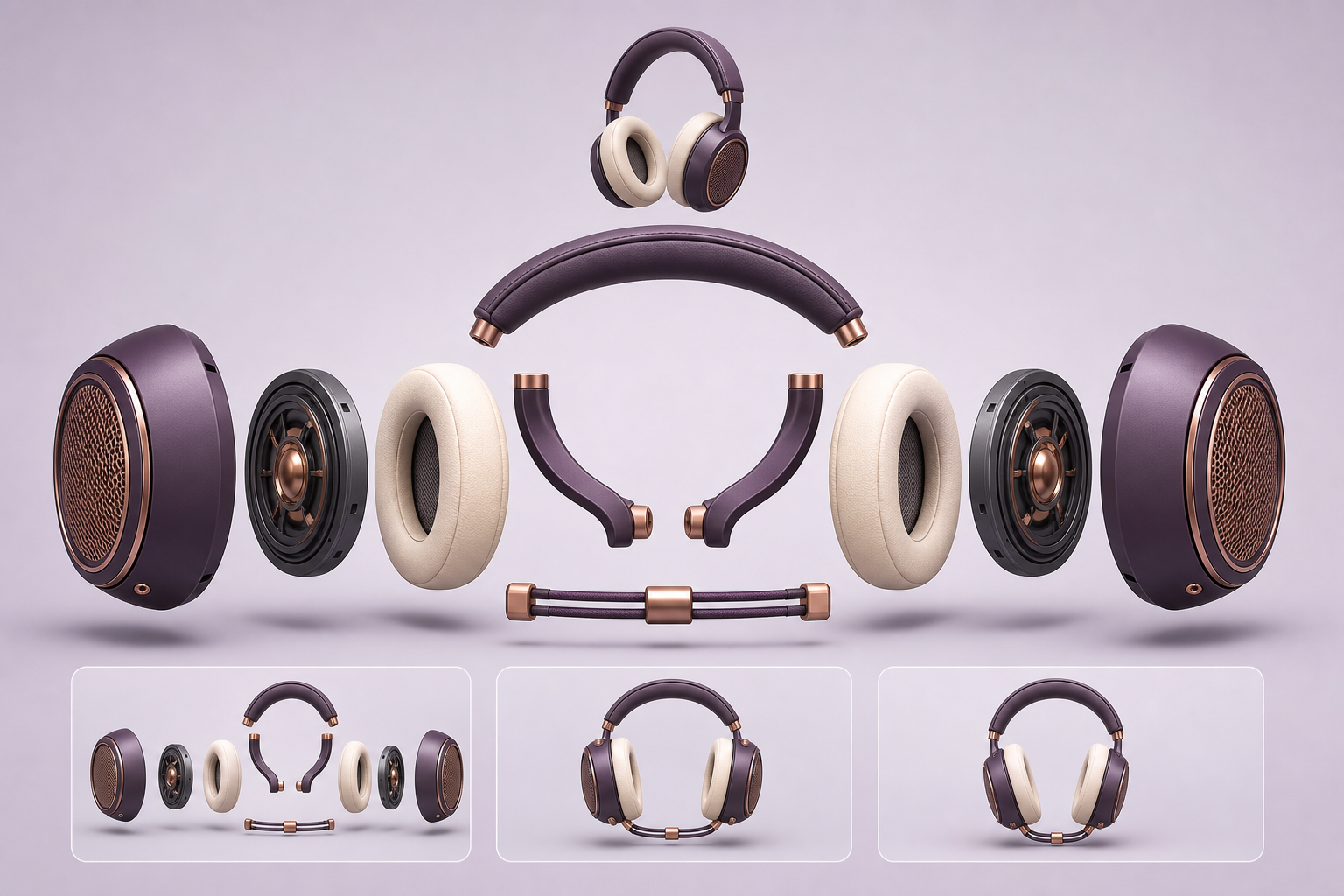
Over-Ear Headphones Exploded Storyboard

Audio-product concept board focused on symmetrical component relationships.

Exploded view storyboard prompt result for original over-ear headphones
Over-Ear Headphones Exploded Storyboard · Reviewed focus: Nine unique part groups, correct left-right symmetry, no duplicated drivers or cushions. · Explanatory concept visual, not an engineering drawing.
Copy-ready tested prompt
Task: Create an explanatory exploded view storyboard for original over-ear headphones.
Subject: Show exactly nine part groups once each: padded headband, two yoke arms grouped as one pair, left outer cup, left driver, left cushion, right outer cup, right driver, right cushion, and internal cable bridge.
Context: An audio-product concept presentation for discussing comfort and module layout, not an acoustic engineering diagram.
Style: Elegant 3D technical infographic with deep plum, warm gray, copper mesh, and soft cream cushions on a pale lavender-gray background.
Composition: Use a balanced front three-quarter view with left and right cup layers fanning outward symmetrically; add a small assembled headset inset above center and three unnumbered sequence frames below with unchanged proportions.
Lighting: Soft beauty-dish light from upper front with gentle material highlights and subtle shadows under floating parts.
Constraints: Original generic silhouette; each listed group exactly once; keep left-right symmetry; no brand shapes, logos, text, labels, ears, person, watermark, measurements, extra drivers, or acoustic claims.
Output: One polished 1536×1024 landscape PNG with the whole headband visible.
Review focus
Nine unique part groups, correct left-right symmetry, no duplicated drivers or cushions.
Tested model
GPT Image 2 built-in generation
Rights boundary
Original generic product form; no real logo, protected character, celebrity, or third-party input image.
Accuracy boundary
Use as an explanatory concept. Verify real components, dimensions, connections, clearances, materials, and safety requirements separately.
Exploded view storyboard · GPT Image 2 · Prompt 09

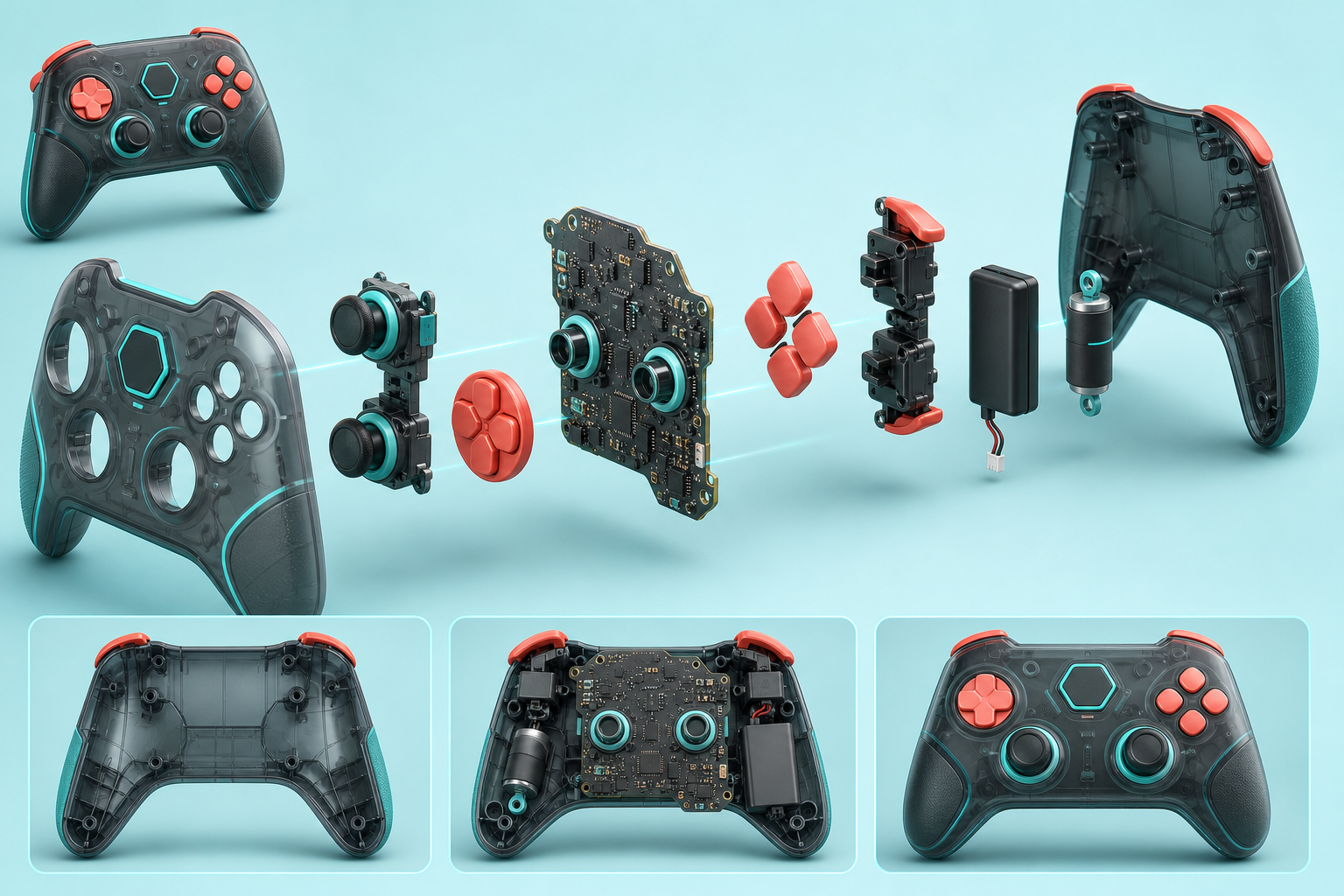
Original Game Controller Exploded Storyboard

Interaction-design concept board for a wholly original controller.

Exploded view storyboard prompt result for an original game controller
Original Game Controller Exploded Storyboard · Reviewed focus: Nine unique components, symmetric controls, unmistakably original shell and button geometry. · Explanatory concept visual, not an engineering drawing.
Copy-ready tested prompt
Task: Create an explanatory exploded view storyboard for a wholly original generic game controller.
Subject: Show exactly nine components once each: front shell, rear shell, main circuit board, two thumb-stick modules grouped as one pair, directional disc, four abstract face buttons grouped as one set, two shoulder-button modules grouped as one pair, compact battery, and central vibration module.
Context: An interaction-design concept review, not a teardown of any commercial controller.
Style: Friendly futuristic 3D infographic using turquoise, coral, charcoal, and translucent smoke-gray plastic on a light aqua background.
Composition: Separate front-to-back layers on a shallow diagonal axis while preserving bilateral symmetry; add a small assembled inset above left and three unnumbered lower frames showing rear shell, electronics, and front closure.
Lighting: Soft cool studio lighting with restrained edge glow and consistent soft shadows.
Constraints: Invent an original shell, controls, proportions, and button shapes; each listed component exactly once; no letters, symbols, real console layouts, logos, text, labels, watermark, hands, measurements, or engineering claims.
Output: One 1536×1024 landscape PNG with all controls and shells fully visible.
Review focus
Nine unique components, symmetric controls, unmistakably original shell and button geometry.
Tested model
GPT Image 2 built-in generation
Rights boundary
Original generic product form; no real logo, protected character, celebrity, or third-party input image.
Accuracy boundary
Use as an explanatory concept. Verify real components, dimensions, connections, clearances, materials, and safety requirements separately.
Exploded view storyboard · GPT Image 2 · Prompt 10

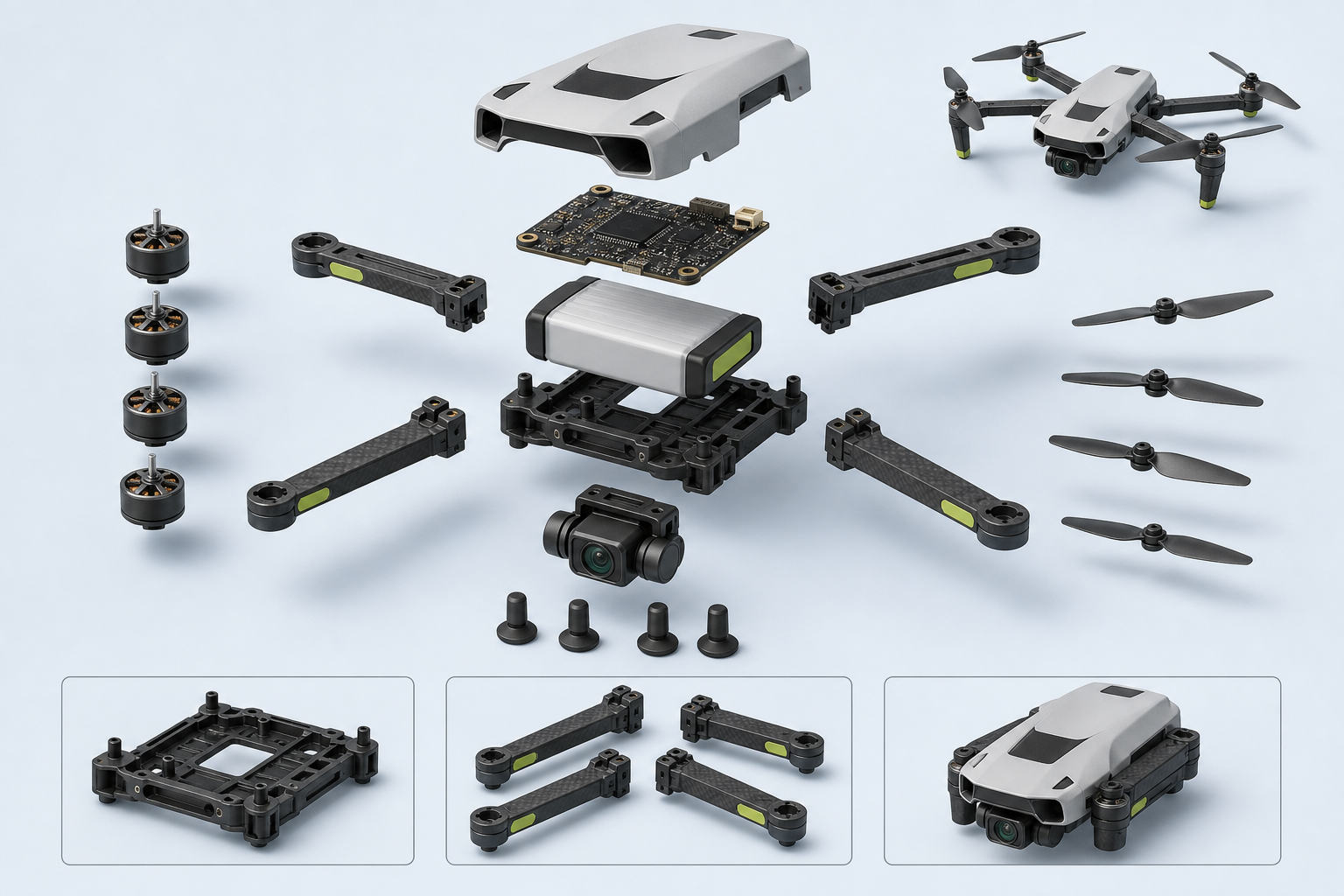
Compact Camera Drone Exploded Storyboard

Aerial-imaging concept board showing a simplified modular architecture.

Exploded view storyboard prompt result for an original compact camera drone
Compact Camera Drone Exploded Storyboard · Reviewed focus: Nine unique modules, four arms and motors grouped correctly, original geometry, no duplicated camera. · Explanatory concept visual, not an engineering drawing.
Copy-ready tested prompt
Task: Create an explanatory exploded view storyboard for an original compact camera drone.
Subject: Show exactly nine part groups once each: top shell, central flight-control board, battery, lower frame, four folding arms grouped as one set, four motors grouped as one set, four propellers grouped as one set, generic camera-gimbal module, and landing pads grouped as one set.
Context: An aerial-imaging product concept board, not flight, repair, or safety instructions.
Style: Lightweight 3D technical infographic with slate gray, frosted white, muted lime, and black components on a pale sky-gray background.
Composition: Center a top three-quarter exploded view with layers separating vertically and arm groups radiating evenly; add a small assembled drone inset above right and three unnumbered frames below showing frame, arms, and closed body.
Lighting: Bright diffused daylight-studio blend from upper left with soft grounding shadows and clear edges.
Constraints: Original generic geometry; each listed group exactly once; four arms, motors, and propellers only; no recognizable trade dress, logos, text, labels, landscape, people, watermark, measurements, flight claims, or engineering claims.
Output: One clean 1536×1024 landscape PNG with no cropped propellers.
Review focus
Nine unique modules, four arms and motors grouped correctly, original geometry, no duplicated camera.
Tested model
GPT Image 2 built-in generation
Rights boundary
Original generic product form; no real logo, protected character, celebrity, or third-party input image.
Accuracy boundary
Use as an explanatory concept. Verify real components, dimensions, connections, clearances, materials, and safety requirements separately.
Exploded view storyboard · GPT Image 2 · Prompt 11

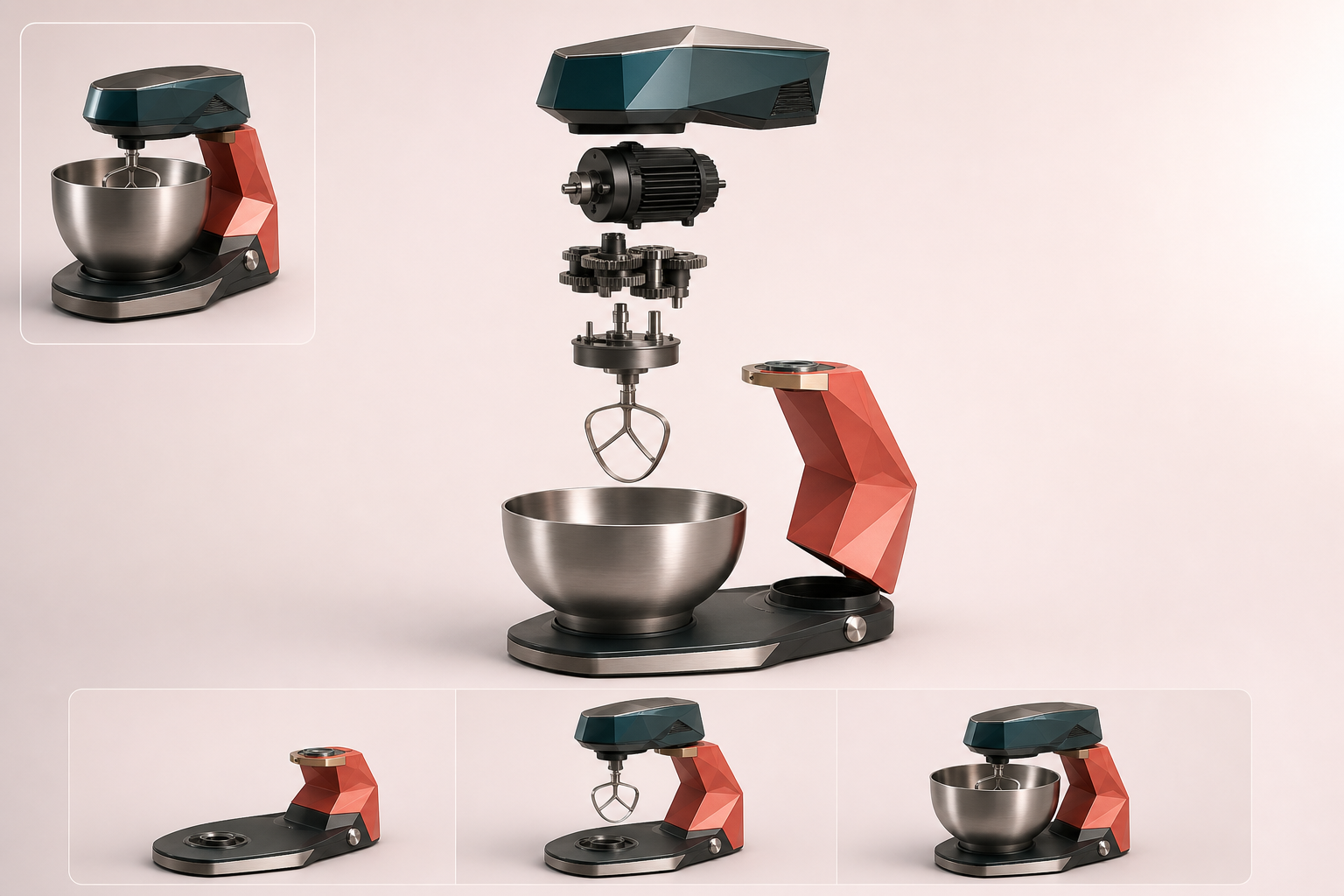
Stand Mixer Exploded Storyboard

Kitchen-appliance concept board clarifying major serviceable modules.

Exploded view storyboard prompt result for an original stand mixer
Stand Mixer Exploded Storyboard · Reviewed focus: Eight unique components, vertical head-to-bowl order, original silhouette, one beater only. · Explanatory concept visual, not an engineering drawing.
Copy-ready tested prompt
Task: Create an explanatory exploded view storyboard for an original countertop stand mixer.
Subject: In the central exploded hero, show exactly eight major components once each: top housing, motor, gear train, planetary drive, single beater, support column, locking base, and mixing bowl.
Context: A kitchen-appliance concept presentation for explaining module relationships, not repair or food-safety guidance.
Style: Refined 3D product infographic with an angular dark-teal motor pod, a faceted offset coral support column, brushed steel, and charcoal internals on a light blush-gray background.
Composition: Invent a non-classic asymmetrical silhouette with a low crescent base, wide oval bowl, offset support column, and compact polygonal motor pod; arrange the eight hero components vertically above the bowl on one clear axis; add only one small assembled inset above left and exactly three unnumbered sequence frames below showing base, head, and bowl attachment with consistent form.
Lighting: Soft warm studio light from upper right with clean enamel highlights and subtle metallic reflections.
Constraints: Radically original generic geometry; do not use the familiar rounded tilt-head or C-shaped heritage-mixer profile; each listed component appears once in the central exploded hero and may repeat only as part of the assembled inset or three sequence frames; no side legend, isolated duplicate parts, leader lines, color swatches, real appliance trade dress, brand badge, text, labels, ingredients, splashes, hands, watermark, measurements, extra attachments, or engineering claims.
Output: One polished 1536×1024 landscape PNG with all parts fully visible.
Review focus
Eight unique components, vertical head-to-bowl order, original silhouette, one beater only.
Tested model
GPT Image 2 built-in generation
Rights boundary
Original generic product form; no real logo, protected character, celebrity, or third-party input image.
Accuracy boundary
Use as an explanatory concept. Verify real components, dimensions, connections, clearances, materials, and safety requirements separately.
Exploded view storyboard · GPT Image 2 · Prompt 12

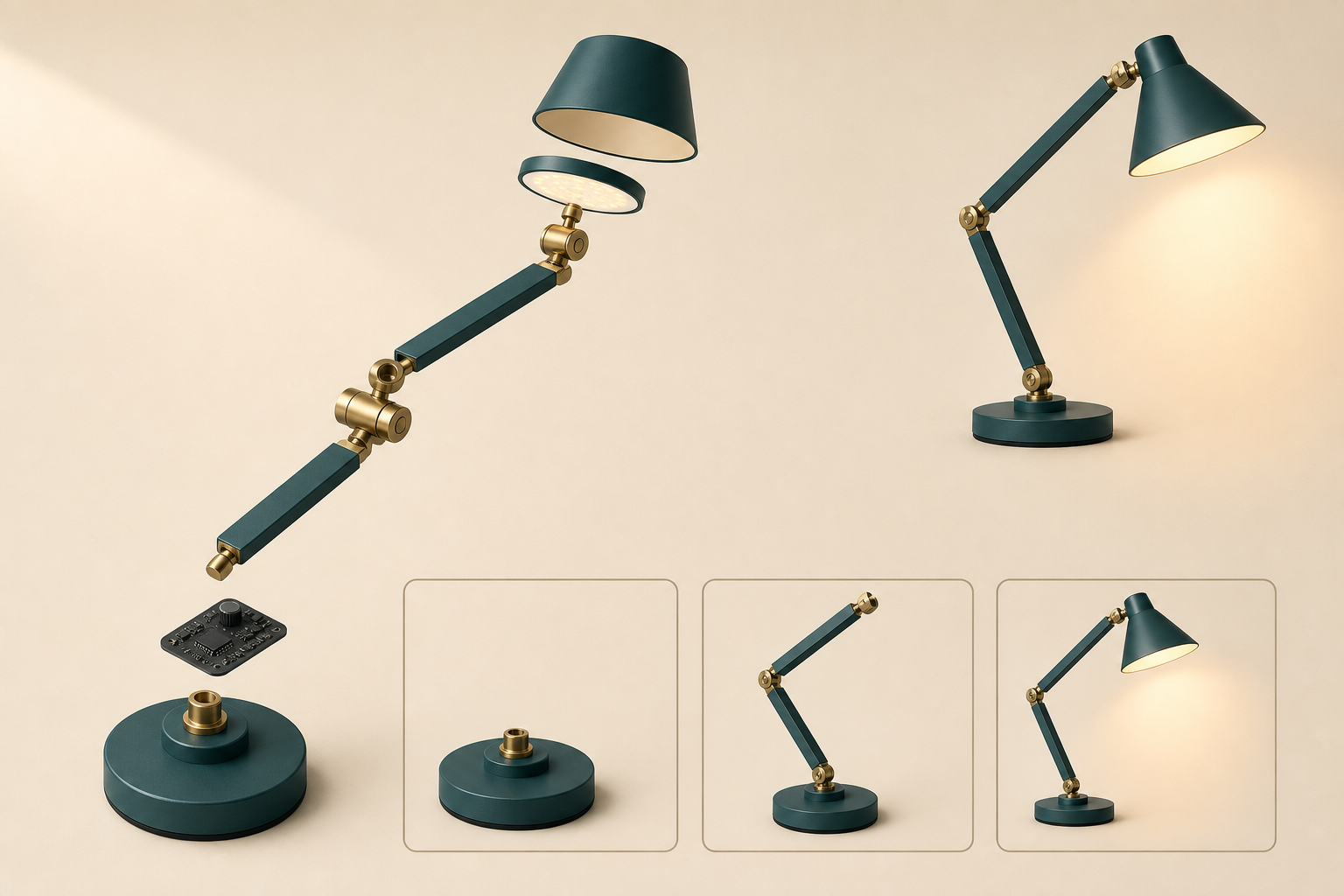
Adjustable Desk Lamp Exploded Storyboard

Lighting-product concept board showing the joint and power path.

Exploded view storyboard prompt result for an original adjustable desk lamp
Adjustable Desk Lamp Exploded Storyboard · Reviewed focus: Eight unique components, single vertical-to-diagonal axis, no duplicated hinge or LED module. · Explanatory concept visual, not an engineering drawing.
Copy-ready tested prompt
Task: Create an explanatory exploded view storyboard for an original adjustable desk lamp.
Subject: Show exactly eight components once each: weighted base, power-control board, lower arm, central hinge, upper arm, swivel joint, LED light module, and shade.
Context: A lighting-product concept review for showing movement and assembly, not electrical or safety documentation.
Style: Minimal 3D technical infographic with dark teal powder coat, brushed brass joints, warm white diffuser, and charcoal electronics on a pale sand background.
Composition: Explode the lamp from base upward along one bent but continuous assembly path; add a small assembled side-profile inset above right and three unnumbered bottom frames showing base, articulated arms, and finished lamp in the same design.
Lighting: Soft directional studio light from upper left plus a very subtle warm glow confined to the assembled inset.
Constraints: Original generic geometry; each listed component exactly once; no real designer-lamp silhouette, logos, text, labels, desk clutter, visible wires, watermark, measurements, electrical ratings, or engineering claims.
Output: One elegant 1536×1024 landscape PNG with all joints separated and uncropped.
Review focus
Eight unique components, single vertical-to-diagonal axis, no duplicated hinge or LED module.
Tested model
GPT Image 2 built-in generation
Rights boundary
Original generic product form; no real logo, protected character, celebrity, or third-party input image.
Accuracy boundary
Use as an explanatory concept. Verify real components, dimensions, connections, clearances, materials, and safety requirements separately.
Exploded view storyboard · GPT Image 2 · Prompt 13

Portable Camping Stove Exploded Storyboard

Outdoor-product concept board showing a simplified fuel-and-support layout.

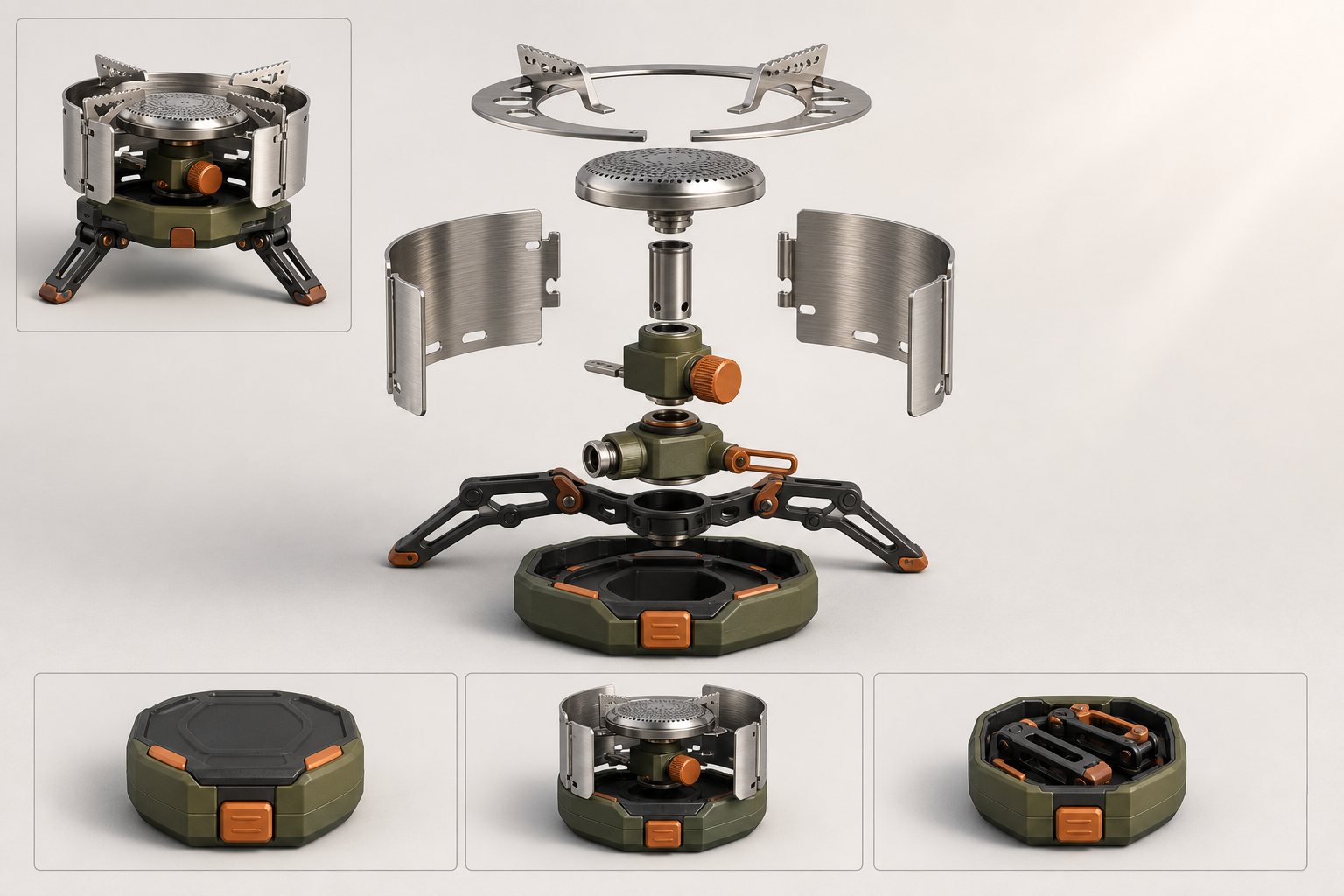
Exploded view storyboard prompt result for an original portable camping stove
Portable Camping Stove Exploded Storyboard · Reviewed focus: Eight unique components, centered burner order, stable leg relationship, no flame in exploded view. · Explanatory concept visual, not an engineering drawing.
Copy-ready tested prompt
Task: Create an explanatory exploded view storyboard for an original portable camping stove.
Subject: Show exactly eight components once each: pot-support ring, burner head, mixing tube, control valve, fuel connector, windscreen, folding-leg assembly, and compact base.
Context: An outdoor-product concept board for visual communication only, not operating, fuel, or safety instructions.
Style: Durable 3D product infographic with olive green, burnt orange, dark graphite, and brushed stainless steel on a pale warm-gray background.
Composition: Separate parts vertically around one centered burner axis with the leg assembly clearly below; add a small assembled stove inset above left and three unnumbered lower frames showing base, burner stack, and folded transport state.
Lighting: Clear diffuse outdoor-studio lighting from upper right with controlled metal highlights and soft shadows.
Constraints: Original generic form; each listed component exactly once; no real brand design, fuel canister, flame in the exploded hero, cookware, text, labels, logos, watermark, measurements, operating claims, or safety claims.
Output: One sharp 1536×1024 landscape PNG with complete safe margins around the stove.
Review focus
Eight unique components, centered burner order, stable leg relationship, no flame in exploded view.
Tested model
GPT Image 2 built-in generation
Rights boundary
Original generic product form; no real logo, protected character, celebrity, or third-party input image.
Accuracy boundary
Use as an explanatory concept. Verify real components, dimensions, connections, clearances, materials, and safety requirements separately.
Exploded view storyboard · GPT Image 2 · Prompt 14

Modular Office Chair Exploded Storyboard

Furniture-system concept board clarifying major ergonomic modules.

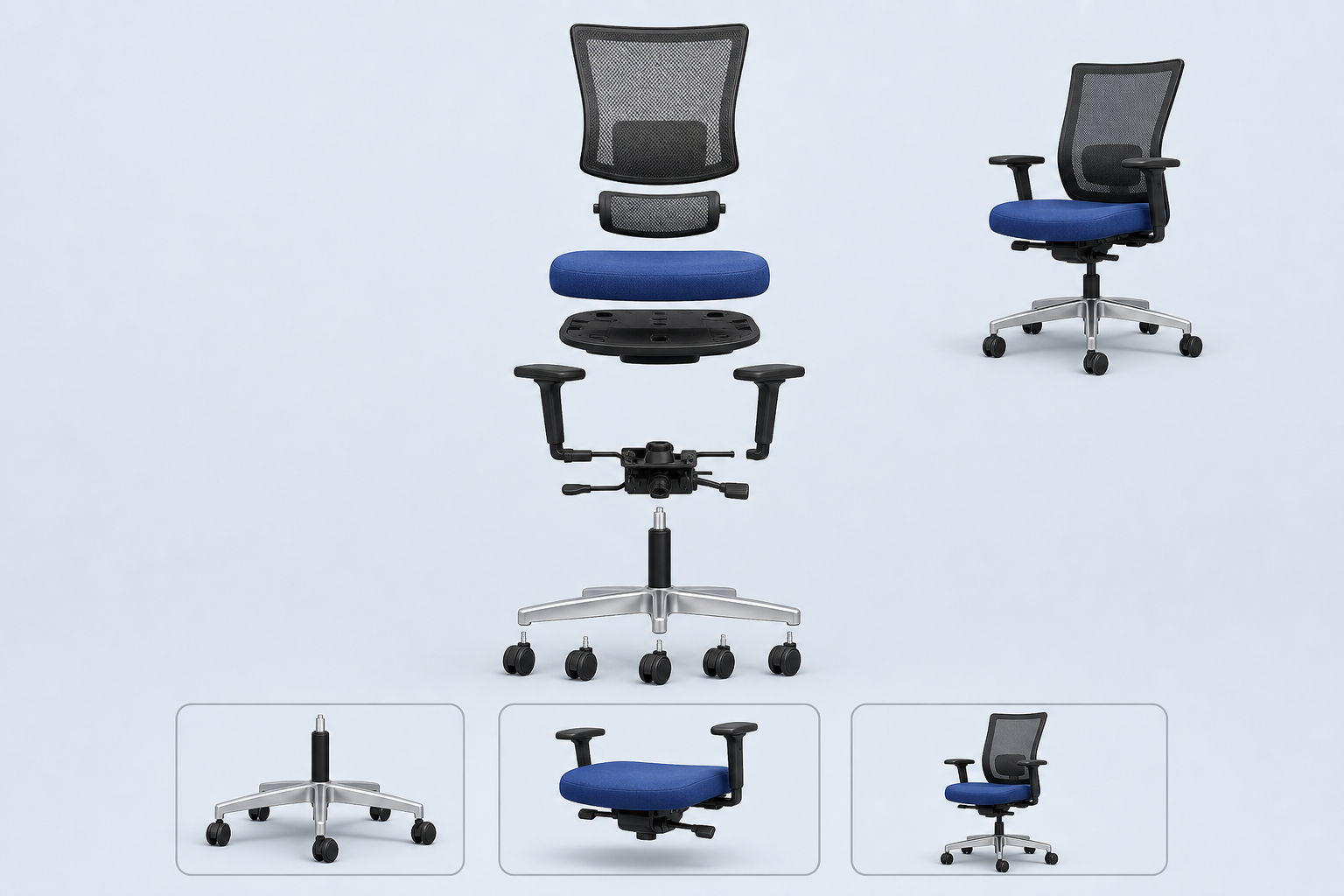
Exploded view storyboard prompt result for an original modular office chair
Modular Office Chair Exploded Storyboard · Reviewed focus: Nine unique part groups, vertical stack, five casters grouped once, no anatomy or ergonomic claims. · Explanatory concept visual, not an engineering drawing.
Copy-ready tested prompt
Task: Create an explanatory exploded view storyboard for an original modular office chair.
Subject: Show exactly nine part groups once each: mesh back, lumbar pad, seat cushion, seat pan, two armrests grouped as one pair, tilt mechanism, gas-lift column, five-star base, and five casters grouped as one set.
Context: A furniture-system concept review that explains modular relationships without making ergonomic, load, or safety claims.
Style: Clean 3D product infographic with charcoal mesh, cobalt fabric, matte black structure, and satin aluminum on a very light blue-gray background.
Composition: Build a centered vertical exploded stack from casters to backrest with even gaps; add a small assembled chair inset above right and three unnumbered bottom frames showing base, seat module, and complete chair with identical proportions.
Lighting: Large neutral softbox from upper left with readable mesh texture and soft contact shadows.
Constraints: Original generic silhouette; each listed group exactly once; show five casters only; no real furniture trade dress, people, logos, text, labels, measurements, watermark, impossible joints, ergonomic claims, or engineering claims.
Output: One complete 1536×1024 landscape PNG with no cropped backrest or casters.
Review focus
Nine unique part groups, vertical stack, five casters grouped once, no anatomy or ergonomic claims.
Tested model
GPT Image 2 built-in generation
Rights boundary
Original generic product form; no real logo, protected character, celebrity, or third-party input image.
Accuracy boundary
Use as an explanatory concept. Verify real components, dimensions, connections, clearances, materials, and safety requirements separately.
Exploded view storyboard · GPT Image 2 · Prompt 15

Original Toy Robot Exploded Storyboard

Friendly educational board for an entirely original modular toy concept.

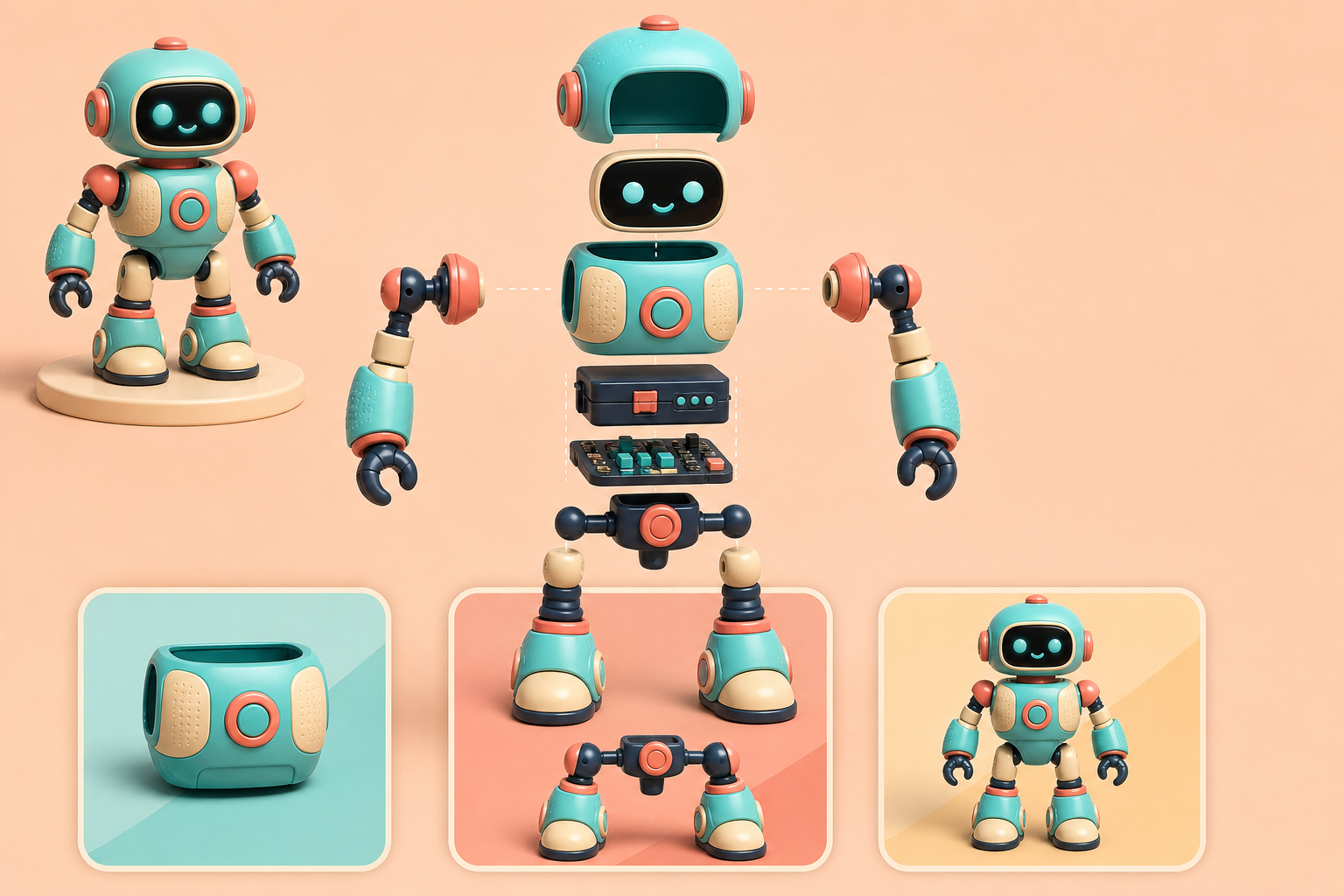
Exploded view storyboard prompt result for an original toy robot
Original Toy Robot Exploded Storyboard · Reviewed focus: Nine unique part groups, original character design, paired limbs grouped once, no protected-character resemblance. · Explanatory concept visual, not an engineering drawing.
Copy-ready tested prompt
Task: Create an explanatory exploded view storyboard for a completely original modular toy robot.
Subject: Show exactly nine part groups once each: rounded head shell, simple face-light panel, torso shell, central battery block, control board, two shoulder joints grouped as one pair, two arms grouped as one pair, hip joint, and two legs grouped as one pair.
Context: A friendly educational toy-concept board for discussing modular assembly, not electronics or child-safety documentation.
Style: Playful 3D infographic with aqua, coral, cream, and dark navy plastic, soft rounded geometry, and subtle molded texture on a pale peach background.
Composition: Use a centered vertical exploded figure with paired limbs separated symmetrically; add a small fully assembled robot inset above left and three unnumbered frames below showing torso, limbs, and completed toy with the same face and proportions.
Lighting: Gentle high-key studio light from upper right with soft toy-like highlights and coherent shadows.
Constraints: Entirely original character design; each listed group exactly once; no resemblance to protected robots, logos, letters, text, labels, weapons, watermark, measurements, exposed hazards, engineering claims, or safety claims.
Output: One cheerful 1536×1024 landscape PNG with every part and the full assembled robot visible.
Review focus
Nine unique part groups, original character design, paired limbs grouped once, no protected-character resemblance.
Tested model
GPT Image 2 built-in generation
Rights boundary
Original generic product form; no real logo, protected character, celebrity, or third-party input image.
Accuracy boundary
Use as an explanatory concept. Verify real components, dimensions, connections, clearances, materials, and safety requirements separately.

Exploded view storyboard prompt FAQ

What should an exploded view storyboard prompt include?

Include the task, original product subject, communication context, rendering style, exact assembly axis, lighting, a bounded component list, exclusions, and the required output board. Also say whether you need an assembled inset and sequence frames.

Can an AI exploded view be used as an engineering drawing?

No. Treat it as an explanatory concept visual. AI can invent components, connections, dimensions, fasteners, clearances, and safety details. A qualified engineer and authoritative product documentation must validate anything used for manufacturing, repair, or safety decisions.

How do I keep the parts in the correct order?

List the parts in sequence, choose one assembly axis, state the exact part count, and require each listed component exactly once. Then inspect the result against your real reference or bill of materials and rerun any mismatch.

Why do these prompts avoid generated labels?

A label-free baseline is easier to audit because generated text can be misspelled, duplicated, or attached to the wrong part. Reserve whitespace and add verified labels later in a design tool after the visual passes component review.

How can I make an assembly storyboard consistent?

Freeze the original silhouette, materials, palette, component count, camera family, and light direction across every frame. Ask each frame to change only the assembly state, not the product design.

Can I use these prompts for commercial product work?

You may adapt the prompt text, but you must clear your own product references, designs, trademarks, input images, and model terms. Avoid copying protected product trade dress, and do not publish an AI concept as verified technical documentation.