AI Candle Product Photography Prompts: 10 Practical Setups
AI candle product photography prompts describe the vessel, wax, wick, lighting and setting before asking an image tool for a product scene. Begin by deciding whether the candle is lit or unlit, then name the container material and the exact number of objects. These ten complete briefs cover white-background jars, small flames, frosted glass, opaque ceramic, pillar candles, paired tapers, lifestyle scenes, a collection and a wax-detail close-up. Use them to explore fictional, unbranded concepts and plan a real shoot. For an actual product listing, compare every result with an authorized reference photograph, including its proportions, rim, label and finish. A generated flame or melt pool provides no measurement of a candle's burn performance.
By Nano Banana Studio · · Fictional product concepts
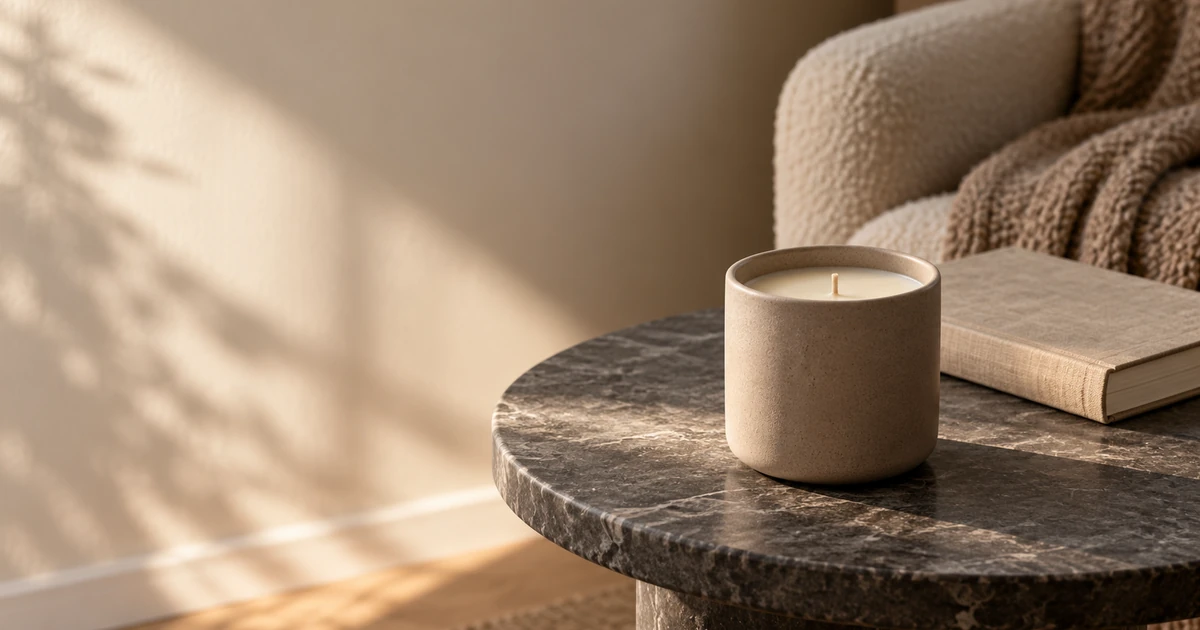
Make the material decision first. Amber glass, frosted glass, ceramic and bare wax need different descriptions. A warm atmosphere also needs a clear light source; it can come from a window while the wick stays unlit.
Plan AI candle product photos around the vessel
Choose one photographic job before adding styling. A clean listing concept needs a complete silhouette and a readable base. A lit-candle image needs a visible connection between flame, wick and wax. A collection image needs countable vessels with clear gaps. A lifestyle hero needs a useful relationship between the product and the empty space around it. Keep those decisions separate so the scene has one clear purpose.
Describe the candle from the outside inward: vessel shape and material, rim, wax surface, wick, then flame state. Follow with the support surface and one main light direction. Words such as warm, premium or cozy are useful art direction, but they leave object structure open to interpretation. A short explicit count and a concrete placement instruction give you something specific to inspect.
These are independently composed fictional candle concepts. Similar amber jars across different prompts should not be assumed to depict one identical SKU. When you need a consistent real range, start from suitable product references and compare each output against them. The product-design handbook covers broader packaging and presentation work; this guide focuses on the vessel, wax, wick and surrounding photographic scene.
Use one complete candle brief at a time
- Choose the candle and its state. Write down the material, shape, object count and whether each wick is lit. Keep that state consistent throughout the brief. An unlit reading-nook scene can still use warm afternoon daylight.
- Copy a complete prompt. Keep the Task, Subject, Context, Style, Composition, Lighting, Constraints and Output instructions together. The exclusions prevent a decorative lid, spare vessel or extra flame from changing the job you selected.
- Generate one setup at a time. Use the brief in GPT's built-in image tool. Save the exact wording with the result. If you change the material, count or crop, treat the new image as a separate result that needs its own checks.
- Inspect structure before atmosphere. Trace each flame into its wick and the wick into the wax. Follow the rim and base edges, count holders and vessels, and check contact shadows. Then assess highlights, surface texture, background clutter and usable copy space.
- Prepare the actual placement. Keep genuine product names, prices, capacities and offer wording in your editing workflow. Check the current requirements of the destination, export a suitable version and inspect it at its intended display size before use.
The prompt text is free to copy and adapt. Image-tool access and generation limits depend on the service you use. These briefs explore photographic directions; accurate real-product representation needs a separate reference check.
Choose candle product background prompts by material
Use the table to choose a starting brief. The ratios describe the requested composition, and each prompt asks for the closest supported native output size. Check the delivered dimensions before cropping or exporting; a chosen ratio is not a universal marketplace specification.
| Photographic job | Starting prompts | Requested ratio | Setting and light | Priority check |
|---|---|---|---|---|
| Clean listing direction | Unlit amber jar · 01 | 1:1 | White backdrop; soft side key | Complete vessel, one wick and contact shadow |
| Lit material study | Amber, frosted glass or ceramic · 02–04 | 2:3 or 1:1 | Quiet backdrop; readable exterior | Connected flame, wax boundary and material-specific light |
| Freestanding candle or pair | Pillar or tapers · 05–06 | 1:1 or 2:3 | Stone support; restrained side light | Attached wax, complete holders and exact object count |
| Candle lifestyle photography | Reading nook or dry bathroom tray · 07–08 | 16:9 or 3:2 | Simple room context; controlled daylight | Product separation, unlit wick and clean background |
| Candle collection photos | Three sizes · 09 | 1:1 | Shared tabletop and light direction | Three distinct jars, three wicks and three supported bases |
| Wick and wax macro photography | Melt-pool detail · 10 | 1:1 | Close view with a soft side key | One flame-to-wick connection and a readable pool boundary |
10 candle setups: lit candle photography prompts and unlit studies
Choose a complete brief below. Each card gives a specific use, adjustable variables and a repair for a common failure. Keep the original object count when making your first attempt. Broader product advertising and seasonal offer layouts have separate guides, so the candle itself can remain the focus here.
- 01 · Unlit amber jar on white
- 02 · Single-wick amber glow
- 03 · Frosted glass with restrained transmission
- 04 · Opaque ceramic by window light
- 05 · Pillar candle with cooled wax drips
- 06 · Two tapers in complete holders
- 07 · Reading-nook wide hero
- 08 · Dry bathroom tray scene
- 09 · Three-size candle collection
- 10 · Wick and melt-pool macro
Unlit amber jar on white
Candle makers planning a clean listing photograph.
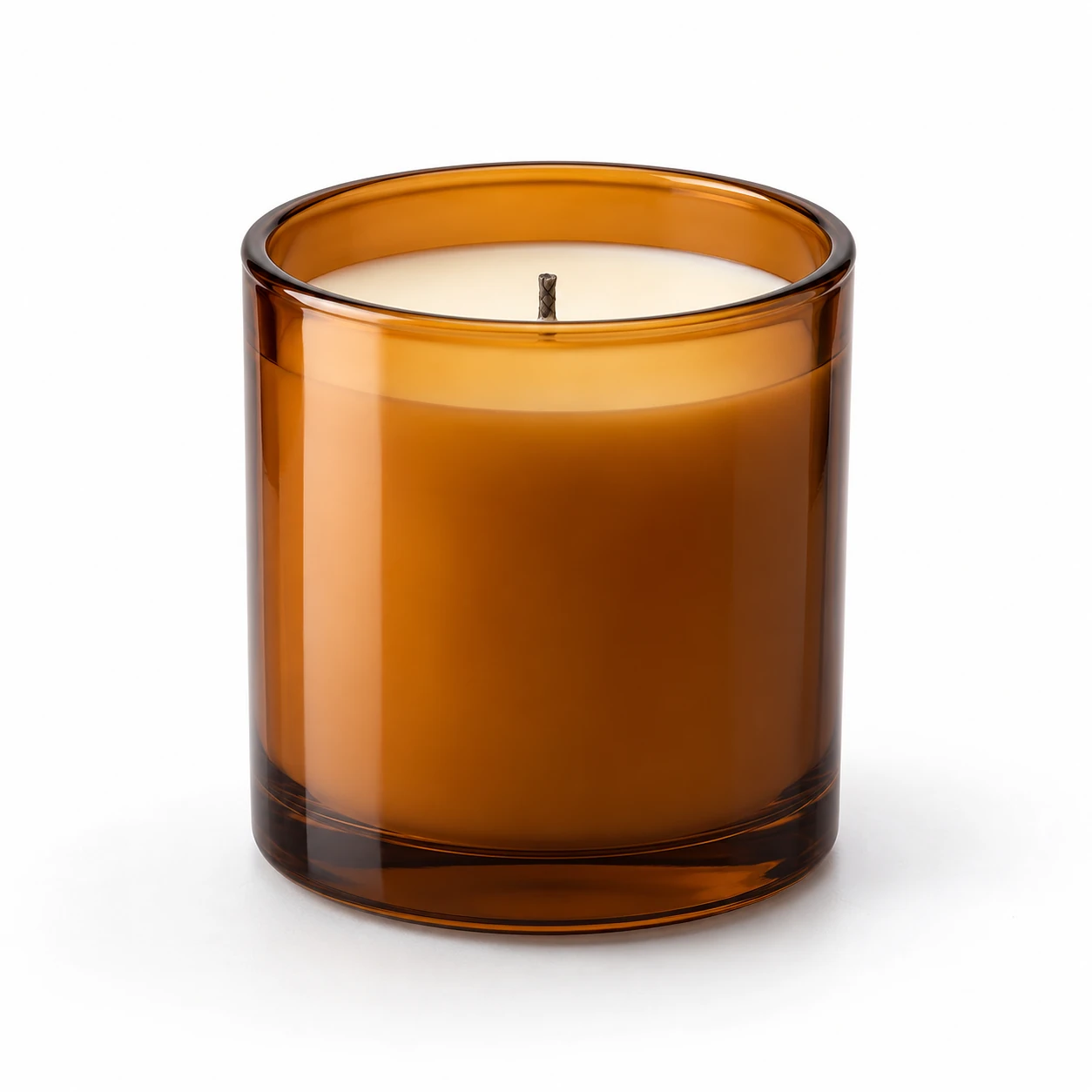
Use this setup to separate jar shape, wax and wick from decorative styling. Keep the full base visible so the contact shadow can be checked against the white support surface.
Task: Photograph one unlit candle as a clean catalogue concept.
Subject: One unbranded cylindrical amber-glass candle jar, filled with smooth warm-ivory wax below the rim, with one short upright dark wick visibly rooted at the centre. No lid.
Context: A small candle maker needs a neutral product-listing reference before photographing an actual SKU.
Style: Photoreal studio still life, accurate glass edges and fine wax texture, neutral white balance, restrained commercial finish.
Composition: One square 1:1 frame, straight-on three-quarter view slightly above rim height. Show the entire jar and base in the central two-thirds, with white breathing room on every side. A seamless pure-white background meets a matte-white tabletop.
Lighting: One large diffused softbox to camera left, gentle fill from the right, narrow controlled glass highlights and a soft contact shadow directly beneath the jar.
Constraints: Exactly one jar and one unlit wick. The wax is opaque and the amber glass is translucent; preserve a distinct rim and grounded base. No flame, smoke, labels, text, logo, watermark, duplicate vessel, lid, floating base or cut-off edge.
Output: One finished 1:1 image at the closest supported native size, suitable as a product-photography concept. A single continuous scene, not a collage, mockup interface or contact sheet.
- Count one jar and one short unlit wick; exclude lids and spare products.
- Follow the complete rim and base without a cropped or doubled edge.
- Check a soft contact shadow and readable glass highlights.
Adjust the brief
- Vessel
- Amber tint and jar proportions; retain one cylindrical vessel.
- Background
- Pure white or a neutral studio surface for a separate variation.
- Camera
- Slightly above rim height so the wax and wick remain visible.
If the image misses the brief
If the wick floats, specify that its lower end enters the wax at the centre. Keep the candle unlit in both the task and constraints.
Single-wick amber glow
Independent brands planning a lit-product mood image.
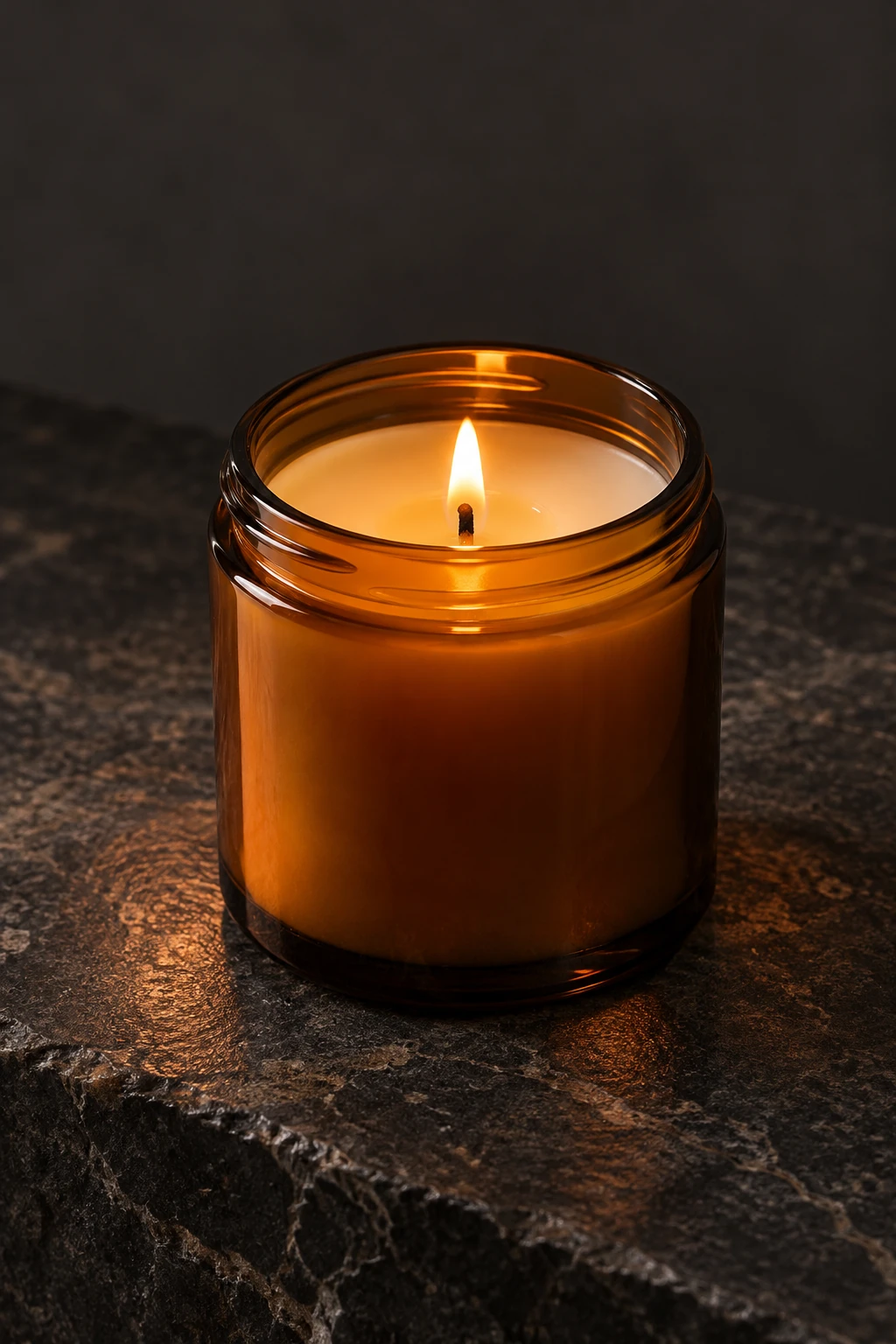
Use this portrait to explore a controlled flame while preserving the jar as the main subject. The separate studio key should keep the exterior readable without turning the flame into a large glowing patch.
Task: Create a portrait candle product-photography concept with a small believable flame.
Subject: One unbranded amber-glass candle jar, ivory wax and one short black wick meeting one small teardrop flame; a shallow melt pool surrounds that wick.
Context: An independent candle brand needs a lit-product mood reference, separate from a claim about any real candle’s burn performance.
Style: Photoreal premium still life with natural amber glass, detailed wax and a quiet charcoal-and-honey palette.
Composition: One portrait 2:3 frame. Place the complete jar on a dark stone slab in the lower-middle of the image, seen at a gentle downward three-quarter angle that reveals wax and wick. Keep the upper quarter as a clean dark-grey background.
Lighting: A soft lateral studio key keeps the outer glass readable. The flame adds a modest warm reflection near the upper glass and a restrained warm spill on the nearby stone, with a contact shadow beneath the base. Retain flame detail without a white blown-out bloom.
Constraints: Exactly one candle, one visible wick and one small flame attached to it. No second flame, disconnected glow, giant fire, smoke, flying sparks, liquid spilling out, labels, letters, logos, watermark or floating jar.
Output: One finished 2:3 image at the closest supported native size, suitable as a product-photography concept. A single continuous scene, not a collage, mockup interface or contact sheet.
- Trace one flame to the same visible wick entering the wax.
- Inspect a shallow local melt pool rather than an overflowing liquid surface.
- Check the grounded base, bounded flame detail and restrained nearby light spill.
Adjust the brief
- Palette
- Charcoal and honey; adjust the backdrop without changing the flame count.
- Jar
- One amber vessel with wax visible below the rim.
- Copy area
- Keep the upper quarter uncluttered for later typography.
If the image misses the brief
If the flame overwhelms the vessel, ask for a small sharply bounded teardrop and a separate soft key light for the jar.
Frosted glass with restrained transmission
Makers comparing frosted-glass art direction.
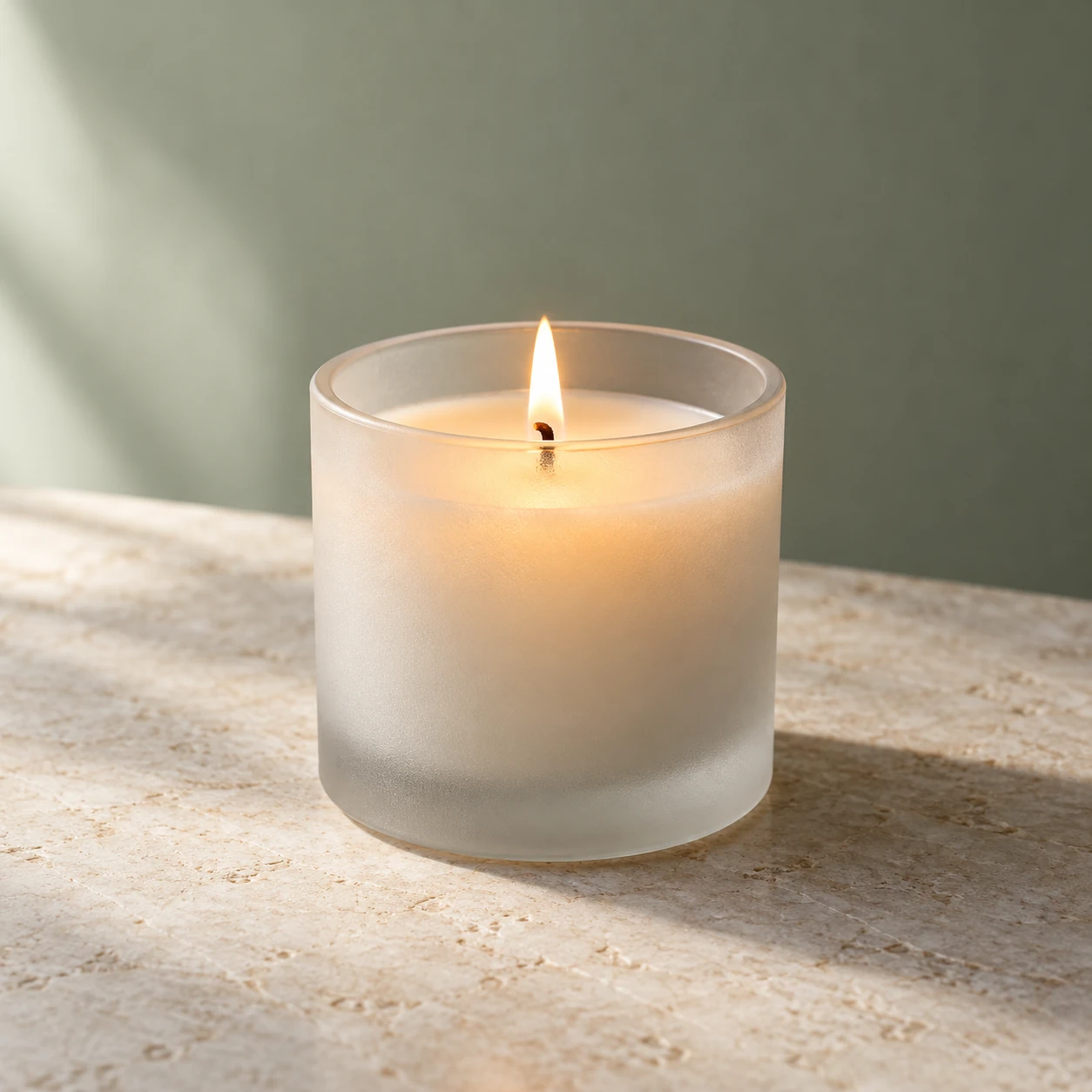
Use this material study to make frosted texture and local warm transmission the inspection task. Keep the surrounding scene simple so a uniform lantern-like glow is easy to spot.
Task: Generate a square lit-candle photograph that makes frosted-glass light transmission visible.
Subject: One short cylindrical frosted-glass candle cup, pale wax below its rim, a single dark wick and one small flame above that wick.
Context: A maker is comparing a frosted-glass visual direction with clear glass and opaque ceramic containers.
Style: Photoreal material-study still life, fine frosted texture, muted sage background, warm-white wax and natural colour.
Composition: A single square scene, three-quarter view slightly above the rim, entire cup resting on a pale stone tabletop. Leave uncluttered space around the silhouette; do not create side-by-side panels.
Lighting: Soft daylight from the left reveals the frosted surface. A subtle local warm glow passes through the upper frosted glass close to the flame and wax surface, fading down the vessel; the lower cup is not a uniformly illuminated lantern. Soft grounded shadow to the right.
Constraints: One cup, one wick, one modest flame. Keep the wax opaque, rim intact and frosted glass translucent rather than transparent. No uniform neon glow, internal light bulb, labels, text, watermark, extra vessels or levitation.
Output: One finished 1:1 image at the closest supported native size, suitable as a product-photography concept. A single continuous scene, not a collage, mockup interface or contact sheet.
- Inspect one cup, one wick and one small attached flame.
- Check that frosted texture remains visible and the rim stays distinct.
- Look for a shaded lower wall rather than uniform neon illumination.
Adjust the brief
- Background
- Muted sage, pale grey or another subdued color.
- Texture
- Fine frosting with visible surface detail.
- Light
- Soft daylight plus a small local warm contribution near the flame.
If the image misses the brief
If the whole cup glows evenly, explicitly limit the warm transmission to the upper portion and retain a shaded lower wall.
Opaque ceramic by window light
Ceramic-candle makers planning a tactile studio scene.
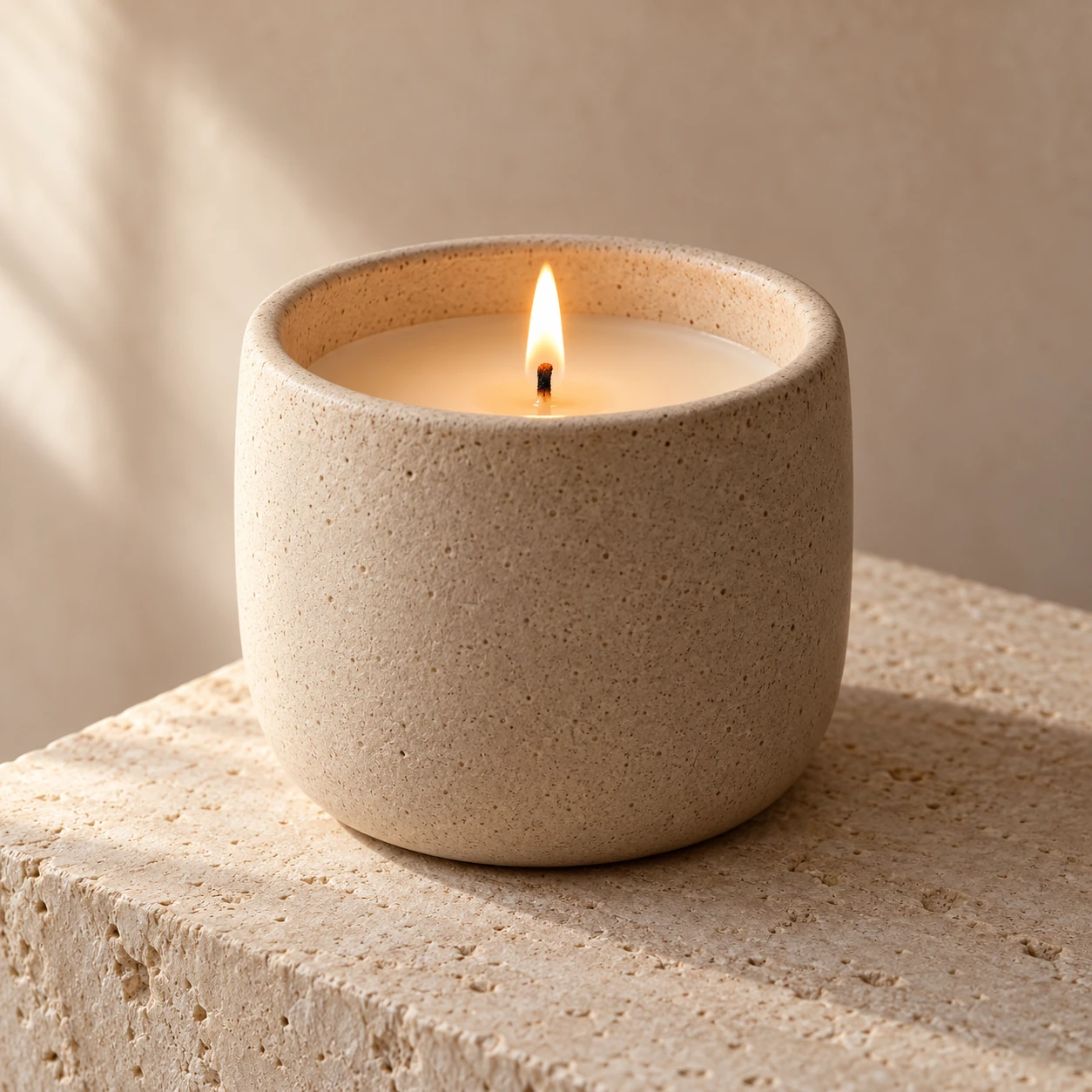
Use this setup to keep matte pottery visibly different from glass. Check the wall and inner rim together, because an attractive warm scene can still introduce a translucent-looking exterior.
Task: Create a square candle photograph with an opaque ceramic vessel and a lit wick.
Subject: One rounded matte oatmeal-coloured ceramic candle cup, a thick visible rim, pale wax, one short dark wick and one small flame.
Context: A ceramic-candle maker wants a material-specific concept that does not render pottery like translucent glass.
Style: Photoreal tactile studio photography, subtle ceramic speckling, quiet warm-neutral palette and believable surface detail.
Composition: One square 1:1 frame at a shallow downward angle. The complete cup sits on a pale limestone block, with its opening, wax and wick visible. A softly out-of-focus beige wall is the only background.
Lighting: Broad soft window light from camera left models the ceramic exterior with a light side and shaded side. Warm flame light touches the inner rim and wax near the wick; no light passes through the opaque outer wall. A small contact shadow anchors the cup.
Constraints: Exactly one ceramic vessel, one wick and one flame. Keep the pottery opaque, matte and solid, with no glowing sidewalls or glass reflections. No holes, handle, labels, text, branding, watermark, extra cup or floating block.
Output: One finished 1:1 image at the closest supported native size, suitable as a product-photography concept. A single continuous scene, not a collage, mockup interface or contact sheet.
- Count one ceramic cup, one wick and one small flame.
- Inspect an opaque matte outer wall with a readable shaded side.
- Check a thick intact rim and a grounded base on the block.
Adjust the brief
- Ceramic
- Oatmeal, clay or another matte opaque finish.
- Support
- One pale stone block with a clear contact point.
- Key light
- Broad soft window light from one side.
If the image misses the brief
If ceramic looks translucent, replace general glowing-candle wording with light on the inner rim only and an opaque exterior.
Pillar candle with cooled wax drips
Artisan makers documenting a pillar-candle direction.
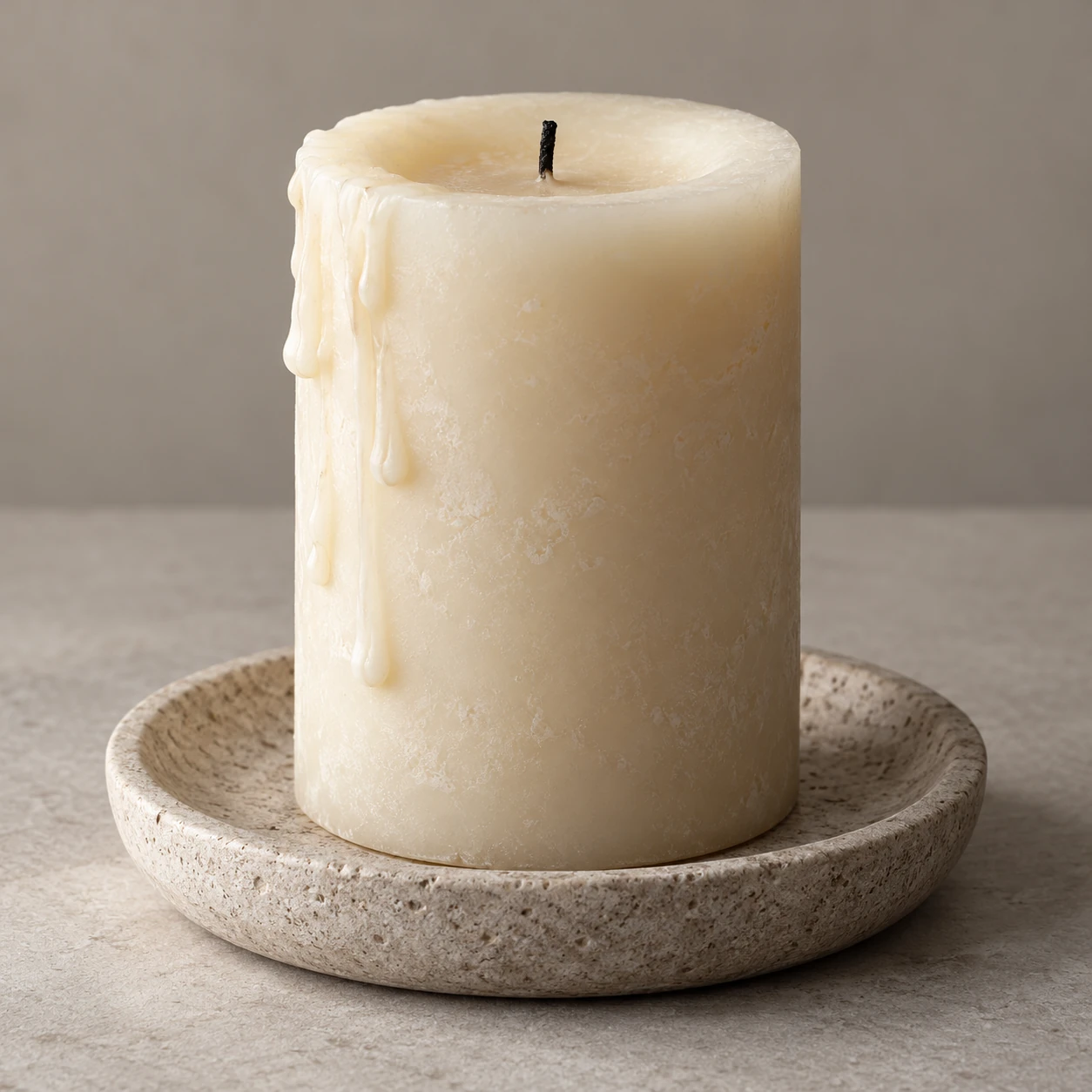
Use the side light to explore cooled wax texture. Keep the dish and entire candle visible; the important distinction is between attached hardened wax and a decorative liquid effect.
Task: Photograph an unlit pillar candle with a few cooled wax drips as a material-detail concept.
Subject: One freestanding warm-ivory pillar candle, flat-bottomed and cylindrical, with a shallow top depression, one short unlit dark wick and a few small hardened wax runs down one side.
Context: An artisan candle maker needs a textured pillar reference, without inventing a container or a burning-performance claim.
Style: Photoreal editorial product photography, natural wax microtexture, off-white, stone-grey and cream tones, restrained contrast.
Composition: One square frame at candle-body height, slightly above the top. Show the entire pillar resting on one broad shallow stone dish; the wax runs stay attached to the pillar and end naturally above the dish. Plain warm-grey background.
Lighting: A large side window on the left creates gentle raking highlights on the wax runs, a readable shaded side and a soft contact shadow at the candle base.
Constraints: Exactly one pillar, one dish and one unlit wick. Keep solid cooled wax attached to the body; no airborne drops or dramatic liquid puddle. No flame, smoke, glass jar, labels, writing, logo, watermark, extra candle, distorted base or fused dish.
Output: One finished 1:1 image at the closest supported native size, suitable as a product-photography concept. A single continuous scene, not a collage, mockup interface or contact sheet.
- Inspect one pillar, one dish and one short unlit wick.
- Check that wax runs remain attached to the candle body.
- Follow the dry dish, complete candle base and contact shadow.
Adjust the brief
- Wax
- Warm ivory, cream or another fictional wax color.
- Texture
- A few small hardened wax runs on one side.
- Support
- One broad shallow dish with a dry visible surface.
If the image misses the brief
If wax becomes glossy liquid, specify cooled opaque wax, hardened surface ridges and a dry dish.
Two tapers in complete holders
Homeware retailers planning a paired-taper composition.
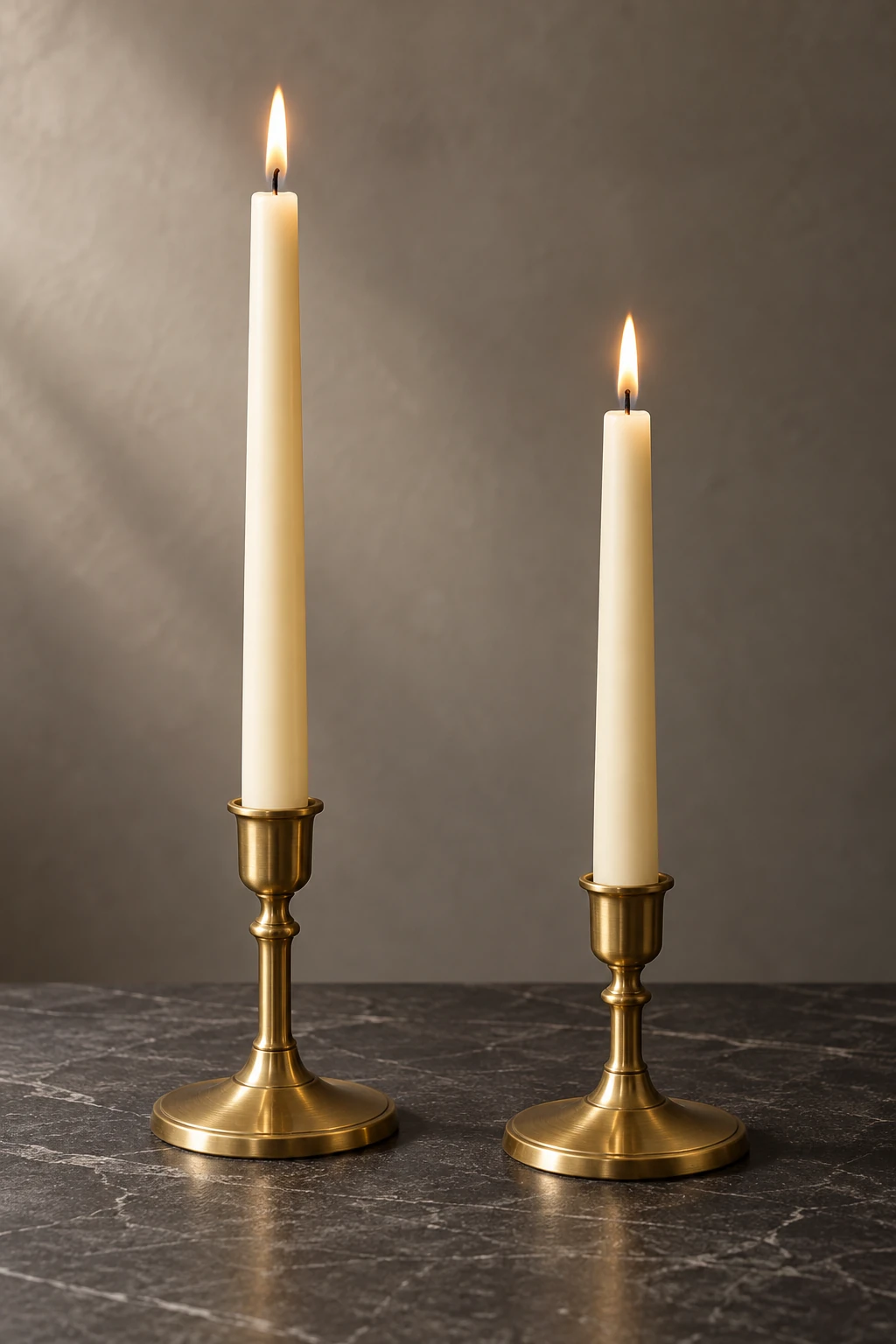
Use a portrait frame to include both flame tips and both holder bases. Treat each candle and holder as an independent supported assembly, even where the two silhouettes sit close together.
Task: Generate a portrait photograph of two lit taper candles with clear structural support.
Subject: Exactly two slender warm-ivory taper candles of different heights, each seated vertically in its own simple brass candle holder with a visible socket, stem and broad circular base. Each taper has one small flame on one dark wick.
Context: A homeware retailer needs a paired-candle composition reference with countable products and complete holders.
Style: Photoreal quiet homeware still life, gently brushed brass, smooth wax, warm-grey backdrop and natural editorial finish.
Composition: One portrait 2:3 frame, eye-level view. Place the taller taper and its full holder toward the left and the shorter taper and full holder toward the right, with visible space between both bases on a dark stone tabletop. Include both flame tips and all base edges inside the frame.
Lighting: Soft key light from the left gives restrained brass reflections and two separate contact shadows. Small flames have bounded yellow-orange detail without large halos.
Constraints: Exactly two tapers, two holders, two wicks and two small flames. Each candle enters a holder socket; neither levitates. No fused stems, missing bases, intersecting candles, extra tapers, labels, text, logos, watermark, smoke or cut-off flame tips.
Output: One finished 2:3 image at the closest supported native size, suitable as a product-photography concept. A single continuous scene, not a collage, mockup interface or contact sheet.
- Count two tapers, two wicks, two flames and two holder bases.
- Trace each taper into its own socket, stem and base.
- Inspect separated silhouettes, complete edges and two grounded contact points.
Adjust the brief
- Height
- Two different taper heights with all tips inside the frame.
- Metal
- Brushed brass; change finish in a separate material study.
- Spacing
- Visible gaps between stems and between both circular bases.
If the image misses the brief
If a holder disappears, require one complete independent socket-stem-base assembly beneath each taper.
Reading-nook wide hero
Candle shops planning a wide website hero.
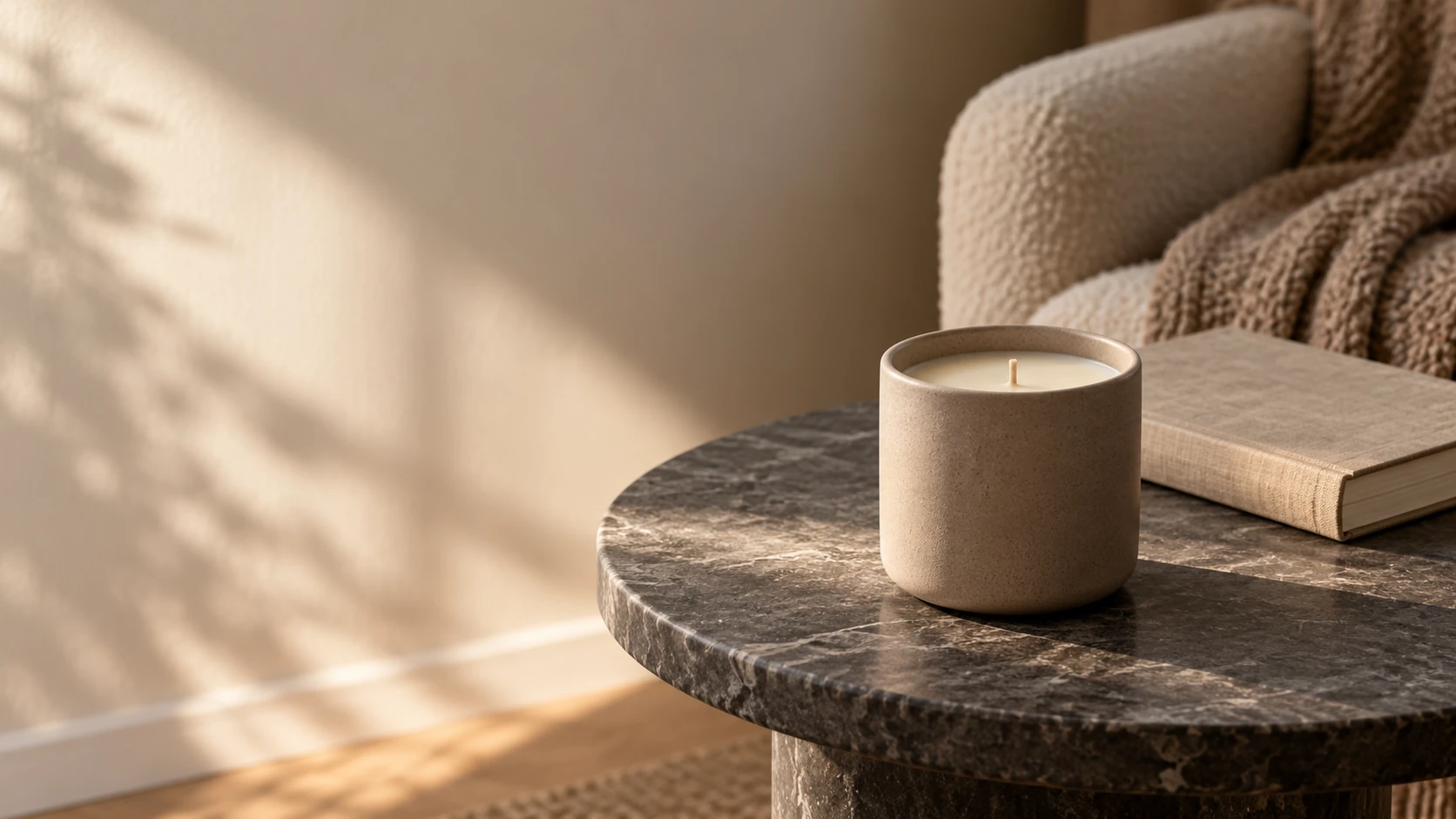
Use the right-third placement to give the candle a clear role and preserve space for a heading. Keep the warm atmosphere tied to daylight so the unlit wick remains part of the brief.
Task: Create a wide lifestyle photograph featuring one unlit candle in a calm reading nook.
Subject: One unbranded matte taupe ceramic candle jar with pale wax and one short unlit wick, sitting on a small dark stone side table; one closed linen-covered book lies separately farther back.
Context: A candle shop wants a reading-room campaign reference with a clear subject and usable heading space, without pretending the generated vessel is an actual SKU.
Style: Photoreal home editorial photography, tactile linen and stone, quiet neutral colours and a softly blurred armchair in the background.
Composition: One landscape 16:9 scene. Keep the complete candle and grounded base in the right third, seen slightly from above so its wax and wick are visible. Keep the left half as a softly lit uncluttered wall for later website copy. The book stays behind and does not cover or support the candle.
Lighting: Late-afternoon window light from camera left makes a gentle diagonal shadow across the table. Ambient warmth comes from daylight, not a flame; the ceramic has normal diffuse highlights.
Constraints: One candle, one unlit wick and one closed book only. No fire, smoke, text, labels, logos, watermark, impossible ceramic transmission, floating book, duplicate jar or collage.
Output: One finished 16:9 image at the closest supported native size, suitable as a product-photography concept. A single continuous scene, not a collage, mockup interface or contact sheet.
- Inspect one complete candle, one unlit wick and one separate closed book.
- Check that the book stays behind and does not cover or support the candle.
- Assess clean left-side space, the jar silhouette and normal opaque ceramic shading.
Adjust the brief
- Room
- A softly blurred reading corner with one armchair.
- Palette
- Quiet linen, taupe and stone tones.
- Copy space
- Keep the left half clear; reverse the complete layout only in a new brief.
If the image misses the brief
If the model adds a flame to create mood, repeat unlit candle in the task and constraints and request warm window light instead.
Dry bathroom tray scene
Home-fragrance shops planning a bathroom lifestyle image.
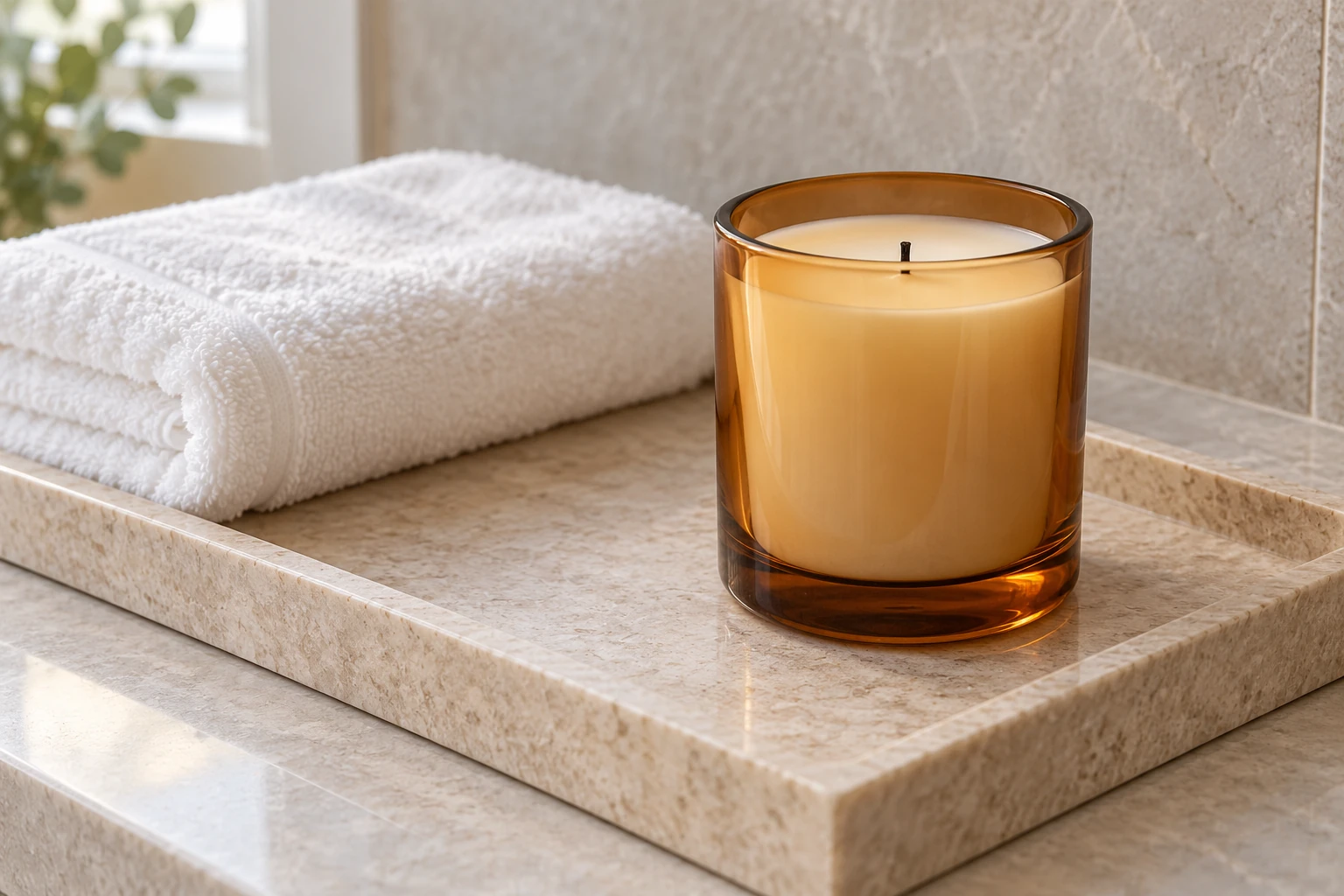
Use a dry tray and one towel to establish the room without crowding the candle. Check the base carefully; interior styling can place a product on fabric or introduce water that changes the requested setup.
Task: Photograph one unlit candle as a clean bathroom lifestyle concept on a dry tray.
Subject: One unbranded clear amber-glass candle jar with pale opaque wax and one short unlit dark wick, resting on a dry rectangular stone tray beside a softly blurred folded white towel.
Context: A home-fragrance shop needs a bathroom styling reference, with the candle’s vessel and base remaining visible and separate from other objects.
Style: Photoreal calm interior product photography, pale stone, natural amber, soft-white textile texture and neutral colour rendering.
Composition: One landscape 3:2 scene from a gentle downward three-quarter angle. Place the whole jar on the right half of the tray with visible empty stone around its base; the towel stays in the back-left. A simple bathroom wall forms the background, with no bathwater or sink basin in frame.
Lighting: Broad diffused daylight from a window to the left gives controlled glass highlights and a soft contact shadow on the dry tray. No luminous glow inside the unlit candle.
Constraints: Exactly one jar, one wick, one tray and one folded towel. The base is on stone, not in water or on fabric. No flame, smoke, water drops, fake labels, lettering, branding, watermark, extra product or floating tray.
Output: One finished 3:2 image at the closest supported native size, suitable as a product-photography concept. A single continuous scene, not a collage, mockup interface or contact sheet.
- Count one jar, one wick, one tray and one folded towel.
- Inspect a dry base resting on stone, separate from the towel.
- Check an intact amber rim and the absence of flame or internal glow.
Adjust the brief
- Tray
- One rectangular dry stone tray with visible margin around the jar.
- Textile
- One folded white towel behind the product.
- Backdrop
- Simple bathroom wall or a plain pale wall in a new variation.
If the image misses the brief
If water or spa clutter appears, remove bath context from the backdrop instruction and specify a dry stone tabletop with only one towel.
Three-size candle collection
Makers planning candle collection photos for three sizes.
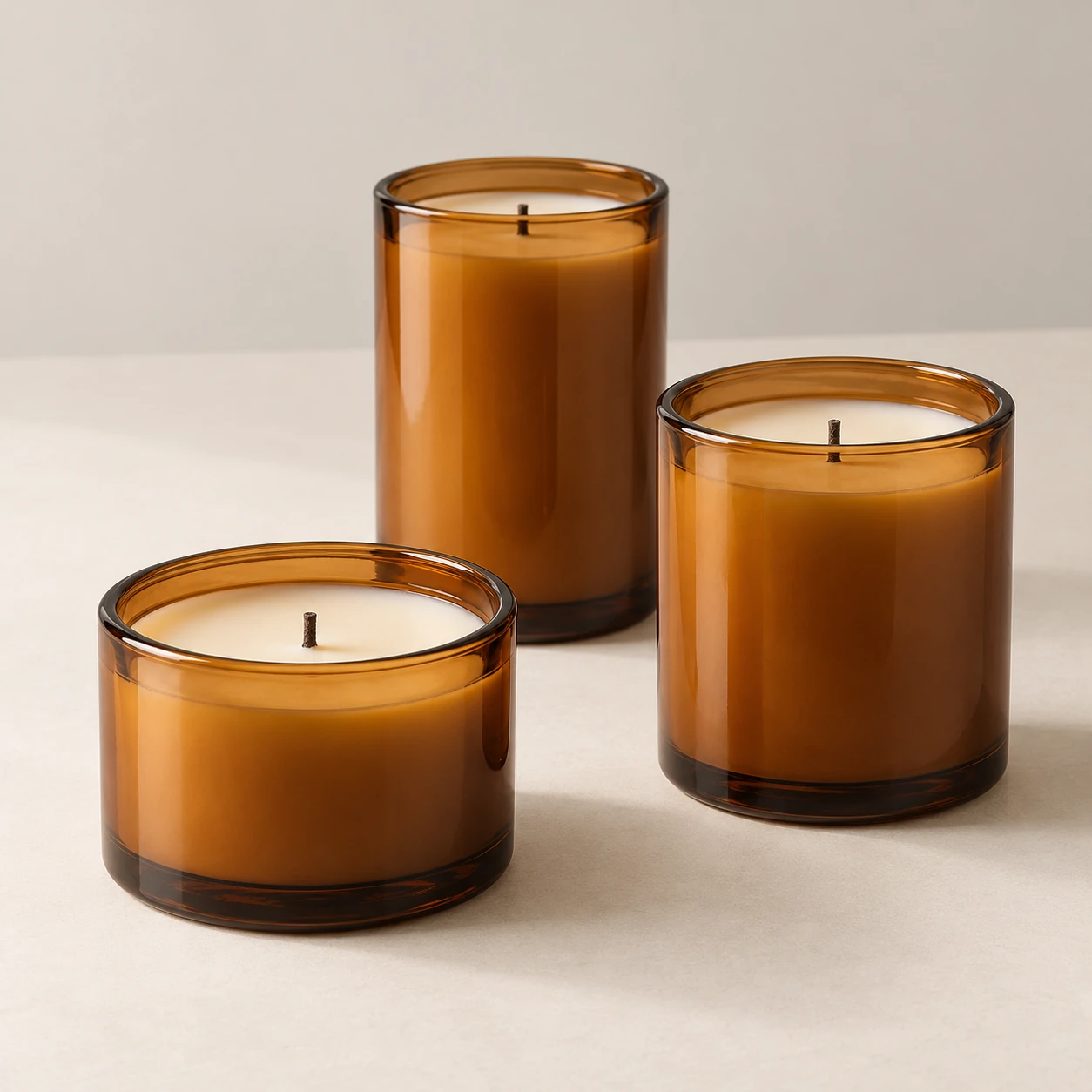
Use a shallow triangle to make three sizes distinguishable without hiding a rim or wick. Keep the comparison to fictional visual proportions; exact capacities and real range dimensions need their own references.
Task: Generate a square collection photograph of three unlit candle sizes.
Subject: Exactly three unbranded cylindrical amber-glass candle jars: a short wide jar, a medium-height jar and a taller slightly narrower jar. Each contains pale opaque wax below its own rim and exactly one short unlit dark wick. No lids.
Context: A candle maker is exploring a three-size collection image; these are fictional proportions, not a claim that a real range has identical geometry or verified capacities.
Style: Photoreal clean catalogue still life, consistent amber material, matte ivory tabletop and a pale warm-grey seamless background.
Composition: One square scene from slightly above rim height. Arrange the three separate jars in a shallow stepped triangle with the tallest toward the rear, leaving visible gaps between silhouettes and showing every grounded base. Do not overlap a wick or rim with another jar.
Lighting: One broad softbox from camera left and gentle right fill create consistent highlights across all three jars and three believable contact shadows on the same tabletop.
Constraints: Exactly three separate jars and three unlit wicks. Keep the relative sizes visibly different but plausible; no duplicate fourth vessel, flames, smoke, lids, labels, letters, logos, watermark, fused glass or floating bases.
Output: One finished 1:1 image at the closest supported native size, suitable as a product-photography concept. A single continuous scene, not a collage, mockup interface or contact sheet.
- Count exactly three jars, three unlit wicks and three grounded bases.
- Check visible gaps, distinct rims and no hidden or merged wick.
- Compare the highlight direction and shadows across the complete range.
Adjust the brief
- Range
- Three visibly different fictional vessel proportions.
- Arrangement
- Tallest toward the rear, with clear gaps around each silhouette.
- Lighting
- One shared softbox direction and gentle fill.
If the image misses the brief
If the model duplicates a jar, specify exactly three vessels with empty gaps, and remove all decorative props from the scene.
Wick and melt-pool macro
Photographers learning to inspect wick and wax detail.
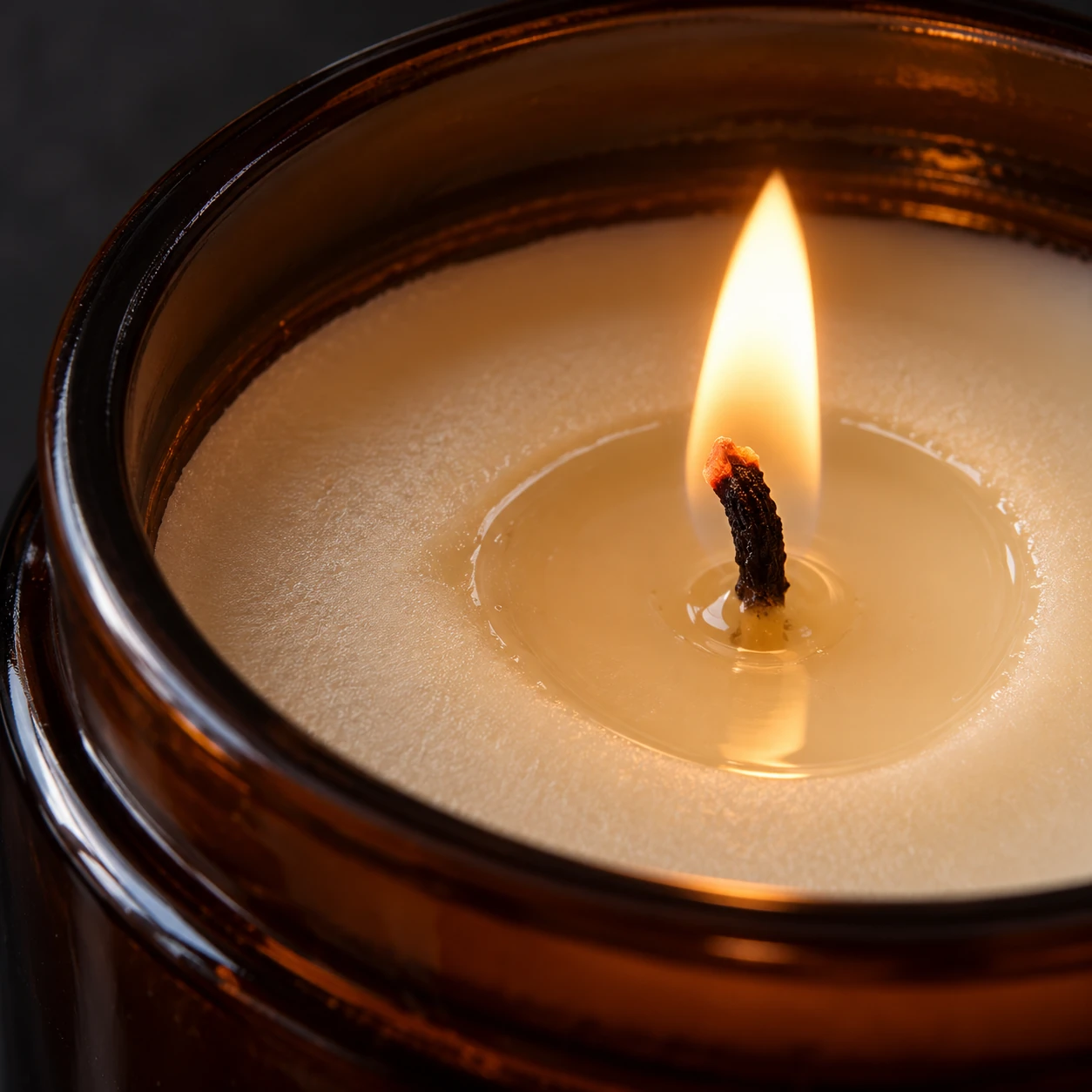
Use this close view to trace the candle's connected parts rather than judging it by brightness. Keep enough rim and pool boundary in frame to understand where the wax surface sits.
Task: Create a close macro photograph showing the connection between a candle flame, wick and wax melt pool.
Subject: The upper interior of one unbranded dark-amber candle jar, with one short black wick anchored in warm-ivory wax, one small teardrop flame attached to its tip and one shallow glossy melt pool around its base. The surrounding cooler wax stays matte.
Context: A candle-photography tutorial needs a visual inspection example of wick anchoring, wax texture and controlled flame exposure, without treating a generated image as a measured burn test.
Style: Photoreal macro product photography with a restrained focus-stacked look, fine wax detail, natural colour and a quiet charcoal background.
Composition: One square close-up from a forty-five-degree downward angle. Show the entire flame, the wick’s connection to the wax, the full small melt-pool boundary and part of the enclosing rim. Centre the wick slightly right of frame centre, with uncluttered darker space to the left.
Lighting: A soft side key reveals the wax’s matte-to-gloss transition and subtle glass rim reflection. Keep flame detail bounded and gently warm; its reflection remains small and local rather than a second flame.
Constraints: Exactly one connected flame, one wick and one melt pool. No detached flame, duplicate wick, huge glowing puddle, boiling wax, sparks, labels, writing, logos, watermark, extra vessel or contact sheet. Keep the wick and wax boundary sharp enough to inspect.
Output: One finished 1:1 image at the closest supported native size, suitable as a product-photography concept. A single continuous scene, not a collage, mockup interface or contact sheet.
- Trace one flame to one wick anchored in the same melt pool.
- Inspect the full small pool boundary and surrounding matte wax.
- Look for sharp enough connections and reflections that do not duplicate the flame.
Adjust the brief
- View
- A forty-five-degree downward close-up with the whole flame visible.
- Wax detail
- Small glossy pool surrounded by cooler matte wax.
- Reflection
- One restrained local rim highlight with no second flame shape.
If the image misses the brief
If a reflection becomes a second flame, remove the bright reflective background and request a single small local highlight on the rim.
Keep candle lifestyle photography easy to read
A room should explain how the product fits a setting while leaving the vessel readable. In the reading-nook brief, one closed book stays behind the candle and the left half is reserved for later website copy. In the bathroom scene, a dry tray and one folded towel provide context. Extra jars, water drops, flowers and loose fabric can hide the base or create a second focal point.
When changing a room, preserve the camera angle, candle state and support relationship first. Change the backdrop or one prop on the next attempt. If a warm interior keeps producing an unwanted flame, describe the warmth as window light and keep the unlit instruction in both the subject and constraints. Recheck the wick after every revision.
Inspect wick, wax and light before choosing a result
A convincing overall mood can conceal a small structural error. Read the image at full size, then check the crop at its intended placement. Use these repairs to simplify a failed instruction; generate a new result from the revised wording and inspect it again.
Detached or duplicated flame
Follow the bright shape to one visible wick. If the connection is missing, specify one small teardrop flame attached to that wick and a shallow pool around its base. Reduce competing reflections that could resemble another flame.
Glass and ceramic look interchangeable
Keep frosted texture visible and ask for restrained local transmission in the upper glass. For opaque ceramic, describe light falling on the inner rim and an exterior with a readable shaded side. Recheck the rim and outer wall together.
Wax becomes a floating liquid effect
For the pillar study, describe cooled, hardened wax attached to the body and a dry dish. For the macro, distinguish a small glossy melt pool from surrounding matte wax. Keep the boundary specific rather than asking for a generally glowing candle.
The collection merges or gains another product
Count jars, wicks, flames and holder bases separately. Remove decorative props and require visible gaps between complete silhouettes. If the count is still wrong, use a simpler arrangement before adding depth or styling.
Adapt a concept to your actual candle
Use a clear product photograph you are allowed to work with when the result must represent a real item. Compare the height-to-width relationship, rim thickness, vessel color, surface finish, wax fill, wick count and label placement. Inspect all the edges at full size. A well-styled generated scene can still change a small construction detail that matters to a buyer.
Keep scent notes, wax ingredients, capacity, burn time and safety information tied to your verified product records. The appearance of a generated flame, glass glow or melt pool cannot establish those facts. Add accurate label artwork and commercial copy through a controlled editing step, then review the complete image and wording together.
For a simple comparison during review, the free before/after comparison layout tool can arrange two existing images side by side. It formats your inputs; it does not verify product identity. Use the product ads and posters workflow when you are ready to add a campaign message, and keep seasonal offer planning in the separate Black Friday guide.
Candle product photography FAQ
How do I write AI candle product photography prompts?
Start with the photographic job, vessel material and lit or unlit state. Name the wax, wick, object count, support surface, camera angle and light direction. End with exclusions and an output composition. This gives you concrete checks for the rim, base, wick and surrounding space instead of relying on mood words alone.
Are these candle photography prompts free to copy?
Yes. The prompt text is free to copy and adapt. Generating an image depends on the availability and limits of your chosen image tool. When you add a product photograph, logo or label, use material you are authorized to work with and check the result against the actual product.
How can I keep an unlit candle from gaining a flame?
State that the wick is unlit in the subject and constraints. Describe the warm atmosphere as daylight or studio illumination, with no internal glow from the candle. Check the wick in the delivered image; if a flame still appears, simplify the setting and regenerate from a revised brief.
What should lit candle photography prompts say about the flame?
Ask for one modest flame attached to one visible wick, with a small melt pool around its base. Use a separate soft key light to keep the vessel readable. Inspect flame detail, wick anchoring and nearby reflections. A generated candle scene is a visual concept, so use real testing for burn-performance information.
How do candle product background prompts change for glass and ceramic?
Name the material before the background. Frosted glass needs visible surface texture and restrained local warm transmission. Opaque ceramic needs an exterior with shaded areas and light falling on the inner rim. Choose a simple backdrop so those differences are easy to inspect, and check your actual vessel reference when preparing a listing.
How do I make candle collection photos with a consistent count?
Give each vessel a clear position, require empty gaps between silhouettes and state the total number of jars and wicks. Use one tabletop and a shared light direction. Count the objects again after cropping. Fictional examples with similar materials do not establish accurate dimensions or identity for a real product range.
Can these concepts replace photographs of an actual candle?
Use the concepts for art direction and planning. A product listing needs an accurate representation of the item being sold. Work from an authorized reference and inspect geometry, materials, wax fill and label detail before use. Generated appearance cannot verify scent, ingredients, capacity or burn time.
Which image ratio works for candle lifestyle photography?
Choose a ratio around the placement: a square can suit a product tile, a portrait can frame a tall pair, and a wide image can reserve room for website copy. These are composition choices. Check current destination requirements, the delivered image dimensions and the final crop before publishing.
Continue with the next product-image task
Keep packaging and range presentation in the product-design prompt handbook. Build a commercial layout with product ads and posters, or use the Black Friday campaign guide for seasonal offers. For wider planning across channels, browse the e-commerce and marketing handbook.
For additional candle-specific reading, see Masonry's candle flame-and-light study and SellShots' candle photography overview. The briefs on this page are original; the source pages do not validate these prompts or their outputs.