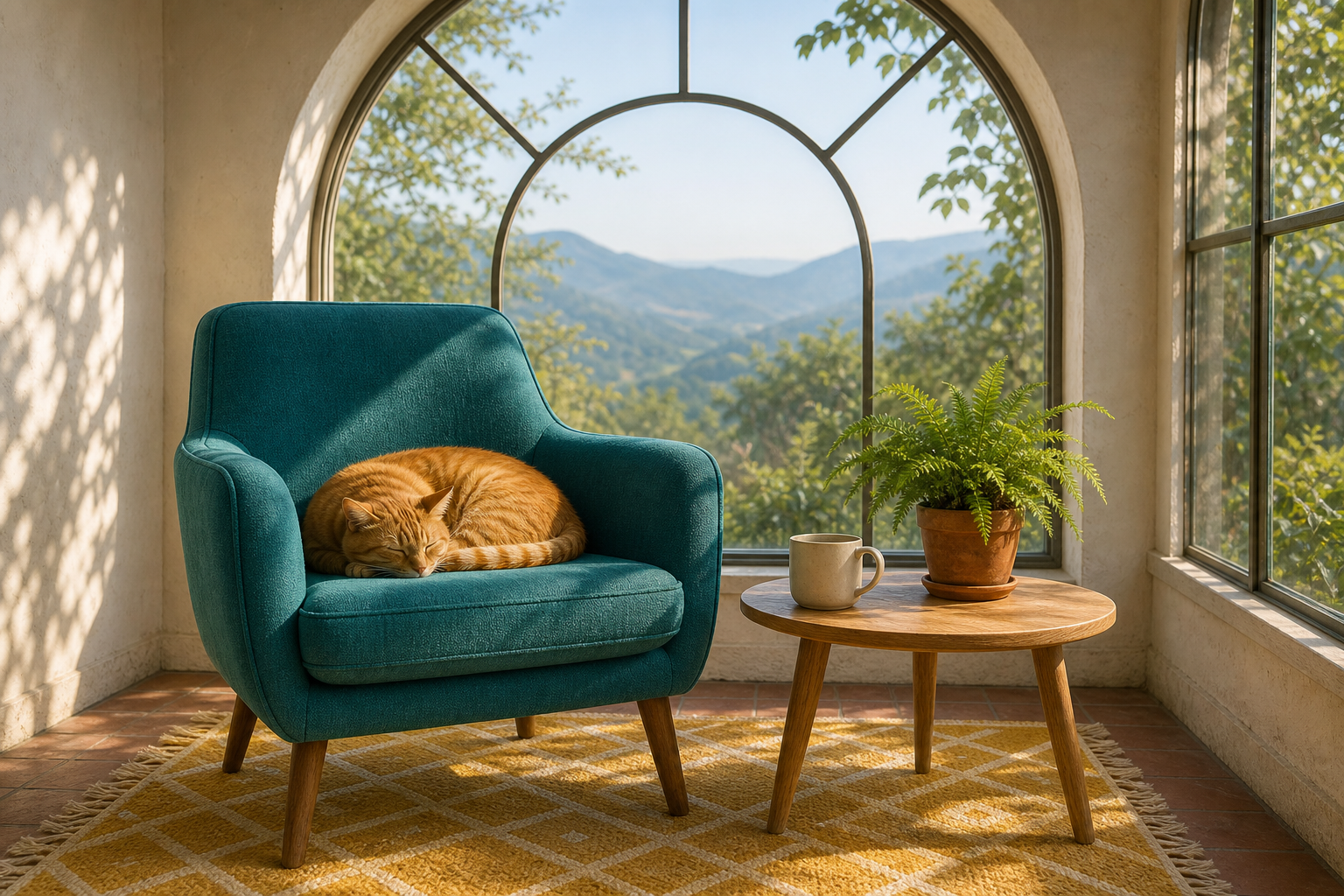
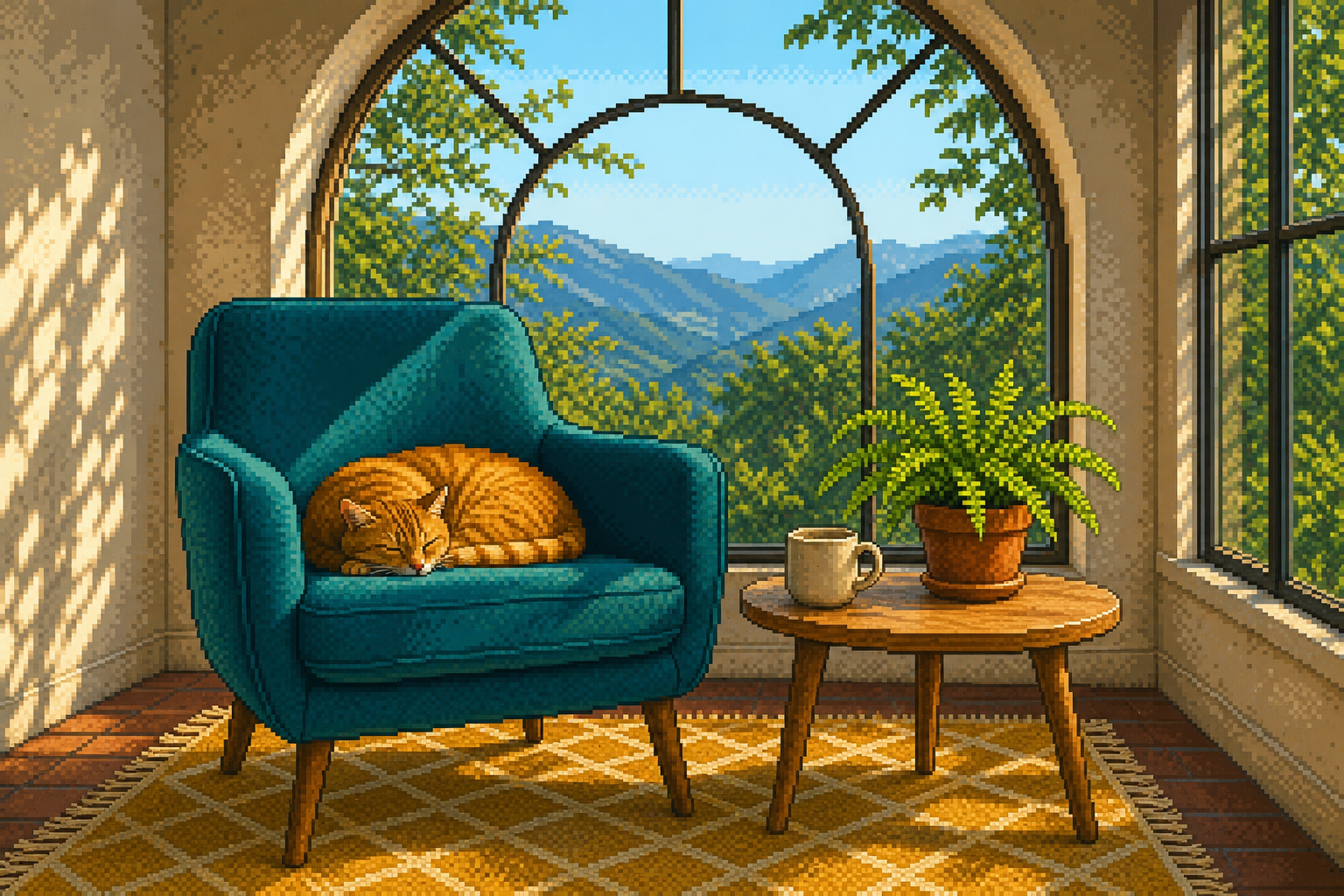
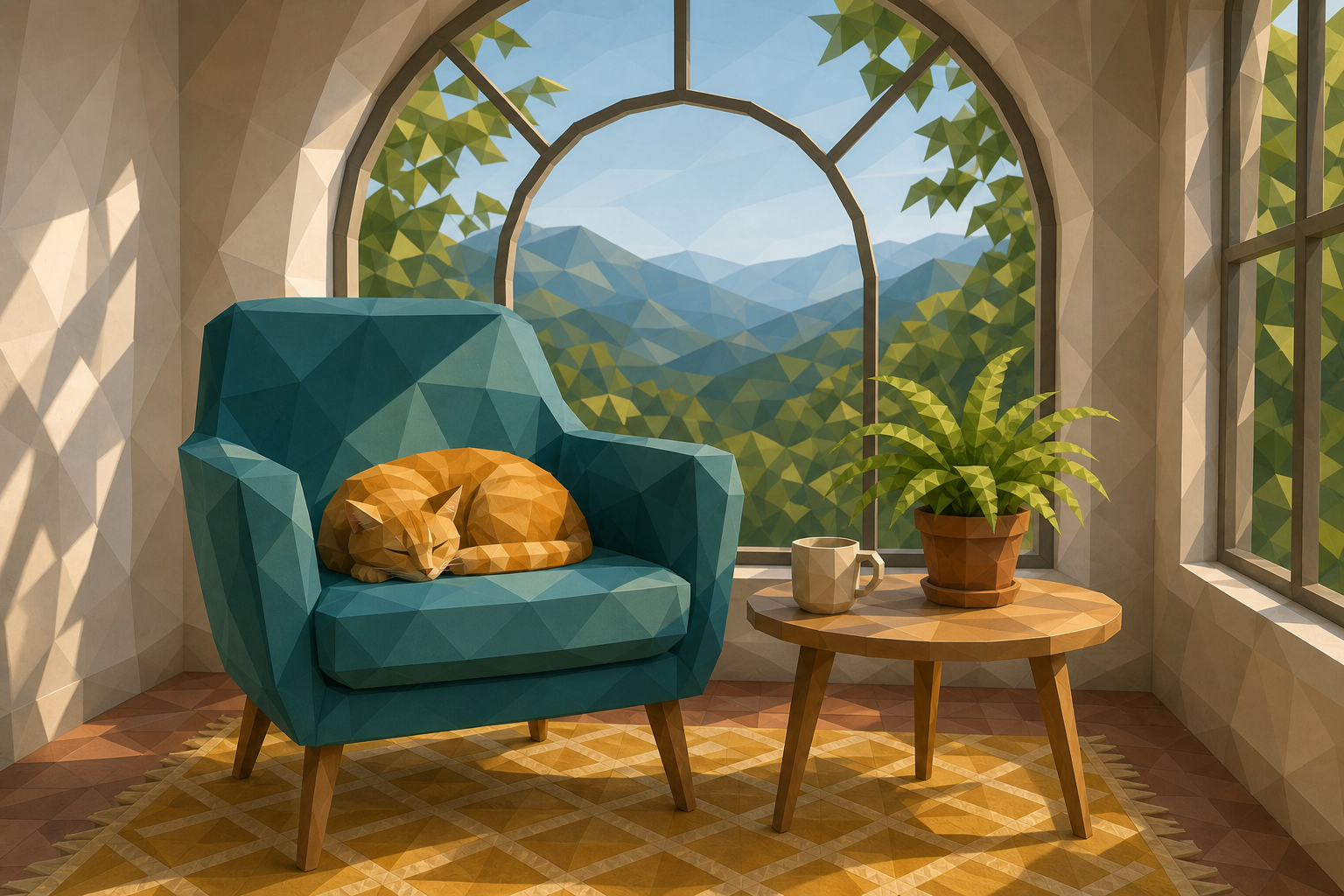
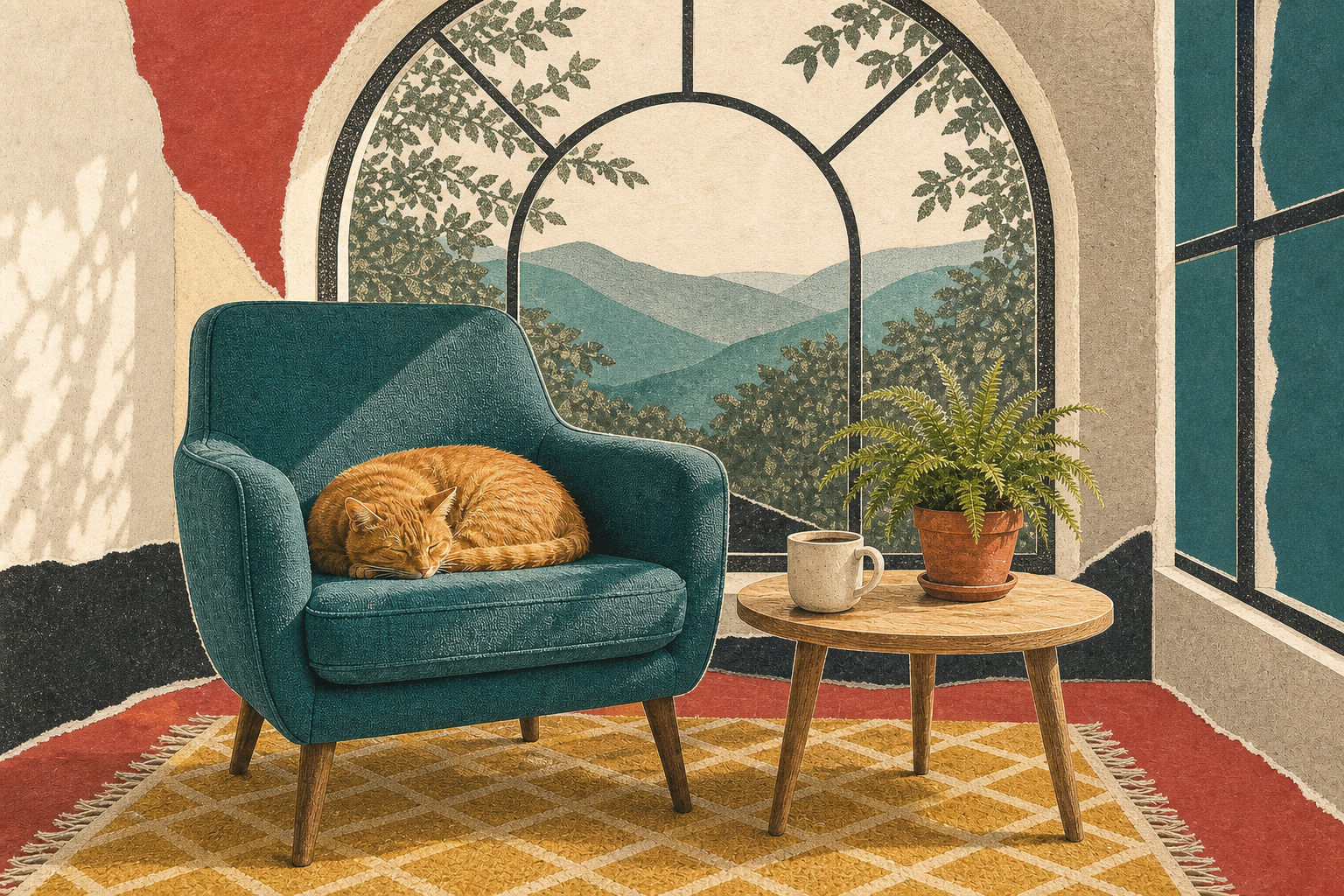
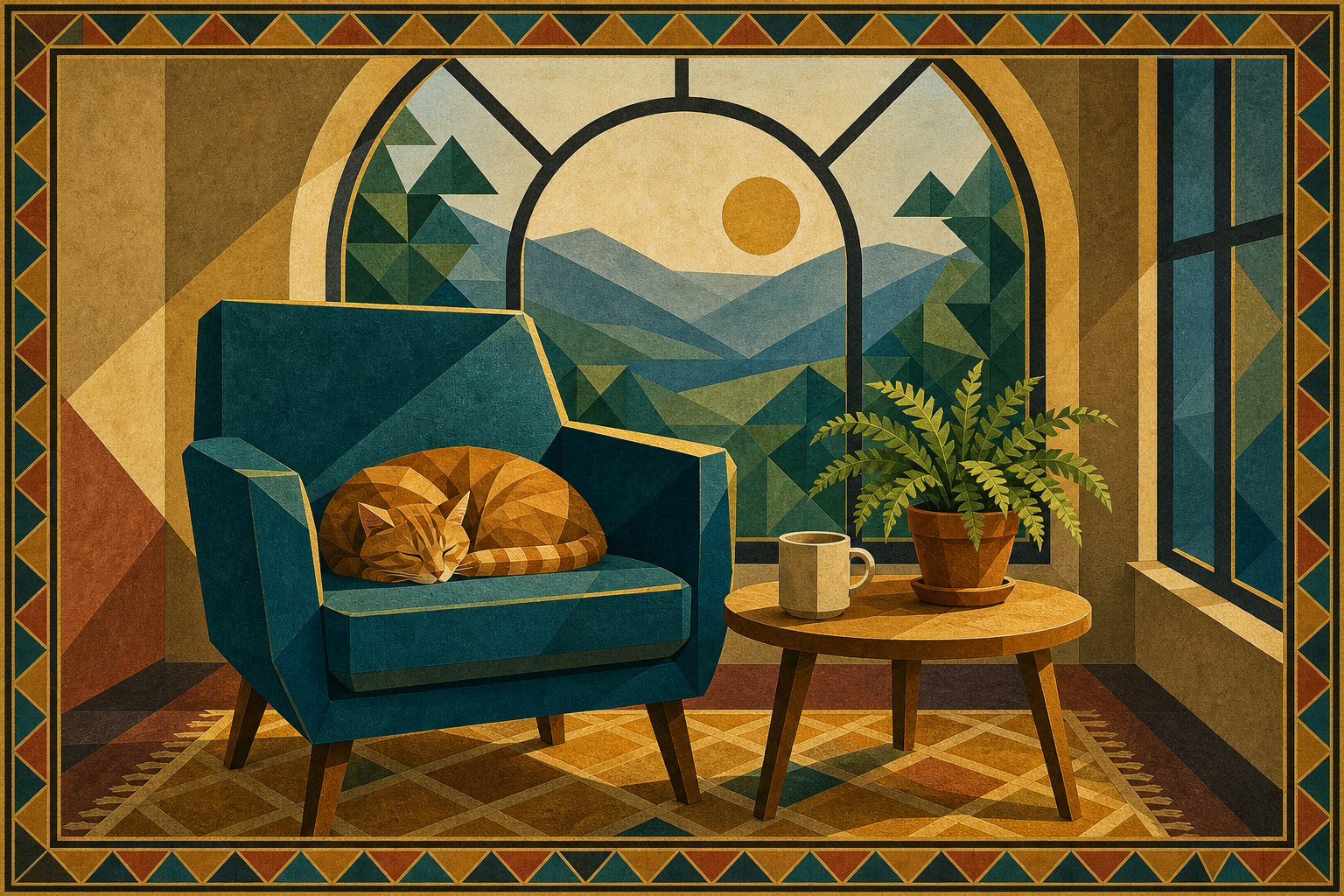
GPT Image 2 style transfer prompts work best when they separate what must stay fixed from what may change. Upload an image you own or are authorized to edit, name the new medium precisely, lock the crop, camera angle, object count, geometry, and light direction, then exclude the failure modes that would undermine comparison. The 15 copy-ready prompts below all use the same synthetic sunroom input, so you can compare how GPT Image 2 handles watercolor transparency, ink values, limited-color print systems, tactile materials, pixel grids, polygon facets, collage, public-domain movement vocabulary, heavy paint, storyboard continuity, and spot-color separation. Each visible prompt is paired with its own reviewed output and exact evidence record. Replace the source-scene inventory with your own rights-cleared image details, but keep the preservation, constraint, and output clauses until the baseline passes review. Then change one variable at a time. Rerun any result that adds or removes subjects, shifts furniture, changes the camera, hides key objects, introduces text or brands, imitates a living artist, or leaves photographic patches inside the transferred medium.
Copy 15 tested GPT Image 2 photo style transfer prompts that turn one rights-cleared source scene into watercolor, ink wash, stencil print, linocut, stained glass, clay, paper cut, pixel art, low-poly 3D, collage, geometric poster, Art Nouveau, impasto, storyboard, and screen print results.
Choose the right GPT Image 2 style transfer method
Start with a medium whose physical rules you can describe and inspect. Watercolor and ink depend on paper gaps and value control; printmaking needs limited inks and explicit separations; clay, paper cut, stained glass, and low-poly work need material or geometry constraints; pixel art needs a logical grid and nearest-neighbor scale. Keep one source image and one transfer target per test so structural drift is obvious.
Four steps for controlled GPT Image 2 style transfer
Confirm image rightsUse a source you created, licensed, or have explicit permission to edit; avoid celebrities, protected characters, private people without consent, and unlicensed artwork.
Inventory fixed anchorsList the exact subject count, major objects, silhouettes, camera angle, crop, geometry, relative positions, and light direction that must survive the transfer.
Define medium rulesName materials, palette, mark-making, surface texture, value system, grid, facet size, paper layers, or ink count instead of relying on a vague style adjective.
Compare and correctInspect structure, object count, source fidelity, medium consistency, text, brands, IP risk, and visual artifacts; rerun only the failed variable with a targeted correction.
Style transfer prompt parameter guide
Goal
Layout
Best for
Adjust
Avoid
Paint or ink
Lock source crop and silhouettes
Watercolor, ink wash, impasto
Paper, pigment, value families, brush marks
Photographic islands and invented detail
Printmaking
Simplify into separable value shapes
Stencil, linocut, screen print
Ink count, palette, halftone, registration
Extra colors, gradients, fake lettering
Tactile material
Preserve object scale and overlap
Clay, paper cut, stained glass
Surface, layer depth, edge treatment, glow
Plastic surfaces and hidden anchors
Digital system
State grid, facets, or panel count
Pixel art, low-poly, storyboard
Palette size, logical resolution, camera views
Blurred pixels, smooth geometry, continuity drift
Failure corrections before you rerun
The composition changes
Why it happens: The prompt names a style but does not freeze source geometry and object relationships.
Prompt correction: Add an exact source inventory and require the same crop, camera angle, object count, relative positions, silhouettes, window geometry, and floor perspective.
Photographic patches remain
Why it happens: The target medium is described as a mood instead of a complete rendering system.
Prompt correction: Specify the physical marks, surface, palette, value behavior, and edge treatment, then add ‘apply the medium consistently to every visible region.’
A limited-color print gains extra colors
Why it happens: The prompt suggests a palette without defining a hard ink budget.
Prompt correction: State the exact named inks plus paper, prohibit gradients and additional colors, and translate light into halftones or flat value groups.
Texture hides the subject
Why it happens: Impasto, collage, ornament, or material effects are added before the main silhouettes are locked.
Prompt correction: Require all source silhouettes to remain readable, set a maximum fragment or ornament density, and apply texture only after the composition is preserved.
The result copies a recognizable artist
Why it happens: The prompt relies on a person’s name instead of transferable visual properties.
Prompt correction: Remove the artist reference and describe a public-domain movement or generic medium through line, material, palette, composition, and lighting traits.
15 copy-ready GPT Image 2 style transfer prompts
Every visible prompt below was applied to the same owned synthetic input and generated the output shown in its card. Copy the complete instruction, replace the source inventory with your own rights-cleared image details, and keep the preservation, constraints, and output clauses until the first result passes review.
Style Transfer · GPT Image 2 · Prompt 01
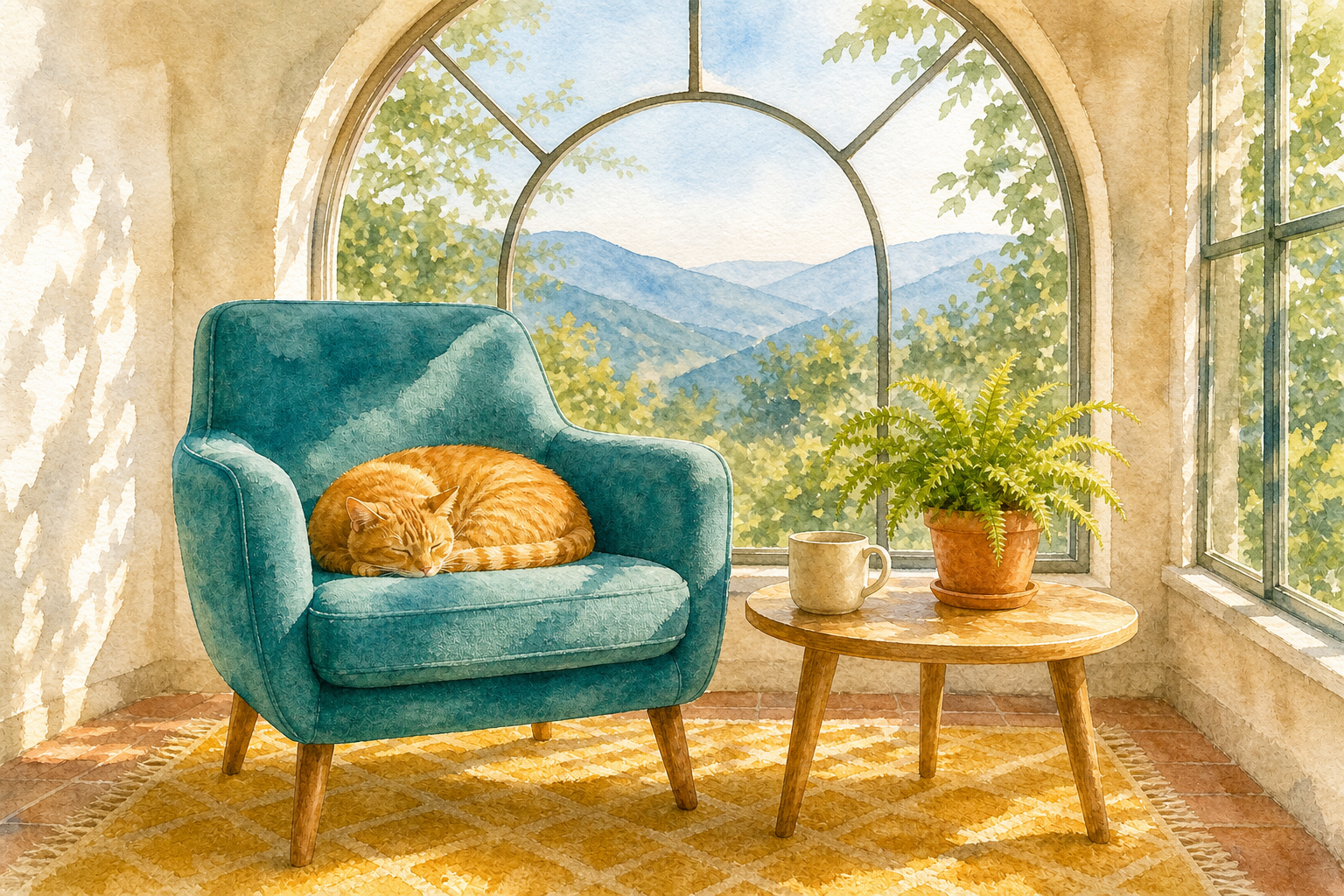
Transparent Watercolor Transfer
For a botanical journal opener that should retain the source scene while gaining luminous watercolor behavior.
Authorized synthetic input
GPT Image 2 edited output
Transparent Watercolor Transfer | Best for: For a botanical journal opener that should retain the source scene while gaining luminous watercolor behavior. | Prompt ENP06-P01 | Check: object count, chair and cat silhouettes, transparent washes, paper gaps, and right-side light | If it fails: If opaque paint hides the source, add ‘reserve visible white paper and build color only through transparent layered washes; no gouache.’
Expected result
The original room remains recognizable through translucent washes, paper gaps, pigment granulation, and restrained dry-brush edges.
Copy-ready tested prompt
Use case: style-transfer
Input images: Image 1: owned synthetic edit target
Asset type: verified website style-transfer example
Primary request: Task: Transform the provided owned synthetic sunroom photograph into a transparent watercolor illustration while keeping the scene recognizable.
Subject: Preserve exactly one teal armchair, one sleeping orange tabby cat, one round oak table, one cream mug, one potted fern, the arched window, distant hills, and the mustard rug.
Context: A calm botanical-journal opener and controlled GPT Image 2 style-transfer comparison.
Style/medium: Translucent watercolor pigment, visible white cold-press paper, wet-on-wet color transitions, granulation, and a few dry-brush edges in teal, ochre, terracotta, sage, and pale blue.
Composition/framing: Keep the original 3:2 landscape crop, camera angle, object count, relative positions, silhouettes, window geometry, and open margins unchanged.
Lighting/mood: Translate the same warm late-morning light from camera right into luminous washes and soft cast-shadow shapes.
Constraints: Change only the visual medium; no extra objects or animals, no moved furniture, no opaque gouache, no photorealistic patches, no text, logos, watermark, border, or artist imitation.
Output: One clean 1536×1024 landscape PNG with the complete scene fully visible.
Adjustable parameters
Paper tooth, pigment palette, wash transparency, granulation, dry-brush density
Failure correction
If opaque paint hides the source, add ‘reserve visible white paper and build color only through transparent layered washes; no gouache.’
Review focus
object count, chair and cat silhouettes, transparent washes, paper gaps, and right-side light
Model
GPT Image 2
Style Transfer · GPT Image 2 · Prompt 02
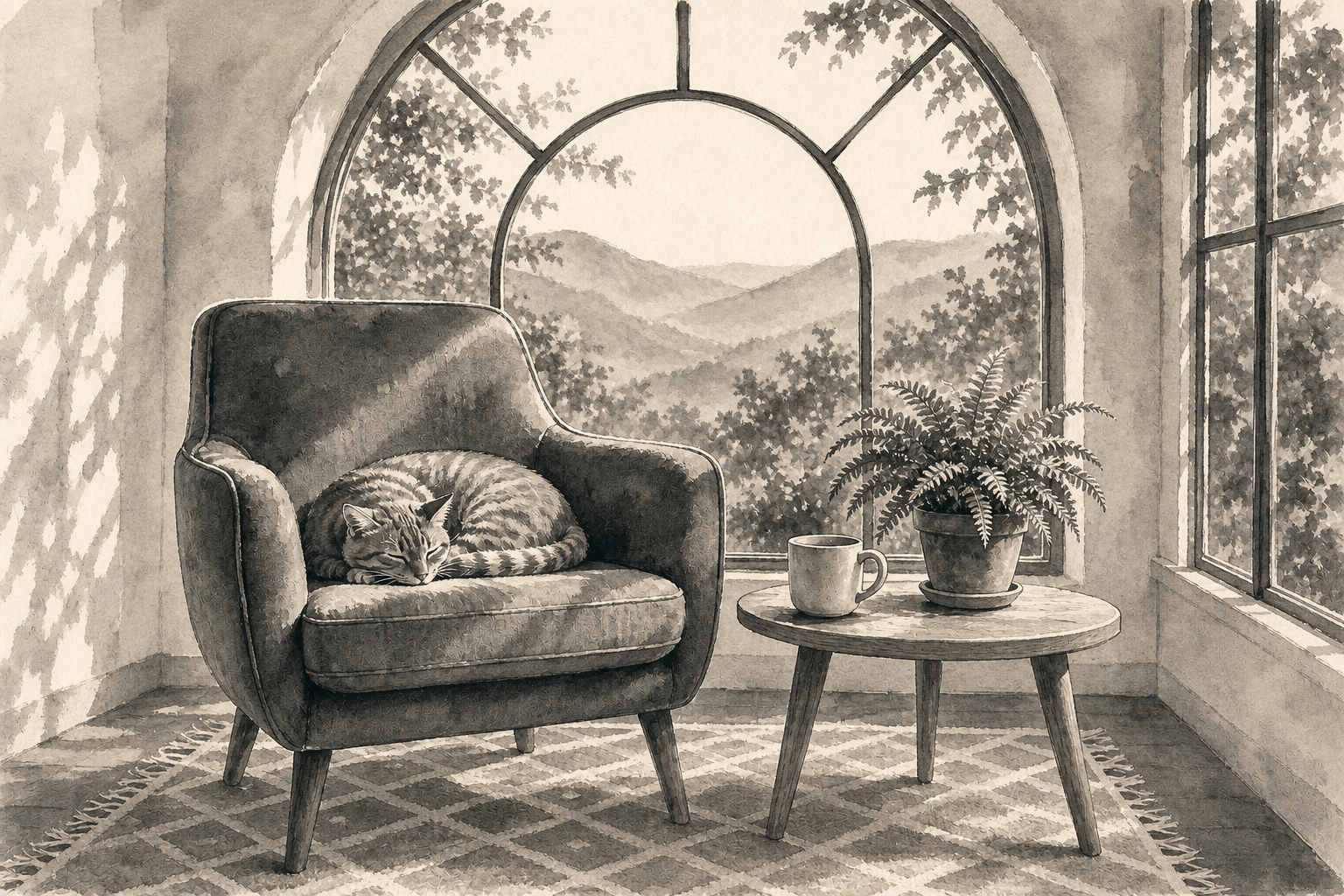
Monochrome Ink-Wash Transfer
For a reflective editorial opener that needs atmospheric ink values without losing source geometry.
Authorized synthetic input
GPT Image 2 edited output
Monochrome Ink-Wash Transfer | Best for: For a reflective editorial opener that needs atmospheric ink values without losing source geometry. | Prompt ENP06-P02 | Check: value separation, source geometry, paper gaps, cat readability, and absence of calligraphy | If it fails: If the image becomes muddy, add ‘use five separated value families and preserve luminous paper gaps on the lit edges.’
Expected result
The room resolves into five ink-value families, fluid washes, dry-brush texture, and luminous mulberry-paper gaps.
Copy-ready tested prompt
Use case: style-transfer
Input images: Image 1: owned synthetic edit target
Asset type: verified website style-transfer example
Primary request: Task: Transform the provided owned synthetic sunroom photograph into a monochrome ink-wash illustration while keeping the scene recognizable.
Subject: Preserve exactly one teal-armchair silhouette, one sleeping cat, one round table, one mug, one fern, the arched window, distant hills, and the rug.
Context: A reflective editorial opener and controlled GPT Image 2 style-transfer comparison.
Style/medium: Black and warm-gray ink wash on off-white mulberry paper, fluid washes, restrained calligraphic contours, atmospheric fading, dry-brush texture, and deliberate paper gaps.
Composition/framing: Keep the original 3:2 landscape crop, eye-level viewpoint, object count, relative positions, window geometry, and foreground-to-background hierarchy unchanged.
Lighting/mood: Preserve the source's right-side late-morning light as five clear ink-value families, luminous paper gaps, and soft shadow masses without inventing a new sun.
Constraints: Change only the visual medium; no extra objects, animals, seals, calligraphy, text, logos, watermark, photographic gradients, or artist imitation.
Output: One spacious 1536×1024 landscape PNG with the complete scene fully visible.
Adjustable parameters
Ink warmth, value count, contour density, dry-brush amount, paper tone
Failure correction
If the image becomes muddy, add ‘use five separated value families and preserve luminous paper gaps on the lit edges.’
Review focus
value separation, source geometry, paper gaps, cat readability, and absence of calligraphy
Model
GPT Image 2
Style Transfer · GPT Image 2 · Prompt 03
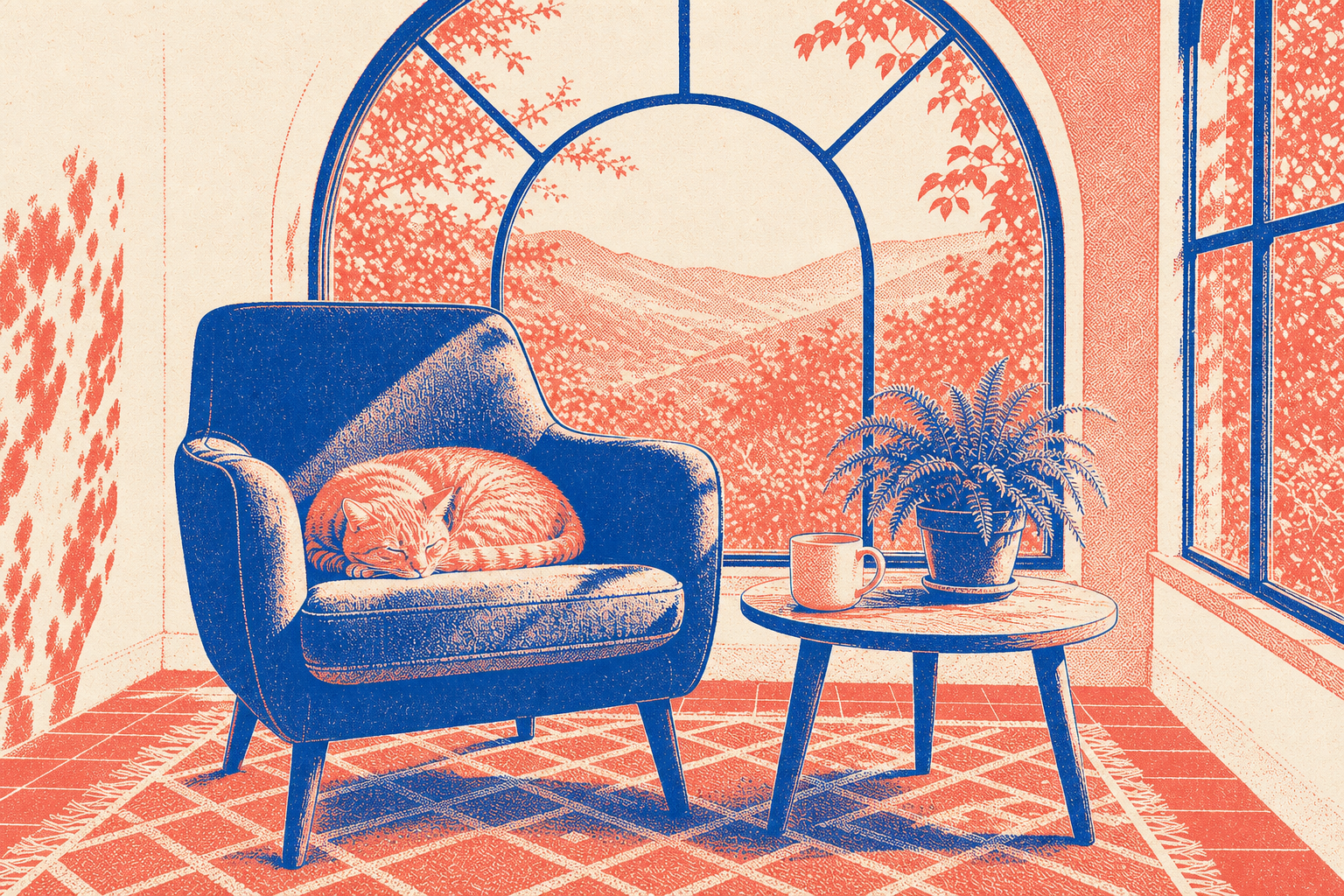
Two-Color Stencil Print
For an independent zine spread that needs a strict two-ink visual system and reproducible shape separation.
Authorized synthetic input
GPT Image 2 edited output
Two-Color Stencil Print | Best for: For an independent zine spread that needs a strict two-ink visual system and reproducible shape separation. | Prompt ENP06-P03 | Check: two-ink compliance, object silhouettes, registration offset, paper exposure, and no gradients | If it fails: If a third color appears, add ‘exactly cobalt ink, coral ink, and exposed paper only; convert all other values to halftone density.’
Expected result
The sunroom reads through cobalt and coral shapes, exposed paper, coarse halftones, and slight registration offset.
Copy-ready tested prompt
Use case: style-transfer
Input images: Image 1: owned synthetic edit target
Asset type: verified website style-transfer example
Primary request: Task: Transform the provided owned synthetic sunroom photograph into a two-color stencil-duplicator print while preserving its structure.
Subject: Preserve exactly one armchair, one sleeping cat, one round table, one mug, one fern, the arched window, hills, and rug.
Context: An independent interior-design zine spread and controlled GPT Image 2 style-transfer comparison.
Style/medium: Only deep cobalt ink and warm coral ink over exposed off-white paper, coarse halftones, fibrous paper grain, bold shape separation, and a slight intentional registration offset.
Composition/framing: Keep the original 3:2 landscape crop, camera angle, object count, relative positions, major silhouettes, window geometry, and open margins unchanged.
Lighting/mood: Convert the source daylight into flat poster-value groups while retaining the right-to-left shadow direction.
Constraints: Change only the visual medium; use no third ink or gradients; no extra objects or animals, readable text, logos, watermark, border, brand references, or artist imitation.
Output: One crisp 1536×1024 landscape PNG using cobalt, coral, and paper only.
Adjustable parameters
Two ink colors, halftone scale, paper grain, registration offset, shape simplification
Failure correction
If a third color appears, add ‘exactly cobalt ink, coral ink, and exposed paper only; convert all other values to halftone density.’
Review focus
two-ink compliance, object silhouettes, registration offset, paper exposure, and no gradients
Model
GPT Image 2
Style Transfer · GPT Image 2 · Prompt 04
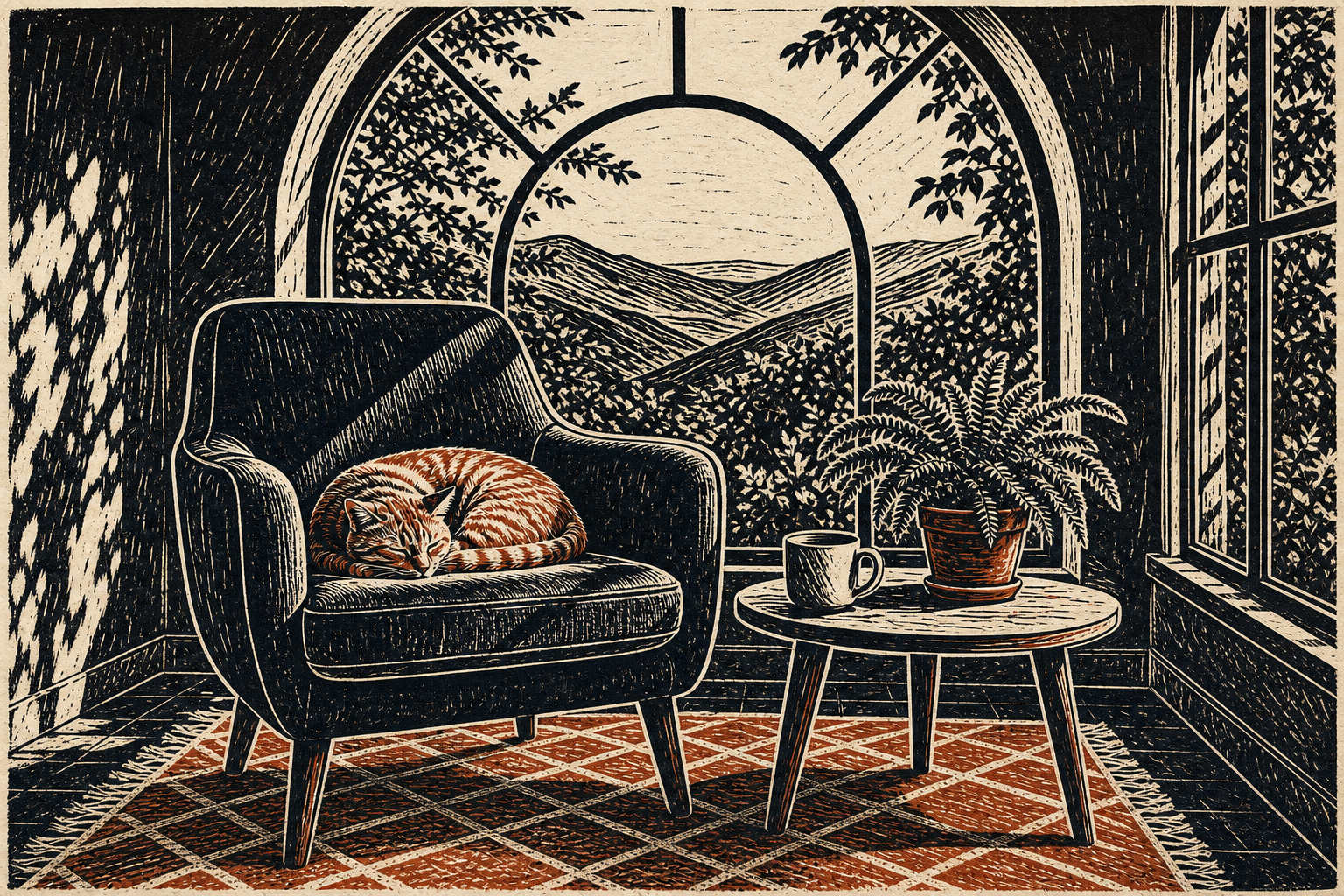
Hand-Carved Linocut Transfer
For a folklore-inspired journal divider that needs bold relief shapes and legible source anchors.
Authorized synthetic input
GPT Image 2 edited output
Hand-Carved Linocut Transfer | Best for: For a folklore-inspired journal divider that needs bold relief shapes and legible source anchors. | Prompt ENP06-P04 | Check: carved marks, high contrast, window arch, furniture placement, and no smooth gradients | If it fails: If the result looks digitally shaded, add ‘replace every gradient with carved hatching or a solid relief shape; show uneven hand-inked coverage.’
Expected result
Black carved forms, cream paper, rust accents, directional hatching, and imperfect ink coverage preserve the room as a relief print.
Copy-ready tested prompt
Use case: style-transfer
Input images: Image 1: owned synthetic edit target
Asset type: verified website style-transfer example
Primary request: Task: Transform the provided owned synthetic sunroom photograph into a hand-carved linocut print while keeping every scene anchor recognizable.
Subject: Preserve exactly one armchair, one sleeping cat, one round table, one mug, one fern, the arched window, distant hills, and the rug.
Context: A folklore-inspired home journal divider and controlled GPT Image 2 style-transfer comparison.
Style/medium: Bold black relief shapes on cream paper with sparse rust-red accents, carved directional hatching, imperfect ink coverage, and visibly irregular hand-cut edges.
Composition/framing: Keep the original 3:2 landscape crop, eye-level viewpoint, object count, relative positions, silhouettes, arched-window geometry, and floor perspective unchanged.
Lighting/mood: Translate the same late-morning side light into one bright rim family and strong graphic shadow masses.
Constraints: Change only the visual medium; no extra objects or animals, smooth gradients, airbrushed shading, fine photographic texture, lettering, logos, watermark, or artist imitation.
Output: One high-contrast 1536×1024 landscape PNG with all original objects fully visible.
If the result looks digitally shaded, add ‘replace every gradient with carved hatching or a solid relief shape; show uneven hand-inked coverage.’
Review focus
carved marks, high contrast, window arch, furniture placement, and no smooth gradients
Model
GPT Image 2
Style Transfer · GPT Image 2 · Prompt 05
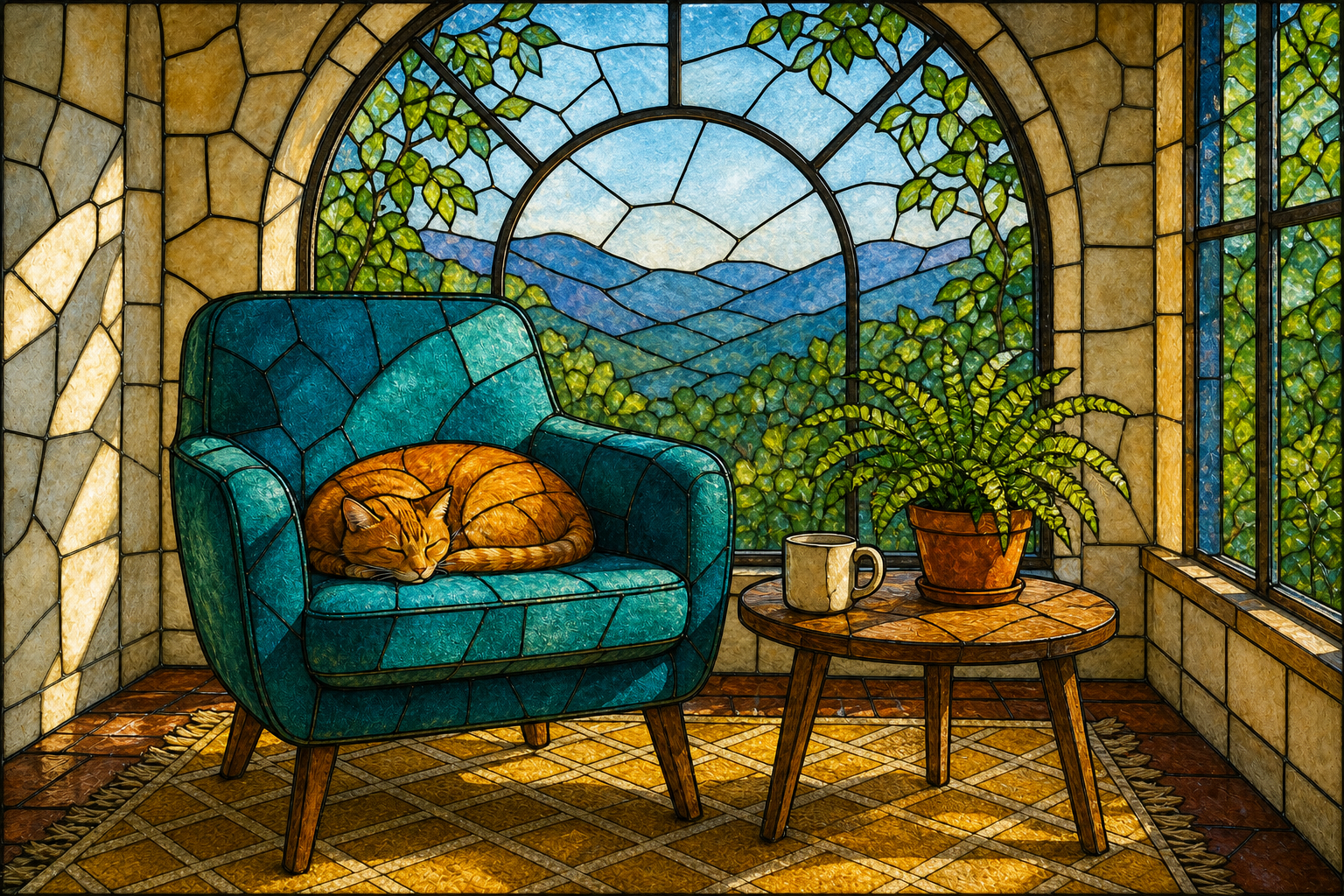
Stained-Glass Mosaic Transfer
For a decorative architectural-panel concept that must stay buildable and visually faithful to the room.
Authorized synthetic input
GPT Image 2 edited output
Stained-Glass Mosaic Transfer | Best for: For a decorative architectural-panel concept that must stay buildable and visually faithful to the room. | Prompt ENP06-P05 | Check: lead-line continuity, cell scale, source objects, luminous backlight, and no painted photo detail | If it fails: If fragments become too small, add ‘use large continuous cells bounded by buildable lead lines and simplify detail without dropping any source object.’
Expected result
Large jewel-tone glass cells and dark lead lines preserve the source through luminous, buildable mosaic geometry.
Copy-ready tested prompt
Use case: style-transfer
Input images: Image 1: owned synthetic edit target
Asset type: verified website style-transfer example
Primary request: Task: Transform the provided owned synthetic sunroom photograph into a stained-glass mosaic panel while preserving the scene.
Subject: Preserve exactly one armchair, one sleeping orange cat, one round table, one mug, one fern, the arched window, distant hills, and the rug.
Context: A decorative architectural panel concept and controlled GPT Image 2 style-transfer comparison.
Style/medium: Large hand-cut glass cells, continuous dark lead lines, jewel-tone turquoise, amber, cobalt, cream, and sea-green panes, subtle bubbles and ripples inside the glass, with no painted photographic detail.
Composition/framing: Keep the original 3:2 landscape crop, object count, relative positions, silhouettes, arched-window geometry, and foreground balance unchanged.
Lighting/mood: Make light pass from behind the panel, producing luminous color and restrained internal glow while retaining the source's brighter right side.
Constraints: Change only the visual medium; no extra objects or animals, tiny unbuildable fragments, broken anatomy, symbols, text, logos, watermark, or artist imitation.
Output: One luminous 1536×1024 landscape PNG with the complete scene fully visible.
If fragments become too small, add ‘use large continuous cells bounded by buildable lead lines and simplify detail without dropping any source object.’
Review focus
lead-line continuity, cell scale, source objects, luminous backlight, and no painted photo detail
Model
GPT Image 2
Style Transfer · GPT Image 2 · Prompt 06
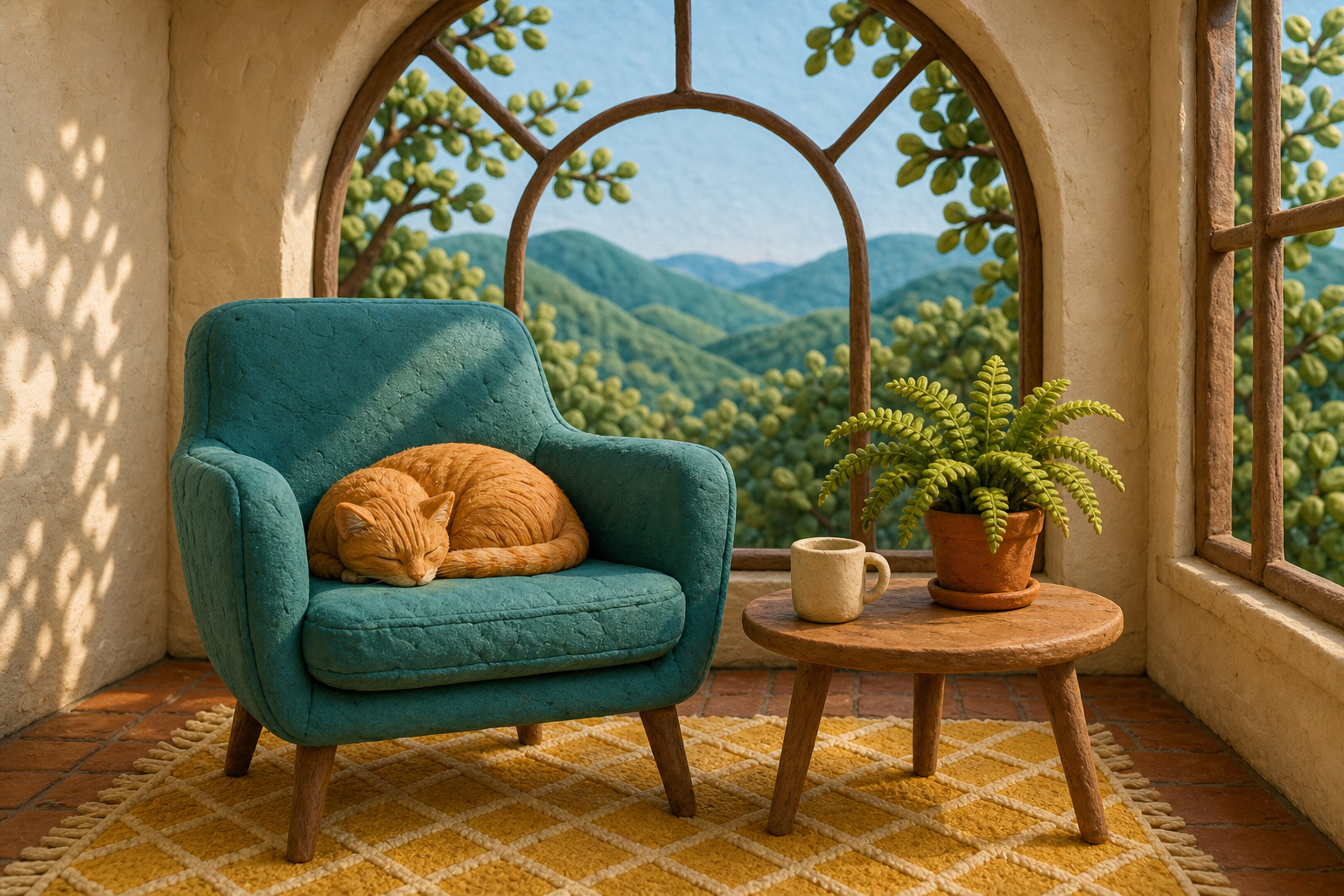
Clay Stop-Motion Miniature
For a playful story frame that needs handcrafted material cues without changing the underlying room.
Authorized synthetic input
GPT Image 2 edited output
Clay Stop-Motion Miniature | Best for: For a playful story frame that needs handcrafted material cues without changing the underlying room. | Prompt ENP06-P06 | Check: clay tactility, correct object count, cat form, miniature scale, and soft right-side light | If it fails: If the scene looks like glossy plastic, add ‘matte hand-shaped clay with subtle fingerprints and irregular handcrafted edges; no molded toy finish.’
Expected result
The source becomes a photographed modeling-clay set with fingerprints, rounded miniature edges, and soft studio shadows.
Copy-ready tested prompt
Use case: style-transfer
Input images: Image 1: owned synthetic edit target
Asset type: verified website style-transfer example
Primary request: Task: Transform the provided owned synthetic sunroom photograph into a handcrafted clay stop-motion miniature while preserving every scene anchor.
Subject: Preserve exactly one teal armchair, one sleeping orange cat, one round table, one cream mug, one potted fern, the arched window, hills, and mustard rug.
Context: A playful interior-story frame and controlled GPT Image 2 style-transfer comparison.
Style/medium: Hand-shaped matte modeling clay, subtle fingerprints, rounded miniature edges, slightly imperfect props, tactile fur ridges, and a warm teal, cream, terracotta, sage, and mustard palette.
Composition/framing: Keep the original 3:2 landscape crop, camera height, object count, relative positions, silhouettes, window geometry, and negative space unchanged.
Lighting/mood: Preserve the warm right-side late-morning light as a miniature-set key with soft short shadows and gentle falloff.
Constraints: Change only material and rendering style; no extra objects or animals, glossy plastic, packaging, labels, readable text, logos, watermark, or artist imitation.
Output: One detailed 1536×1024 landscape PNG that looks like a photographed clay animation set.
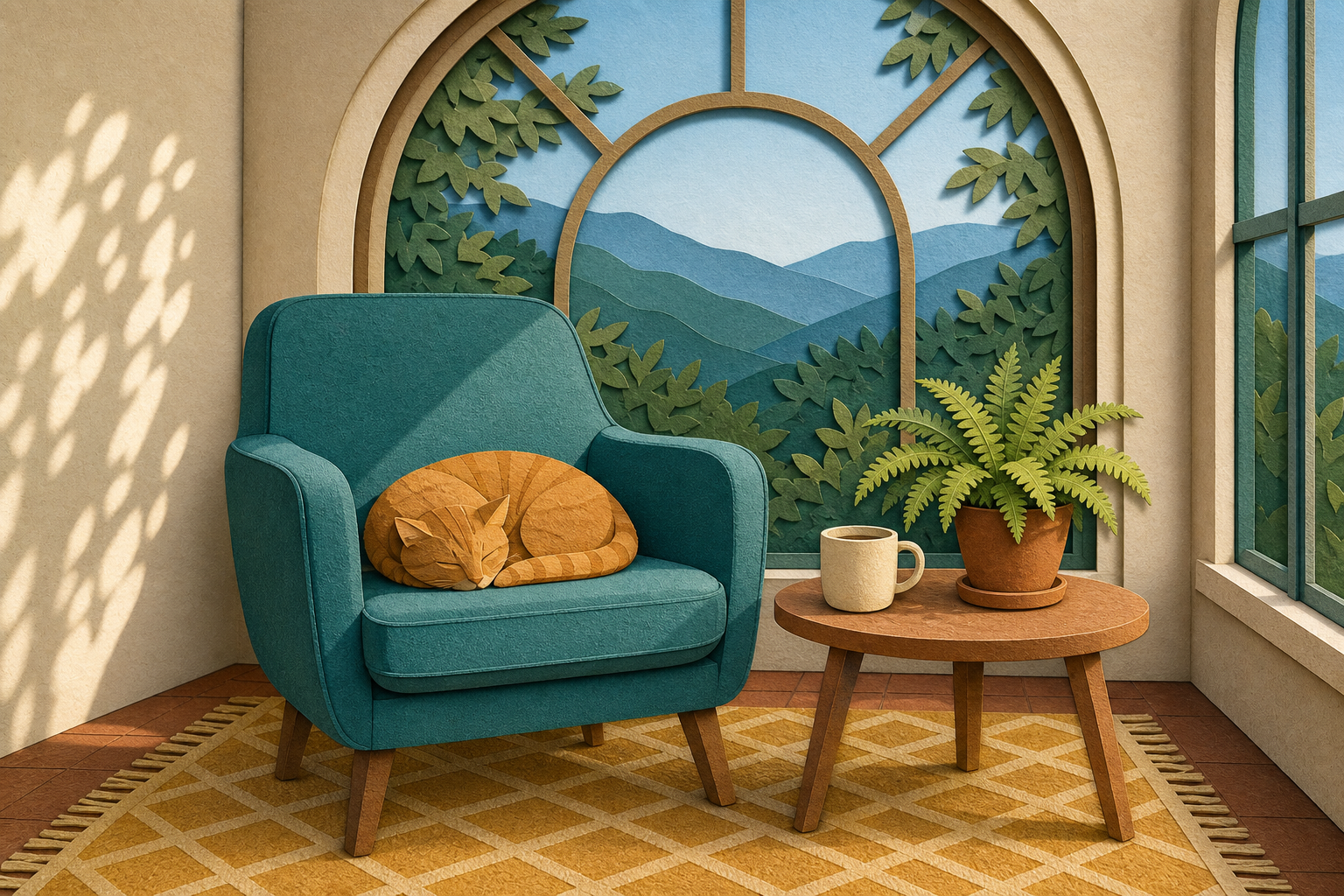
For a tactile brochure background that needs clear depth planes and a recognizable source composition.
Authorized synthetic input
GPT Image 2 edited output
Layered Paper-Cut Transfer | Best for: For a tactile brochure background that needs clear depth planes and a recognizable source composition. | Prompt ENP06-P07 | Check: separate depth planes, paper fibers, scene geometry, overlap order, and no plastic surfaces | If it fails: If the output looks like smooth 3D plastic, add ‘every form is a visibly cut sheet with fibrous edges and shallow paper-on-paper shadows.’
Expected result
Six to eight fibrous paper layers preserve the room through silhouette overlap and shallow cast shadows.
Copy-ready tested prompt
Use case: style-transfer
Input images: Image 1: owned synthetic edit target
Asset type: verified website style-transfer example
Primary request: Task: Transform the provided owned synthetic sunroom photograph into a layered paper-cut illustration while preserving the original structure.
Subject: Preserve exactly one armchair, one sleeping cat, one round table, one mug, one fern, the arched window, distant hills, and the rug.
Context: A tactile home-and-garden brochure background and controlled GPT Image 2 style-transfer comparison.
Style/medium: Six to eight visibly separate cut-paper depth planes, fibrous edges, restrained teal, forest green, slate blue, cream, rust, and mustard papers, and clean silhouette overlaps.
Composition/framing: Keep the original 3:2 landscape crop, camera angle, object count, relative positions, arched-window geometry, hill order, floor perspective, and open margins unchanged.
Lighting/mood: Use soft backlighting so every paper layer casts a shallow believable shadow onto the layer behind it, with brighter light from camera right.
Constraints: Change only the visual medium; no extra objects or animals, smooth plastic 3D surfaces, printed text, logos, watermark, border, or artist imitation.
Output: One crisp 1536×1024 landscape PNG with all depth layers and original objects fully visible.
Adjustable parameters
Layer count, paper palette, fiber visibility, separation depth, backlight softness
Failure correction
If the output looks like smooth 3D plastic, add ‘every form is a visibly cut sheet with fibrous edges and shallow paper-on-paper shadows.’
Review focus
separate depth planes, paper fibers, scene geometry, overlap order, and no plastic surfaces
Model
GPT Image 2
Style Transfer · GPT Image 2 · Prompt 08
16-Bit Pixel-Art Transfer
For an original cozy adventure-game background that needs a genuine logical pixel grid rather than a blurred filter.
Authorized synthetic input
GPT Image 2 edited output
16-Bit Pixel-Art Transfer | Best for: For an original cozy adventure-game background that needs a genuine logical pixel grid rather than a blurred filter. | Prompt ENP06-P08 | Check: crisp pixel grid, 32-color discipline, object silhouettes, light direction, and no blur | If it fails: If pixels blur, add ‘render on a 384×256 logical grid and enlarge exactly 4× with nearest-neighbor scaling and no anti-aliasing.’
Expected result
A crisp 384×256 logical scene enlarged four times with a 32-color palette, controlled clusters, and selective dithering.
Copy-ready tested prompt
Use case: style-transfer
Input images: Image 1: owned synthetic edit target
Asset type: verified website style-transfer example
Primary request: Task: Transform the provided owned synthetic sunroom photograph into a 16-bit pixel-art environment while preserving the scene.
Subject: Preserve exactly one teal armchair, one sleeping orange cat, one round table, one mug, one fern, the arched window, distant hills, and the mustard rug.
Context: An original cozy adventure-game background and controlled GPT Image 2 style-transfer comparison.
Style/medium: A consistent 384×256 logical-pixel grid, limited 32-color palette, crisp one-pixel clusters, selective dithering, hard-edged shapes, and exact nearest-neighbor enlargement.
Composition/framing: Keep the original 3:2 landscape crop, camera angle, object count, relative positions, silhouettes, arched-window geometry, floor perspective, and major shadow shapes unchanged.
Lighting/mood: Retain warm sun from camera right against cooler teal and blue interior shadows with no blurred glow.
Constraints: Change only the visual medium; no extra objects, animals, characters, text, logos, watermark, anti-aliasing, blurry scaling, photorealistic gradients, or artist imitation.
Output: One 1536×1024 landscape PNG created as an exact 4× nearest-neighbor upscale.
If pixels blur, add ‘render on a 384×256 logical grid and enlarge exactly 4× with nearest-neighbor scaling and no anti-aliasing.’
Review focus
crisp pixel grid, 32-color discipline, object silhouettes, light direction, and no blur
Model
GPT Image 2
Style Transfer · GPT Image 2 · Prompt 09
Low-Poly 3D Diorama
For an original interior visualization that tests faceted geometry while holding camera and layout constant.
Authorized synthetic input
GPT Image 2 edited output
Low-Poly 3D Diorama | Best for: For an original interior visualization that tests faceted geometry while holding camera and layout constant. | Prompt ENP06-P09 | Check: visible facets, camera match, furniture geometry, full scene, and matte surfaces | If it fails: If surfaces become smooth, add ‘use large visible triangular planes and flat shading throughout; no subdivision or glossy photorealism.’
Expected result
Large matte polygon facets, flat shading, and restrained ambient occlusion convert the room into a coherent diorama.
Copy-ready tested prompt
Use case: style-transfer
Input images: Image 1: owned synthetic edit target
Asset type: verified website style-transfer example
Primary request: Task: Transform the provided owned synthetic sunroom photograph into a low-poly 3D diorama while preserving the scene geometry.
Subject: Preserve exactly one armchair, one sleeping cat, one round table, one mug, one fern, the arched window, distant hills, and the rug.
Context: A material-style exploration for an original interior visualization and controlled GPT Image 2 style-transfer comparison.
Style/medium: Large visible polygon facets, matte mineral-like surfaces, simplified triangular planes, flat-shaded modeling, restrained teal, sandstone, sage, terracotta, mustard, and pale-blue palette, with subtle ambient occlusion.
Composition/framing: Keep the original 3:2 landscape crop, camera elevation, object count, relative scale, silhouettes, window geometry, hill layers, and floor perspective unchanged.
Lighting/mood: Preserve the source right-side sun, long soft-edged shadows, and bright window rim through faceted light groups.
Constraints: Change only geometry treatment and materials; no extra objects or animals, smooth subdivision, glossy photorealism, text, logos, watermark, altered architecture, or artist imitation.
Output: One polished 1536×1024 landscape PNG of the complete low-poly scene.
Adjustable parameters
Facet scale, surface matte level, palette, ambient occlusion, camera elevation
Failure correction
If surfaces become smooth, add ‘use large visible triangular planes and flat shading throughout; no subdivision or glossy photorealism.’
Review focus
visible facets, camera match, furniture geometry, full scene, and matte surfaces
Model
GPT Image 2
Style Transfer · GPT Image 2 · Prompt 10
Editorial Mixed-Media Collage
For a restorative-home magazine opener that needs collage energy without burying the source scene.
Authorized synthetic input
GPT Image 2 edited output
Editorial Mixed-Media Collage | Best for: For a restorative-home magazine opener that needs collage energy without burying the source scene. | Prompt ENP06-P10 | Check: source visibility, fragment limit, object count, editorial hierarchy, and no readable text | If it fails: If collage fragments overwhelm the room, add ‘use no more than five supporting fragments and keep the source scene as the only complete central image.’
Expected result
The central room remains legible beneath limited torn-paper fragments, photocopy texture, flat blocks, and sparse grease-pencil marks.
Copy-ready tested prompt
Use case: style-transfer
Input images: Image 1: owned synthetic edit target
Asset type: verified website style-transfer example
Primary request: Task: Transform the provided owned synthetic sunroom photograph into an editorial mixed-media collage while keeping the core scene intact.
Subject: Preserve exactly one armchair, one sleeping cat, one round table, one mug, one fern, the arched window, distant hills, and the rug.
Context: A magazine feature opener about restorative home spaces and controlled GPT Image 2 style-transfer comparison.
Style/medium: Keep the central scene legible while using no more than five supporting torn-paper fragments, monochrome photocopy texture, flat color blocks, cut-paper shadows, sparse grease-pencil marks, and muted teal, red, cream, mustard, and black.
Composition/framing: Keep the original 3:2 crop, camera angle, object count, relative positions, silhouettes, window geometry, and central focal hierarchy unchanged.
Lighting/mood: Flatten the source lighting into clear editorial value groups while retaining its right-to-left direction.
Constraints: Change only the visual medium; no added objects or animals, faces, headlines, readable text, brands, logos, watermark, clutter, or artist imitation.
Output: One balanced 1536×1024 landscape PNG with the complete source scene visible.
Adjustable parameters
Fragment count, photocopy contrast, color blocks, pencil density, cut-paper shadow
Failure correction
If collage fragments overwhelm the room, add ‘use no more than five supporting fragments and keep the source scene as the only complete central image.’
Review focus
source visibility, fragment limit, object count, editorial hierarchy, and no readable text
Model
GPT Image 2
Style Transfer · GPT Image 2 · Prompt 11
Medieval Geometric Poster
For a fictional decorative-arts exhibition background using anonymous geometry rather than protected symbols or artist references.
Authorized synthetic input
GPT Image 2 edited output
Medieval Geometric Poster | Best for: For a fictional decorative-arts exhibition background using anonymous geometry rather than protected symbols or artist references. | Prompt ENP06-P11 | Check: anonymous geometry, scene readability, object count, symbolic light, and no identifiable emblems | If it fails: If invented symbols appear, add ‘anonymous repeating geometry only; no heraldry, runes, religious icons, emblems, or readable marks.’
Expected result
Interlocking flat forms, parchment texture, mineral colors, and restrained ornament preserve the room as a geometric poster.
Copy-ready tested prompt
Use case: style-transfer
Input images: Image 1: owned synthetic edit target
Asset type: verified website style-transfer example
Primary request: Task: Transform the provided owned synthetic sunroom photograph into a medieval-inspired geometric poster background while preserving the scene.
Subject: Preserve exactly one armchair, one sleeping cat, one round table, one mug, one fern, the arched window, distant hills, and the rug.
Context: A fictional decorative-arts exhibition background and controlled GPT Image 2 style-transfer comparison.
Style/medium: Interlocking flat geometry, parchment texture, mineral red, lapis blue, ochre, black, teal, and restrained gold-like accents, framed by anonymous repeating geometric ornament.
Composition/framing: Keep the original 3:2 landscape crop, object count, relative positions, silhouettes, arched-window geometry, hill proportions, and broad floor shapes unchanged.
Lighting/mood: Replace naturalistic light with a symbolic low sun, crisp value bands, and a narrow luminous edge on right-facing forms.
Constraints: Change only the visual system; no heraldry, religious icons, runes, people, extra objects or animals, lettering, logos, watermark, identifiable emblems, or artist imitation.
Output: One clean 1536×1024 landscape PNG with the entire scene readable as a geometric poster.
Adjustable parameters
Geometry density, mineral palette, parchment grain, ornament width, edge accent
Failure correction
If invented symbols appear, add ‘anonymous repeating geometry only; no heraldry, runes, religious icons, emblems, or readable marks.’
Review focus
anonymous geometry, scene readability, object count, symbolic light, and no identifiable emblems
Model
GPT Image 2
Style Transfer · GPT Image 2 · Prompt 12
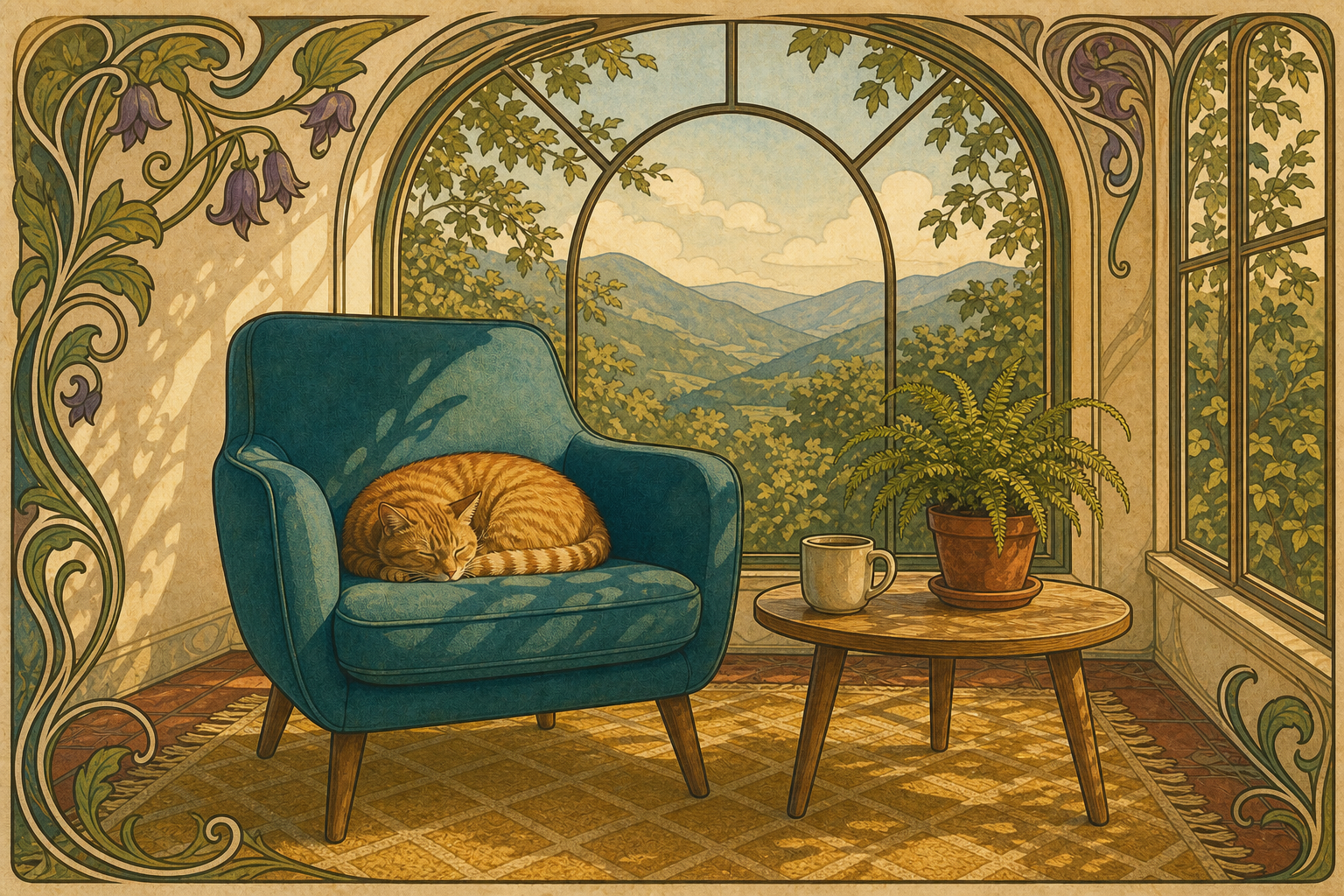
Art Nouveau Botanical Transfer
For a book-cover background that uses public-domain movement vocabulary instead of a named artist.
Authorized synthetic input
GPT Image 2 edited output
Art Nouveau Botanical Transfer | Best for: For a book-cover background that uses public-domain movement vocabulary instead of a named artist. | Prompt ENP06-P12 | Check: public-domain movement traits, chair and cat visibility, border restraint, fixed geometry, and no artist imitation | If it fails: If ornament hides the focal subject, add ‘preserve a clear negative-space halo around the chair and cat and keep the border outside their silhouettes.’
Expected result
Sinuous vines, flattened enamel-like color, rhythmic linework, and restrained ornament frame the preserved scene.
Copy-ready tested prompt
Use case: style-transfer
Input images: Image 1: owned synthetic edit target
Asset type: verified website style-transfer example
Primary request: Task: Transform the provided owned synthetic sunroom photograph into an Art Nouveau botanical illustration using only public-domain movement traits.
Subject: Preserve exactly one teal armchair, one sleeping orange cat, one round table, one mug, one fern, the arched window, distant hills, and mustard rug.
Context: A book-cover background and controlled GPT Image 2 style-transfer comparison.
Style/medium: Sinuous vine borders, rhythmic organic linework, flattened enamel-like colors, curling leaves, restrained floral ornament, and a cream, olive, plum, teal, terracotta, and muted-gold palette.
Composition/framing: Keep the original 3:2 landscape crop, object count, relative positions, chair silhouette, window arch, floor perspective, plant placement, and a clear negative-space halo around the focal chair unchanged.
Lighting/mood: Preserve the source dappled afternoon-like highlights from camera right while simplifying shadows into decorative shapes.
Constraints: General movement vocabulary only; do not reference any artist; no extra furniture, animals, people, text, logos, watermark, or ornament hiding the chair or cat.
Output: One elegant 1536×1024 landscape PNG with the full source scene visible.
Adjustable parameters
Vine density, line rhythm, palette, border width, negative-space halo
Failure correction
If ornament hides the focal subject, add ‘preserve a clear negative-space halo around the chair and cat and keep the border outside their silhouettes.’
Review focus
public-domain movement traits, chair and cat visibility, border restraint, fixed geometry, and no artist imitation
Model
GPT Image 2
Style Transfer · GPT Image 2 · Prompt 13
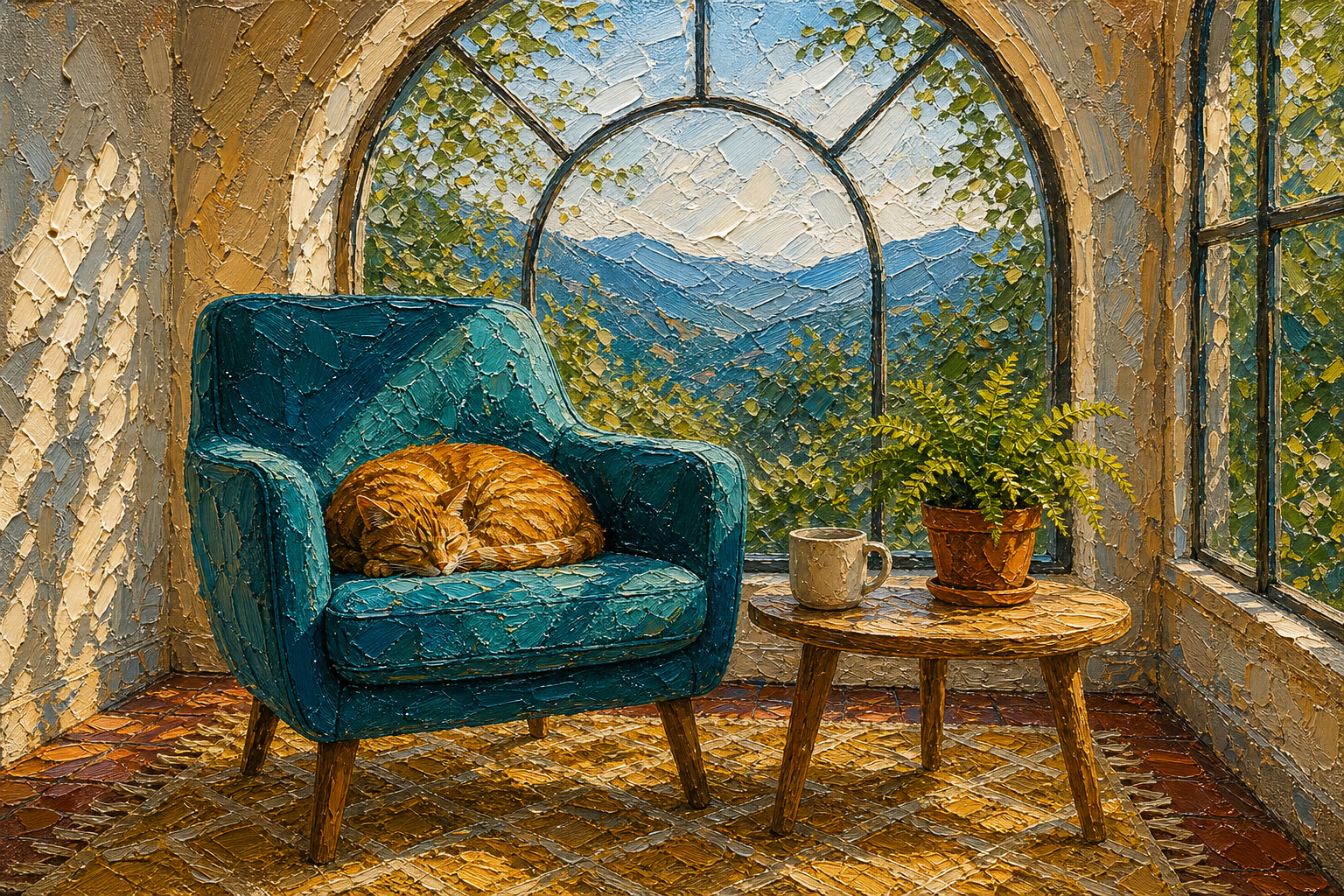
Thick Impasto Oil Transfer
For a gallery-style interior landscape that needs tactile paint while keeping the room’s silhouettes locked.
Authorized synthetic input
GPT Image 2 edited output
Thick Impasto Oil Transfer | Best for: For a gallery-style interior landscape that needs tactile paint while keeping the room’s silhouettes locked. | Prompt ENP06-P13 | Check: silhouette fidelity, tactile ridges, canvas texture, light direction, and no digital blending | If it fails: If texture deforms objects, add ‘lock every silhouette and edge relationship first, then apply raised paint ridges without moving the contours.’
Expected result
Palette-knife strokes, raised ridges, canvas weave, and textured shadows convert the complete room into impasto paint.
Copy-ready tested prompt
Use case: style-transfer
Input images: Image 1: owned synthetic edit target
Asset type: verified website style-transfer example
Primary request: Task: Transform the provided owned synthetic sunroom photograph into a thick impasto oil painting while preserving the scene.
Subject: Preserve exactly one armchair, one sleeping cat, one round table, one mug, one fern, the arched window, distant hills, and the rug.
Context: A gallery-style interior landscape print and controlled GPT Image 2 style-transfer comparison.
Style/medium: Thick palette-knife strokes, raised paint ridges, visible canvas weave, directional marks, and a cobalt, teal, burnt-umber, gray-green, ochre, terracotta, and cream palette.
Composition/framing: Keep the original 3:2 landscape crop, camera angle, object count, relative positions, locked furniture and cat silhouettes, window geometry, hill layers, and floor perspective unchanged.
Lighting/mood: Retain the source break of light from camera right, bright paint ridges on edges, and deep textured shadow masses.
Constraints: Change only the visual medium; lock silhouettes before adding texture; no extra objects or animals, smooth digital blending, text, logos, watermark, or artist reference.
Output: One tactile 1536×1024 landscape PNG with all original objects fully visible.
Adjustable parameters
Stroke thickness, ridge direction, canvas weave, palette, shadow mass
Failure correction
If texture deforms objects, add ‘lock every silhouette and edge relationship first, then apply raised paint ridges without moving the contours.’
Review focus
silhouette fidelity, tactile ridges, canvas texture, light direction, and no digital blending
Model
GPT Image 2
Style Transfer · GPT Image 2 · Prompt 14
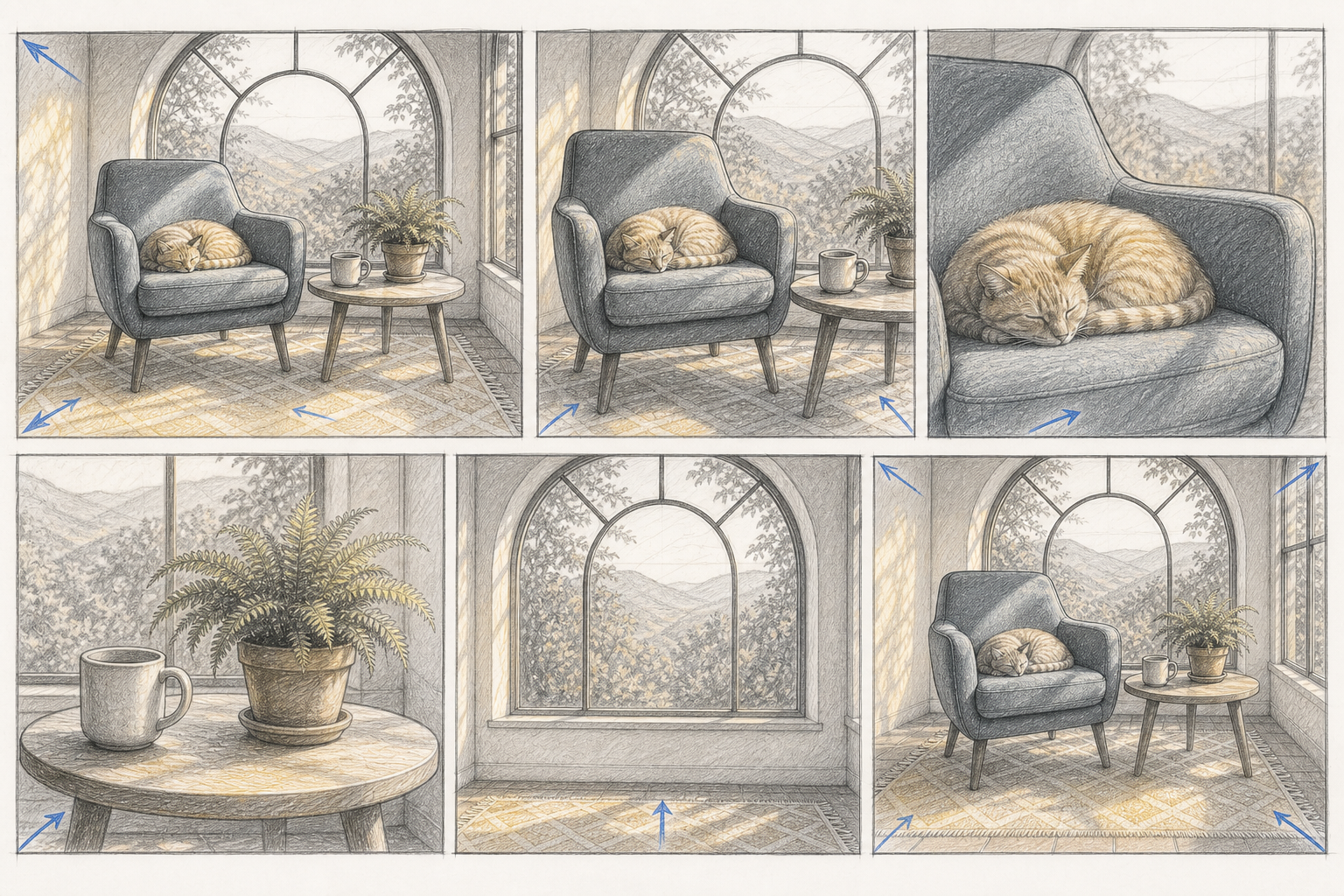
Six-Frame Pencil Storyboard
For production planning that studies six camera views without introducing a new subject or losing continuity.
Authorized synthetic input
GPT Image 2 edited output
Six-Frame Pencil Storyboard | Best for: For production planning that studies six camera views without introducing a new subject or losing continuity. | Prompt ENP06-P14 | Check: exact six-panel layout, continuity, object design, camera axis, and absence of text | If it fails: If the sheet adds panels or labels, add ‘exactly six equal unlabeled panels in two rows of three with clean gutters and no captions or numbers.’
Expected result
Exactly six graphite panels preserve the room through consistent design, camera axis, blue arrows, and one yellow light accent.
Copy-ready tested prompt
Use case: style-transfer
Input images: Image 1: owned synthetic edit target
Asset type: verified website style-transfer example
Primary request: Task: Convert the provided owned synthetic sunroom photograph into a six-frame pencil storyboard study of the same quiet scene.
Subject: In every frame keep the same single teal armchair, sleeping orange cat, round table, mug, fern, arched window, hills, and rug; show no new subject.
Context: Production planning for a calm interior sequence and controlled GPT Image 2 style-transfer comparison.
Style/medium: Graphite construction lines, darker final contours, sparse cross-hatching, soft smudged values, blue-pencil camera arrows only, and one restrained warm-yellow sunlight accent.
Composition/framing: Arrange exactly six equal panels in two rows of three with clean gutters: source wide shot, medium chair view, cat close-up, tabletop detail, window view, and final wide shot; preserve object design, proportions, spatial relationships, and camera axis across panels.
Lighting/mood: Translate the same right-side late-morning light consistently through line weight, hatching, and the single yellow accent.
Constraints: No captions, numbers, readable notes, extra objects or animals, changed furniture, logos, watermark, color beyond blue pencil and yellow accent, or artist imitation.
Output: One clear 1536×1024 landscape storyboard-sheet PNG with all six panels fully visible.
Adjustable parameters
Panel count, shot list, line weight, blue-arrow density, yellow-accent placement
Failure correction
If the sheet adds panels or labels, add ‘exactly six equal unlabeled panels in two rows of three with clean gutters and no captions or numbers.’
Review focus
exact six-panel layout, continuity, object design, camera axis, and absence of text
Model
GPT Image 2
Style Transfer · GPT Image 2 · Prompt 15
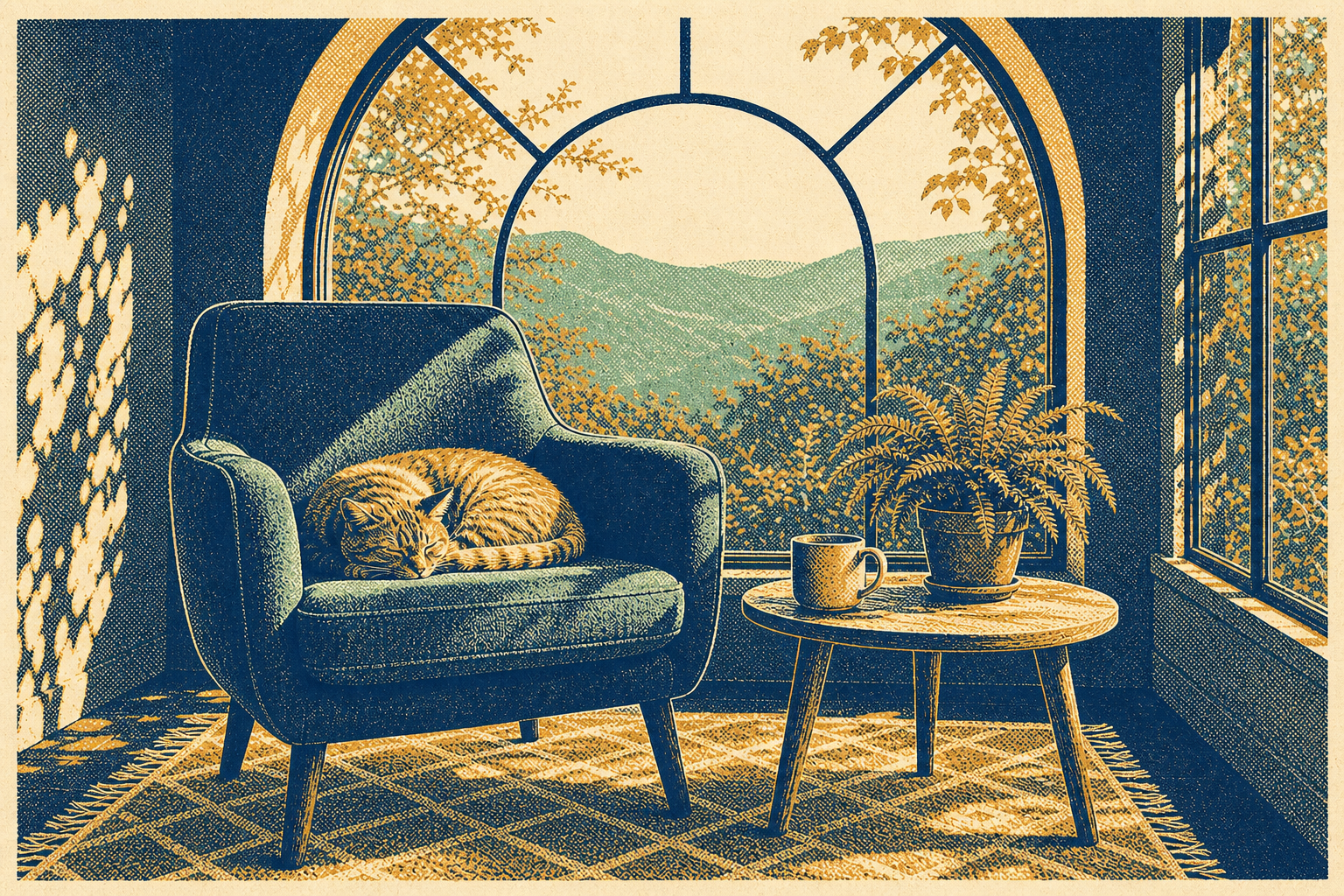
Three-Color Screen-Print Transfer
For a community arts poster background that needs an exact spot-ink budget and clean source fidelity.
Authorized synthetic input
GPT Image 2 edited output
Three-Color Screen-Print Transfer | Best for: For a community arts poster background that needs an exact spot-ink budget and clean source fidelity. | Prompt ENP06-P15 | Check: three-ink compliance, halftone consistency, object silhouettes, print texture, and no lettering | If it fails: If gradients or extra inks appear, add ‘exactly navy, amber, and mint spot inks plus cream paper; translate every intermediate value into one halftone angle.’
Expected result
Navy, amber, and mint spot inks over cream paper preserve the room through bold separations and controlled halftone texture.
Copy-ready tested prompt
Use case: style-transfer
Input images: Image 1: owned synthetic edit target
Asset type: verified website style-transfer example
Primary request: Task: Transform the provided owned synthetic sunroom photograph into a three-color screen-print poster background while preserving the scene.
Subject: Preserve exactly one armchair, one sleeping cat, one round table, one mug, one fern, the arched window, distant hills, and the rug.
Context: A community arts poster background with no copy and controlled GPT Image 2 style-transfer comparison.
Style/medium: Exactly navy, warm amber, and muted mint spot inks over cream paper, bold color separations, one consistent halftone angle, subtle mesh texture, and small natural ink imperfections.
Composition/framing: Keep the original 3:2 landscape crop, camera angle, object count, relative positions, major silhouettes, arched-window geometry, light rhythm, and foreground spacing unchanged.
Lighting/mood: Translate the source illumination into amber highlight shapes against broad navy shadow masses and mint midtones.
Constraints: Change only the print medium; no gradients, additional ink colors, extra objects or animals, lettering, logos, watermark, border, brand references, or artist imitation.
Output: One crisp 1536×1024 landscape PNG using exactly three spot inks plus paper.
If gradients or extra inks appear, add ‘exactly navy, amber, and mint spot inks plus cream paper; translate every intermediate value into one halftone angle.’
Review focus
three-ink compliance, halftone consistency, object silhouettes, print texture, and no lettering
Model
GPT Image 2
GPT Image 2 style transfer prompt FAQ
What should a GPT Image 2 style transfer prompt include?
Include the edit task, a precise inventory of the source image, the intended context, target medium and its physical rules, locked composition, translated lighting, explicit exclusions, and output size. Separate preserved content from changed rendering so fidelity is easy to inspect.
How do I preserve the original composition during style transfer?
Name the crop, camera angle, subject and object count, relative positions, silhouettes, geometry, perspective, and light direction. Tell GPT Image 2 to change only the visual medium, then compare the output against the input anchor by anchor.
Can I use a photo as the style-transfer input?
Yes, if you own the photo or have permission and the people or protected material inside it are cleared for the intended use. The examples here use a synthetic source created for this test, with no real person, logo, protected character, or third-party artwork.
How can I avoid copying a living artist’s style?
Do not use the artist’s name. Describe a generic medium, a public-domain movement, or objective traits such as materials, line quality, palette, composition, texture, lighting, and edge behavior. Review the result for close resemblance before publishing.
Why does my style transfer add or remove objects?
The model may treat a short style request as permission to reinterpret the scene. Add an exact object inventory, require the same count and placement, prohibit additions and removals, and rerun with the failed object named explicitly.
Can I copy these GPT Image 2 style transfer prompts for commercial work?
The prompt text is provided as a reusable starting point, but you must clear your own input image, substituted subjects, brands, characters, and references. Also check current model terms, employer policy, licenses, and local law before commercial use.